
Idea 1
Living a Life That Deserves Tears
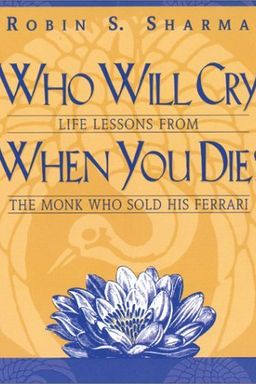
Who will cry when you die? That haunting question sits at the heart of Robin Sharma’s Who Will Cry When You Die?—a book that challenges you to rethink the way you live before it’s too late. Sharma isn’t trying to scare you; he’s trying to awaken something sleeping inside of you. He argues that the tragedy of life isn’t death itself but what we allow to die within us while we live—our passion, purpose, kindness, and courage. His central message is simple yet profound: life is a one-time opportunity, and happiness, fulfillment, and legacy come from living deliberately and serving selflessly.
Each person, Sharma says, must discover their unique calling—the reason they exist—and begin living in alignment with it. He believes that you don’t have to quit your job or move to the Himalayas to find it; rather, you must bring more of yourself into every hour of your day. Whether you’re a teacher, lawyer, or artist, your work becomes meaningful when it contributes to something larger than yourself. This echoes the philosophy in his bestselling The Monk Who Sold His Ferrari, but instead of a fable, this book offers 101 short life lessons you can practice, one day at a time.
Living with Intention and Authenticity
Sharma contends that most people live reactively, letting life happen to them instead of acting upon life. “If you don’t act on life,” he writes, “life has a habit of acting on you.” He compares this to a leaf floating in a stream, drifting wherever the current goes. The antidote, he says, is self-discipline—what he calls “Tough Love.” By getting tough with yourself, you begin living life on your terms. You stop chasing convenience and start choosing character. Each choice you make determines the quality of your days, so you must choose consciously and courageously.
Living authentically, Sharma reminds you, means focusing less on pleasing others and more on listening to your inner voice. He advises you to write daily in a journal, cherish your children, and allow silence to be your teacher. Through practices such as meditation, early rising, and connecting with nature, he shows that peace and meaning are not found in achievements but in awareness. Like philosophers from Aristotle to Thoreau, Sharma insists that greatness stems not from material successes but from moral strength and mindful living.
Pain, Growth, and Purpose
In one of the book’s most resonant lessons, Sharma writes that pain is a teacher and failure is the highway to success. He urges you to “see your troubles as blessings,” arguing that adversity forges character and clarifies purpose. This mirrors the wisdom of Rainer Maria Rilke, who advised patience with unresolved questions rather than rushing to easy answers. Sharma’s take is distinctly practical—when you fall, get back up; every wound hides wisdom. Our setbacks are not signals to quit but invitations to grow.
The Legacy of Service
Another thread running through the book is service. Greatness, Sharma says, comes when you transcend personal ambition and ask, “How may I serve?” Quoting Albert Schweitzer and Gandhi, he argues that service is not saintly sacrifice but the most enlightened form of self-interest: you find true success when you help others succeed. The story he shares about Gandhi losing a shoe and tossing the second one onto the tracks—so the finder could have a pair—illustrates that spirit of selflessness beautifully.
Why These Ideas Matter Now
In an age of rapid technology and endless distraction, Sharma’s book feels more relevant than ever. He reminds you to slow down, savor simplicity, and reconnect to what matters—whether that’s a family meal, a walk in the woods, or the quiet act of writing thank-you notes. While our world grows noisier and more demanding, his message is timeless: diminish busyness, amplify purpose. The person who lives with clarity, courage, and compassion doesn’t just die peacefully—they die knowing they have made life better for others.
Ultimately, Who Will Cry When You Die? is a call to action disguised as a set of gentle meditations. It’s not about mourning; it’s about awakening. You are reminded that each day counts, that happiness is a choice, and that you’re capable of more than you know. Live fully, Sharma urges—not someday, but today—so that when your time comes, you will rejoice, and the world will cry because it lost someone who truly lived.