
Idea 1
The Rise of Distributed Trust
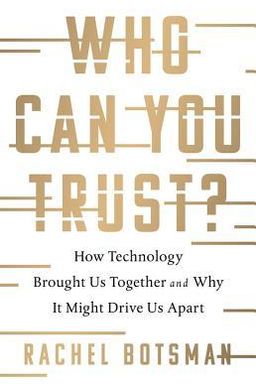
How do you decide whom to trust in a world where strangers handle your money, data, and even your safety? In Who Can You Trust? Rachel Botsman argues that humanity is living through a profound shift—the Third Trust Revolution—in which trust moves from local relationships and institutions to distributed networks and platforms. You now rely on invisible systems of reputation, algorithms, and digital ratings rather than face-to-face judgment or authoritative gatekeepers.
Botsman’s central idea is that trust is not dying; it is changing form. You have moved from local trust (people you know), through institutional trust (banks, brands, governments), to distributed trust (systems that let you interact safely with strangers and machines). To understand that change, you must see how technology reduces unknowns—the essence of her definition: trust is a confident relationship with the unknown.
The erosion of institutional trust
Botsman traces how scandals—from Lehman Brothers and Volkswagen to BP and FIFA—eroded public belief in institutions. These failures created distrust shaped by inequality (some never face consequences), the twilight of elites (the digital flattening of authority), and echo chambers (algorithmic bubbles reinforcing bias). You began to rely more on peers, collaborative journalism, and platforms that felt more accountable.
This backdrop made distributed trust possible. Once you stopped automatically trusting governments and experts, you began to test and verify through networks—the Edelman Trust Barometer captures this shift from vertical to horizontal trust. The crisis of authority cleared the space for new mechanisms: ratings, algorithmic moderation, and identity protocols.
The architecture of distributed trust
Platforms such as Alibaba and Airbnb offer vivid case studies. Jack Ma’s TrustPass and Alipay turned suspicion toward strangers into routine economic confidence by introducing escrow, verified identities, and transparent reputation. You trust other drivers on BlaBlaCar or hosts on Airbnb not because regulators certify them, but because layered signals—reviews, badges, guarantees—reduce uncertainty. This layered process forms Botsman’s Trust Stack: first trust the idea, then the platform, then the person.
Every new behavior involves a trust leap—that moment you act beyond certainty: staying in a stranger’s home, paying with invisible money, or using an autonomous car. Trust leaps are not irrational: they happen when systems make the unknown familiar enough. The push away from centralized intermediaries toward reputation-driven networks underpins your daily interactions.
From signals to systems
Botsman warns that trust is fragile. You are wired to make snap judgments based on appearance and social signals—a smiling face, professional demeanor, or polished profile—yet such cues (as shown by Jon Freeman’s research) often have little connection with truth. In distributed systems, trust signals can be fabricated. Technologies like Trooly and UrbanSitter illustrate how better design can combine verified credentials with behavior-based scoring to minimize deception. You must learn to ask, as Onora O’Neill advises: “trustworthy for what?”
Reputation as infrastructure
Reputation becomes the new currency—used everywhere from ride-sharing to the darknet. Even Silk Road’s illegal market relied on ratings, escrow, and feedback to maintain order where law could not reach. High reputation lowered risk and raised prices, proving that distributed trust can self-regulate—but also showing its vulnerabilities when fake reviews or exit scams undermine credibility. Botsman underscores that reputation systems are double-edged: they can democratize trust, yet also amplify inequality or surveillance when controlled by powerful actors.
The frontier of algorithmic trust
Objects and algorithms now perform trust work once done by humans. Blockchain removes intermediaries through cryptographic proof—yet still centralizes power in mining pools or developers (as the DAO hack demonstrated). Robots like “Bert C” show that emotional design influences human trust more than technical competence, while failures like Microsoft’s Tay expose how machine learning can magnify moral failure. These examples remind you that code can’t replace ethics; distributed systems still need responsibility, oversight, and moral architecture.
The dangers of total reputation
China’s Social Credit System and Ant Financial’s Sesame Credit embody the extreme form of distributed trust—where data-driven scoring becomes political governance. Your friends’ habits, purchases, and online behaviors can affect access to housing, travel, or work. Rewards and punishments replace freedom of judgment. Botsman cautions that when reputation shifts from voluntary evaluation to enforced obedience, trust turns into control.
Designing for repair
In closing, Botsman argues for people-first trust design. Projects like Tala in Kenya demonstrate how data can empower rather than exploit—the system builds trust by measuring behavior with empathy and transparency. She urges accountability frameworks (“rate the raters”), algorithmic audits, appeal systems, and cross-platform ethics. Distributed trust works only when shaped by human values, not surveillance logic. Technology can heal broken trust—but only if it remains accountable to the people it serves.
Core message
Trust is migrating—from institutions to platforms, from authority to reputation, from physical presence to digital proof. The challenge isn’t whether you can trust technologies or strangers—it’s whether you can build systems where accountability, empathy, and transparency survive the transition.
Botsman’s book is therefore both diagnosis and manual: a call to understand trust’s new geography and to shape it deliberately before it shapes you.