
Idea 1
Rural Power, Peril, and Politics
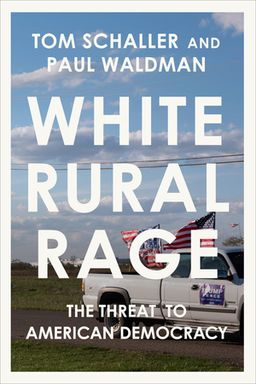
What happens when the most disaffected group also enjoys the most structural power? In White Rural Rage, Paul Waldman and Tom Schaller argue that rural White Americans wield disproportionate leverage through the U.S. Senate, Electoral College, and strategically drawn districts—enough to enable minority rule—while a politics of grievance, conspiracism, and authoritarian temptation converts that leverage into national outcomes. They contend that the combination of institutional tilt and escalating cultural conflict now poses an outsized risk to American democracy, unless you can help redirect rural politics away from symbolic rage and toward material, pluralist gains.
The authors insist you look past stereotypes. Rural America isn’t just a cultural landscape of pickup trucks and farm iconography; it’s a complex political ecosystem structured by constitutional design, economic decline, and media narratives that turn disillusionment into mobilization. The book moves from institutions to identities to consequences: how the system overweights rural votes, how rural decline fuels resentment, how culture war eclipses policy, and how conspiracy and Christian nationalism harden anti-democratic currents. It closes by elevating rural people of color—often invisible yet civically resilient—and by calling for a multiracial rural movement that trades performative politics for concrete wins.
The Structural Tilt You Live Under
You start with constitutional math. Two senators per state means Wyoming’s voters enjoy far more clout than California’s; the population ratio grew from 13:1 (1790) to ~69:1 today, but the Senate still splits 2–2. Add the Electoral College’s baseline of three electors per state and the effective California-to-Wyoming weight compresses to ~18:1. By 2040, 70% of Americans could choose only 30 senators. Map design then extends the tilt: Republicans disperse efficiently across rural and exurban districts while Democrats cluster in cities, letting GOP map-makers turn vote minorities into seat majorities (see Wisconsin 2018: 46% of the vote, ~65% of the seats). These mechanics are not abstractions; they shape courts, budgets, and whether national reforms ever get a vote. (Note: This mirrors themes in Lee Drutman’s and Jonathan Rodden’s work on institutional bias and geographic polarization.)
A Depopulating, Disinvested Landscape
Schaller and Waldman ground the politics in place. Rural counties collectively lost about 226,000 residents in the 2010s while metro regions gained 21 million; two-thirds of rural counties shrank. Mechanization, consolidation, and the Walmart/dollar-store effect hollowed out local economies from coal country (Mingo County, WV) to farm towns. Hospitals closed—136 from 2010–2021—and maternal health and overdose rates worsened. Proximity is prosperity, Headwaters Economics shows; distance now kills. The resulting vacuum—jobs, services, and hope—creates space for grievance entrepreneurs.
Culture War as Mobilizing Glue
You see a language of identity that sells belonging without solving problems. The pickup truck becomes a portable billboard of toughness; ads like Ram’s Sam Elliott–voiced “So God Made a Farmer” universalize the rural myth. In library and school fights (Llano County, TX; Boundary County, ID), national media frames local disputes as civilization battles. Politicians reap rewards by offering symbolic recognition and retribution—book bans, anti-immigrant stances, school-curriculum purges—rather than hospitals, broadband, or antitrust enforcement. (In David Pepper’s framing, statehouses become “laboratories” for entrenchment via preemption.)
Trump, Realignment, and Aftershocks
Donald Trump harnessed rural anger not by playing farmer but by validating grievance and granting permission for rage. He won 206 Obama-to-Trump counties by fusing resentment politics with a promise of payback. Even as coal jobs kept falling, loyalty persisted because identity and retribution trumped material delivery. Ambitious figures—Elise Stefanik, J.D. Vance—learned to exchange technocratic nuance for MAGA performance. The authors argue the style will outlast the man: grievance has become organizational DNA.
From Resentment to Risk
The book’s threat taxonomy is blunt. Rural White politics is, on average, more receptive to racialized narratives, conspiracism, Christian nationalism, and a leader-over-law ethos. Election denialism found deep footholds; vaccine refusal reversed rural health advantages; “constitutional sheriffs” claimed county supremacy to nullify laws. Violence and intimidation—from the Whitmer kidnapping plotters to armed library protests—migrate from online fantasies into real communities. When an overrepresented bloc becomes more willing to bend or break rules, the constitutional order strains.
Thesis in a sentence
Rural White grievance politics, amplified by structural overrepresentation and fed by conspiracies and culture war, can impose minority rule—and unless redirected toward inclusive, material gains, it will keep destabilizing American democracy.
Another Rural Story Exists
Crucially, the authors spotlight rural people of color—Black, Latino, and Native communities—who bear deeper hardships yet often show stronger democratic commitment. From Enfield, NC mayor Mondale Robinson’s organizing to the Saint Regis Mohawk Tribe’s economic initiatives, you see templates for constructive, multiracial rural politics. The charge to you is clear: help build civic power that turns rural leverage into better schools, hospitals, broadband, and fair elections, rather than into a perpetual culture war.