
Idea 1
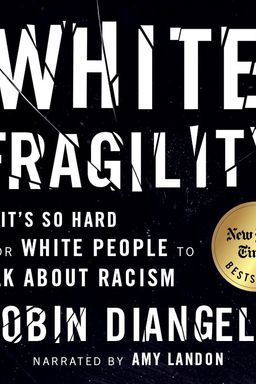
Confronting White Fragility: Why It's So Hard for White People to Talk About Racism
Why do so many well-intentioned white people struggle when discussions about race arise? In White Fragility, Robin DiAngelo argues that the difficulty comes from a profound lack of racial stamina—a learned inability to cope with the discomfort that comes from recognizing white privilege and systemic racism. This fragility, she asserts, perpetuates racial inequality by diverting attention away from racism itself and back toward protecting white comfort.
DiAngelo, a sociologist, equity educator, and long-time trainer on race relations, introduces white fragility as both a societal condition and a behavioral pattern. It emerges when white people experience racial stress—when their self-image as "good people" collides with evidence that they benefit from and even perpetuate racism. These moments often trigger defensive reactions like anger, fear, guilt, silence, or withdrawal. Rather than engaging in meaningful dialogue, white individuals often deflect or shut conversations down, reinforcing rather than dismantling racial inequity.
A Systemic View of Racism
At the core of DiAngelo’s argument is a crucial redefinition of racism. Rather than seeing racism as the moral failure of bad individuals, she describes it as a system of power that benefits white people collectively, regardless of individual intentions. Drawing on sociologists like Joe Feagin and Charles Mills, she argues that racism is maintained through deeply embedded social, institutional, and cultural norms that make whiteness the unmarked, invisible standard for humanity. Unlike simple prejudice, which anyone can hold, racism involves institutional power—the ability of one racial group to define reality and distribute resources to their advantage.
This system gives white people a kind of cultural comfort—what DiAngelo calls “white equilibrium.” It’s the expectation that race will be a non-issue in their daily lives and that they’ll be treated as individuals rather than as representatives of a racial group. When that equilibrium is disturbed, white fragility sets in. The result isn’t just emotional discomfort; it’s the full force of societal resistance that keeps racism out of view and unexamined.
The Emotional Machinery of Fragility
DiAngelo illustrates how white fragility operates through layered emotional and behavioral responses. White people, taught since childhood to see themselves as unbiased individuals, react defensively when confronted with evidence to the contrary. In workplace settings, in classrooms, or even in casual conversations, this fragility can manifest as tears, anger, or the familiar protest: “I’m not racist.” These defensive moves shift the focus from racial harm to white emotional distress, a move DiAngelo calls the re-centering of whiteness. The pattern silences honest discussion and reinforces white solidarity—the unspoken agreement that white people will protect each other’s comfort around racial issues.
She recounts real examples from her workshops: participants reacting furiously to being told they hold racial bias, managers derailing diversity discussions with claims of feeling attacked, and white colleagues arguing that racism is a matter of “bad people,” not systems. Each example underscores how white emotion—particularly guilt, fear, and hurt—functions as a defense mechanism that keeps systemic racism invisible and unchallenged.
Beyond the Good/Bad Binary
A major obstacle to white self-examination, DiAngelo contends, is what she calls the good/bad binary. In this dominant idea, only intentionally harmful acts—slurs, violence, overt discrimination—count as racism. By associating racism exclusively with “bad” people, most white individuals exempt themselves. This binary makes learning about systemic racism almost impossible. If being racist is the worst thing a person can be, feedback about racial harm becomes a moral indictment rather than an opportunity for growth.
By contrast, DiAngelo invites readers to replace this binary with a recognition of racism as an inevitable force shaping everyone’s consciousness. If you’re white, she argues, you have inherited racial bias simply by living in a society built on white supremacy. That doesn’t make you “bad”; it makes you responsible for unlearning those patterns and holding yourself accountable when you perpetuate racism, consciously or not.
From Ignorance to Responsibility
Throughout the book, DiAngelo urges readers to move from defensiveness to humility. Racism is not only “out there”; it’s within us, conditioning our perceptions and relationships. To dismantle it, we must accept that learning about race is never finished. It’s an ongoing, lifelong process requiring honest feedback, discomfort, and self-analysis. She reminds white readers that when people of color offer feedback, it is a gesture of trust, not an attack. The courageous act is not to explain or defend, but to listen, reflect, and make repair.
Ultimately, White Fragility isn’t just about personal awareness—it’s about systemic change. DiAngelo advocates for white people to break with white solidarity, seek cross-racial relationships rooted in honesty, and take collective responsibility for transforming institutions. As she states, “Niceness is not courageous.” Ending racism will require confronting the comfort of white complacency.
This book equips readers to do precisely that: to recognize how white racism is maintained through denial and fragility, to develop racial resilience, and to begin the lifelong work of living with integrity inside a racist system. Through well-researched theory and real-world examples, DiAngelo gives us a blueprint for transforming racial consciousness—from fragile defensiveness to courageous engagement.