
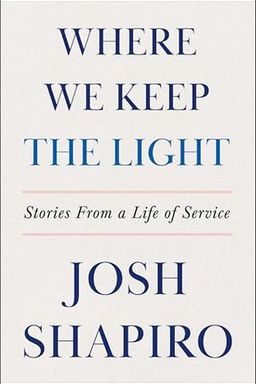
WHERE WE KEEP THE LIGHT cover

WHERE WE KEEP THE LIGHT

by Josh Shapiro with Emily Jane Fox

The governor of Pennsylvania chronicles events that shaped his life and his political career.

When Systems Fail, Communities Decide

When Systems Fail, Communities Decide

What happens to justice, medicine, and ordinary decency when the grid goes dark for good? This novel argues that once interlocking systems (electricity, logistics, finance, policing) collapse, survival turns on how quickly people convert knowledge, relationships, and moral conviction into practice. The story anchors that thesis in a specific place — Munising and Grand Island — and in specific people: Lena Easton, a diabetic clinician; Jackson Cross, a reluctant sheriff; Eli Pope, a haunted former Ranger; Shiloh, a survivor-child; and predators like Darius Sykes and Sawyer. Their choices turn scarcity into a crucible where community is rebuilt — or broken — in real time.

From invisible infrastructure to daily improvisation

Solar superflares annihilate satellites and surge-destroy grids, but you experience the breakdown through its mundane ripples. Telephones die, banking seizes, hospital ventilators go silent, fuel trucks stop, and shelves empty. The lighthouse becomes a clinic; the Northwoods Inn grows hydroponics, installs wind and solar arrays, and runs solar dehydrators. People barter canning lessons for labor; rain catchment and smokehouses stand in for grocery logistics. You don’t just lose Netflix — you lose insulin cold chains and ER triage. (Note: the book echoes the granular realism of Station Eleven’s community rebuilds but with the tactical specificity of a military thriller.)

Scarcity as the moral engine

Insulin is the centerpiece of scarcity because it is time-sensitive and life-critical. Lena stores hers in a solar mini-fridge and Frio wallet and counts out three weeks of survival. That countdown drives impossible choices: she shares vials with Keagan and other children, shortens her own horizon, and becomes a moral lightning rod. Theft follows visibility: caches vanish from the lantern room fridge and springhouse cooler, pushing Eli, Jackson, and volunteers into risky hunts and a controversial plan to stop a FEMA medicine train. You witness how rationing becomes not just logistics but ethics — who lives, who waits, and who decides.

Predators and improvised law

Where institutions thin, opportunists rise. Darius Sykes hangs corpses on telephone poles along M-28; Sawyer fortifies Grand Island and runs cartel-linked rackets. Jackson responds by deputizing volunteers, setting checkpoints, stringing deer-cam surveillance on logging roads, and tolerating uneasy allies like Nyx and Antoine because competence beats pedigree. The rule of law reduces to process you can perform with boots and radios: observe, patrol, de-escalate where possible, fight when cornered. The book insists that legitimacy must compete with necessity — the line between sheriff and warlord blurs under pressure.

Family power and buried crimes

Even as new dangers grow, old local hierarchies still script outcomes. Horatio Cross manipulates a public moment to install Jackson as acting sheriff; his ham radio and pill bottles hint at deeper rot and cartel collusion. Astrid’s beauty and standing hide a long-concealed murder — Lily Easton’s death — until Shiloh’s trauma-fragments and Jackson’s dogged reconstruction expose the truth (the cane’s thumping, the tackle box). With no courts standing, Jackson lets Astrid die by withholding an EpiPen — a vigilante verdict he justifies as community protection and necessary finality.

Tradecraft, rescue, and their costs

The book dives into improvised tradecraft: PVC-and-tape-measure antennas to triangulate hostile radios, drone overwatch from Alexis, deer cams mapping SUV patterns. Eli leads night infil into a copper mine to rescue Lena and breach Sykes’ depot. Alpha and Bravo teams move with IR, clear trip-wired grenades, and rely on Nyx’s 300 Win Mag and Antoine’s M203 for decisive moments. Eli and Sykes end in a knife fight on a ledge — the kind of intimate violence that leaves victory tasting like grief. You count the cost: Gideon and Curtis dead, Chief McCallister dying, and a community both saved and scarred.

Trauma, love, and the work of repair

Amid tactics and scarcity, the core currency is human attachment. Eli confesses killings that haunt him; he claims Shiloh as his daughter and risks everything to keep her and Lena alive. Jackson coaches Shiloh through dissociated memories by the river, offering improvised trauma care (safety, grounding, gentle prompts) because no psychologist is coming. The Northwoods Inn grows beyond shelter into a moral economy — hydroponics and goat milk matched by patrol rotations and shared hardship. The book’s claim is stark: in collapse, survival is technical, but endurance is relational — you live by systems, and you heal by people.

Key Idea

Scarcity forces you to choose what kind of person — and community — you will be. Every work-around (a deer cam, a Frio wallet, a deputized patrol) is also a moral stance about care, trust, and the use of force.


From Grid to Grit

From Grid to Grit

The first visible loss is power; the deeper loss is predictability. You watch a chain reaction: GPS dies, card readers fail, fuel stops, and supply shelves turn skeletal. The hospital closes its doors and staff flee to a larger hub in Marquette; pharmacies become quiet mausoleums for expired meds. You don’t feel an abstract collapse; you feel breakfasts without milk, ERs without oxygen, and long drives that become foot patrols under silent traffic lights.

The lighthouse clinic and the Inn’s micro-grid

Lena turns her lighthouse living room into a clinic with glass syringes, sterilizers, herbal remedies from the library, and a solar-powered mini-fridge. She stretches insulin with careful dosing and Frio evaporative wallets. The Northwoods Inn answers with infrastructure: wind and solar arrays, hydroponics in repurposed rooms, solar dehydrators for preservation, smokehouses for protein, and rain catchment for hygiene. Power becomes choosy: you route limited electricity to refrigeration, radios, and pump systems — not comfort.

Skills you once called hobbies

Canning, foraging, seed saving, and boilerless heat shift from weekend projects to survival verbs. Mrs. Grady teaches preservation; Lori and Tim Brooks trade shelter and meals for labor and watch-standing. The Inn formalizes chores into a rhythm: cooking rotations, latrine duty, perimeter checks, water-hauling, and tool maintenance. People re-learn the old math: calories in, calories out, with energy debt paid in blisters.

Barter, trust, and uneven scarcity

You see a barter web emerge: goat milk for antibiotics, labor for lodging, ammo for dried produce. Scarcity arrives unevenly; a person with a specialty (Lena’s insulin, Jackson’s authority, Eli’s skills) holds disproportionate power and responsibility. That asymmetry breeds both stewardship and envy. Refugees like the Tiltons arrive with nothing but desperation; your community must choose between charity and triage, between open gates and resource depletion.

Early warning signs in any town

  • Supply lines stall: delivery trucks like Milton Sanders’ show up empty or not at all; FEMA schedules become rumors.
  • Institutions shrink: Munising Memorial shutters, pushing care to distant hubs; courts stop, warrants become speeches.
  • Local ingenuity rises: deer-cam security grids, smokehouses, rain catchment, and repurposed commercial kitchens go online.

Security is part of daily life

Daily chores braid with watchfulness. The Inn trains sentries, assigns posts, and rotates patrols. Jackson and volunteers set checkpoints on logging roads, install cams at choke points, and conduct face-to-face verification. Even kids like Shiloh join low-risk posts, reclaiming agency through competence. (Note: the book’s emphasis on distributed security echoes community-defense literature and stands apart from lone-wolf prepper fantasies.)

The psychological pivot

The hardest shift is mental. You accept that no cavalry is coming, that your library is now a pharmacopoeia, and that your neighbor’s skillset matters more than a brand-name device. The story makes this transition feel tactile: jars clinking after a canning session, the wind’s hum through the Inn’s turbines, a dog (Bear) trained to search and reassure. Normal returns not as a grid reboot but as a community rhythm you help maintain.

Takeaway

Resilience is the speed at which you turn knowledge into workable systems. The lighthouse clinic and the Inn’s micro-society prove that prepared minds, not stockpiles alone, carry you through prolonged disruption.


Insulin and Ethics of Care

Insulin and Ethics of Care

Insulin turns an abstract collapse into an hour-by-hour negotiation with mortality. Lena’s Type 1 diabetes imposes a clock: even with careful rationing and solar cooling, she estimates three weeks. That number reframes every decision — who receives a shot today, how hard to risk for resupply, when to move, when to hide. The novel treats this not as melodrama but as applied bioethics under siege.

Cold chains and visible targets

Because insulin demands refrigeration, storage equals vulnerability. The lantern-room fridge and springhouse cooler make Lena’s lighthouse a beacon for thieves. When caches are stolen, you feel the social aftershocks: who informed? who looked away? Jackson and Eli respond with investigations and vigilance, but the thefts tighten the clock and fray trust. Visibility, once a signal of public service, becomes an invitation to predation.

Triage as character test

Lena shares precious vials — with Keagan, with a community child of Traci and Curt — accepting shorter odds for herself. Her calculus blends medical triage (who benefits most, who is viable with limited doses) with a virtue ethic of compassion and reciprocity. The story refuses tidy answers: generosity may invite exploitation; hoarding may preserve capacity for future care. You live inside that tension, often with no good option, only less-bad paths.

The train raid: stealing to save

Desperation births audacity. Eli, Jackson, and volunteers plan to halt a FEMA train transporting refrigerated meds using a controlled propane fire (“vent and burn”), with Wildland trucks for approach, drones for overwatch, and tools — blowtorches, circular saws, dry ice — to breach intermodals. The plan collides with a cartel-backed ambush run by Sykes; grenades and rifle fire shred logistics and people alike. Eli salvages only two vials in his chest pouch. They are priceless, heartbreaking symbols of how combat chaos turns months of planning into a handful of hope.

Exploitation in the shadow of need

Scarcity tempts betrayal. Sykes manipulates Traci’s love for her son to bait Lena; Traci, terrified, compromises Lena’s safety and later pleads for mercy. The book shows how parental love, normally protective, can be weaponized. It also shows the aftermath: guilt, community judgment, and the rough work of making space for flawed people in a place that needs every able hand.

No homemade fix — and why that matters

Lena researches whether insulin can be made locally. It can’t, not realistically — you need industrial bioreactors, purification, QA. That scientific constraint sharpens ethics: there is no clever hack to avoid rationing, only harder choices. The narrative anchors you in realism (unlike some survival fiction that hand-waves biotech), forcing you to plan around immovable limits.

Care as social glue

Medical scarcity, paradoxically, stitches people together. Lena’s clinic becomes the Inn’s moral center; those who receive care often join defense, labor, or watch rotations. The community adopts a quiet rule: share hardship, share risk. You sense the evolution from charity to covenant — a recognition that survival is collective, not transactional.

Key Idea

In collapse, medicine is ethics with a stopwatch. Every dose is a decision about values, and every cache a test of trust.


Predators and Improvised Law

Predators and Improvised Law

When formal policing thins, you face a brutal equation: either predators set the rules, or communities relearn how to project protective force. The book populates this vacuum with Sykes — a sadist who uses spectacle (corpses strung on poles) to colonize fear — and Sawyer, a calculating island kingpin whose alliances reach across the border to the Côté cartel. Against them stand Jackson and an assemblage of citizens, ex-cons, and specialists willing to do harm to prevent worse harm.

From procedure to presence

Jackson’s department operates with what still works: bodies, radios, optics, and relationships. He deputizes vetted volunteers, sets roadblocks, and puts deer-cam networks along logging roads to map movements. Alexis provides drones for standoff recon; Nyx and Antoine bring long gun and grenade-launcher competence. Due process narrows to documentation and witness memory — whatever you can defend in a heated room of neighbors. (Note: the book’s law-enforcement arc recalls Longmire’s moral grit, but under siege.)

Escalation ladders

Small crimes become signals. Theft at the lighthouse leads to the Fitch murders, to Sykes’ hanging corpses as propaganda, and to the rail ambush where cartel gunners crash the local plan to seize meds. Each rung on this ladder deepens mistrust and narrows nonviolent options. Jackson must choose between deterrence (visible patrols, fortified positions at the Inn) and decisive operations (raids, ambush interdictions). Either path risks normalizing violence — or ceding the initiative to criminals.

Allies you don’t like, capabilities you need

Survival makes strange bedfellows. Jackson tolerates Nyx and Antoine — capable but morally gray — because skill outranks comfort. He folds Eli into operations despite a fraught history. The calculus is pragmatic: win today, audit character later. This risks future betrayal but recognizes that in crisis, reliable capacity is as rare as fuel.

Legitimacy versus lethality

Jackson wrestles with becoming what he fights. He documents where he can, tempers force with intention, and avoids gratuitous cruelty. Yet the realities bite: to rescue Lena, his teams deploy flash-bangs and fragmentation grenades in claustrophobic tunnels; to neutralize Sykes, Eli accepts a knife fight that ends in a fatal drop. The book refuses to call this justice clean. It calls it necessary and corrosive — a price you note and carry.

Strategic patience pays

The counterweight to adrenaline is patience. The team spends hours triangulating radio chatter with a homemade directional antenna (PVC pipe, tape measures, scavenged coax), watches tire-track patterns from deer cams, and times movements to dark, weather, and habit. You learn a core rule: the slower you gather, the faster you can act. That tempo — crawl to sprint — is how small groups outmaneuver larger, meaner ones.

What This Teaches You

In a vacuum of law, legitimacy emerges from competence plus restraint. You earn trust by seeing threats early, acting precisely, and explaining why blood was spent.


Family Power and Reckonings

Family Power and Reckonings

Collapse doesn’t erase old power; it weaponizes it. Horatio Cross, a former sheriff, leverages public theater to install Jackson as acting sheriff and then quietly undermines him via cartel-linked radio leaks. Astrid — charismatic, wounded, and ruthless — hides Lily Easton’s murder behind beauty and local myth, relying on a cane’s thump and social deference to blur truth. The book insists that in small communities, family and reputation are currencies as potent as ammo.

Signals that betray the betrayer

Jackson reads the room — and the room is Horatio’s workshop. Unfamiliar prescription bottles suggest dependency; a ham radio on the desk points to out-of-band comms. Timelines click: only someone close to Jackson could leak details that synced with the train ambush. Sawyer, smug on his island dock, confirms Horatio’s snitching to the Côté cartel. One quiet radio call becomes an avalanche of dead neighbors.

Shiloh’s shards, Astrid’s mask

Shiloh carries dissociated memory fragments — a thumping, a shadow in a hoodie, a tackle box out of place. Jackson grounds her (safety, sensory prompts, agency to stop anytime) until the picture resolves. Astrid’s confession fuses memory and motive; years of impunity collapse in a single, airless room. With courts absent, justice arrives as a choice only Jackson can make — and he withholds the EpiPen when Astrid’s anaphylaxis closes in. It’s an execution framed as prevention of future murders, and it stains him even as it stops harm.

Eli’s revelation and reordered loyalties

Eli confesses to Shiloh that he is her father — a truth that shifts every perimeter he will defend. His loves become his battle plan: protect Lena, protect Shiloh, accept any wound. That paternal claim also clarifies Jackson’s role: no longer sole guardian, he becomes a co-steward caught between bloodline betrayal (Horatio) and chosen family duty (the Inn).

Sawyer: enemy, broker, mirror

Sawyer remains the ambiguous third pole — a fuel-and-drugs operator who can trade access or order bloodshed. Jackson bargains on the dock with veiled threats and conditional cooperation. The scene captures collapse realism: yesterday’s villain may be today’s leverage if he stabilizes a route or blocks a worse predator. But every favor accrues compound interest.

Trust as the scarcest resource

By the time Horatio’s treachery and Astrid’s crime surface, you see the core deficit isn’t diesel; it’s trust. The community must decide whose history still matters and whose usefulness redeems a stained past. That decision process — messy, proximate, and personal — replaces any vanished courtroom. You live with the verdicts because you must live with each other.

Observation

In crisis, power is who can move people today — by fear, by favors, or by earned trust. The book shows all three and the graves they dig.


Trauma, Tradecraft, Redemption

Trauma, Tradecraft, Redemption

The novel’s heart beats in two tempos: the cold focus of tradecraft and the warm ache of trauma and love. Eli Pope personifies both. He builds antennas from PVC and tape measures by day and confesses a killing on Sawyer’s yacht by night. He teaches Shiloh to shoot and breathe through fear while stitching his own wounds with the indifference of necessity. When you follow him into the copper mine, you watch tactics and motive fuse.

The mine: preparation, violence, consequence

Intelligence comes first: triangulated radio pings, drone passes, tire-track analysis. Then teams: Alpha and Bravo, roles clearly assigned, Nyx on overwatch with a 300 Win Mag, Antoine ready with an M203, Nash and Moreno sweeping tunnel mouths. IR illumination risks enemy NVGs; trip-wired grenades force meticulous clearing. The breach is fast and final — flash-bangs, frags, a fan-shaped advance. Eli and Sykes meet in the dark, lose guns, and close to knives on a ledge. The throw that ends Sykes also ends a piece of Eli he can’t recover.

Waking up to the bill

In the lighthouse infirmary, Lena and Shiloh bookend Eli’s bed. Victory’s bill is read aloud: Gideon and Curtis dead, Chief McCallister dying, caches lost, and only slivers of insulin saved. The rescue succeeded, but the community is thinner; the line between hero and martyr tightens. The book declines the dopamine hit of triumph — it insists on grief literacy.

Shiloh’s agency and careful healing

Shiloh channels fear into competence: crossbow mastery, sentry rotations, observation discipline. Jackson’s field-therapy — grounding, sensory prompts, permission to stop — allows memories to return without shattering her. These scenes feel clinically informed (safety first, slow pacing) and ethically fraught (no licensed therapist, high stakes). The intent isn’t to solve trauma but to carry it together.

Community as rehab

The Northwoods Inn serves as physical shelter and moral rehab. Shared work — foraging with Lori, goat milking, patrol drills, latrine duty — turns spectators into owners. Bear, the search-and-rescue dog, extends care beyond words. Inclusion heals: Shiloh’s sentry post isn’t a token nod; it’s a promise that she’s part of the perimeter others will defend, too.

Love as motive, risk, and repair

Eli’s ferocity comes from love, not tactics. It sharpens his edge and blinds his flanks. Jackson’s duty is braided to guilt and broken kinship; he hunts truth for the town and for himself. Lena’s caregiving is both vocation and self-sacrifice, each shared vial of insulin an entry in her private ledger of borrowed time. The author ties every firefight to a face you care about, so choices land with weight.

Core Dilemma

Redemption here isn’t institutional absolution; it’s iterative action — tell the hard truth, stand a post, share a vial, risk the dark — and accept the scars as the only certificate you get.

Dig Deeper

Get personalized prompts to apply these lessons to your life and deepen your understanding.

Go Deeper

Get the Full Experience

Download Insight Books for AI-powered reflections, quizzes, and more.