
Idea 1
Fixing Health Care Through Entrepreneurship and Choice
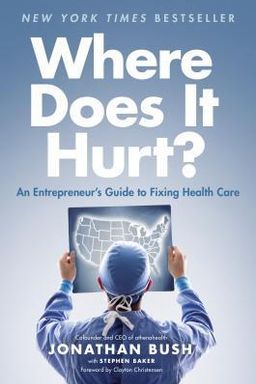
How can you take control of your health care in a system that often feels impossible to navigate, painfully expensive, and maddeningly bureaucratic? In Where Does It Hurt?, Jonathan Bush—cofounder and CEO of athenahealth and member of the famed Bush family—argues that the real cure for America’s health care crisis isn’t more government control or policy reforms. It’s unleashing the creative power of entrepreneurs and giving patients the freedom to make informed choices about their own care.
Bush contends that America’s $2.7 trillion health care industry has become a bloated, inefficient, and unresponsive system dominated by large hospitals, insurers, and regulations that reward complexity rather than quality. Yet paradoxically, its inefficiencies represent massive opportunities for innovation. He sees the system’s chaos as an entrepreneur’s playground—a chance to transform health care into a vibrant marketplace that values results, transparency, convenience, and human connection. In short: fixing health care means treating it like a real business.
A Broken Industry and the Promise of Markets
Bush opens with his firsthand experience as an ambulance driver and medic in New Orleans, witnessing hospitals treat chronic poverty and sickness as a form of endless crisis care. He asks: what if hospitals were forced to operate like any other business, responding to customer demand and price competition? Imagine paying $39.95 to manage hypertension at home instead of thousands for an emergency room visit. Entrepreneurship, Bush argues, could turn health services into something affordable, humane, and convenient—like Jiffy Lube for the human body.
This idea extends through the book. Bush believes competition and customer choice—shopping for care, comparing prices, demanding transparency—can do for health care what markets did for retail, technology, and even coffee shops. (Think Amazon treating shopping as a science, or Starbucks turning coffee into an experience.) He shows how allowing patients to act as customers, and caregivers as innovators, can awaken the sleepy, monopolistic system into a dynamic ecosystem akin to other industries that thrive under market pressure.
Why Bureaucracy Holds Us Back
In Bush’s view, bureaucracy—both governmental and institutional—has paralyzed progress. Antikickback laws, state licensing restrictions, and outdated data regulations keep newcomers out and protect bloated incumbents. Hospitals, doctors, and regulators are all locked into perverse incentive structures that prioritize billing over healing. He illustrates this with absurd examples, like laws preventing one doctor from paying another five dollars to share medical records, or regulations that stop patients from accessing their own data.
Bush’s memorable story about nearly losing his company to government regulation illustrates the problem. When the federal government tried to encourage electronic health records, legislators wrote outdated rules that favored old hardware over new internet-based systems like athenahealth. Bush personally lobbied Congresswoman Nancy Johnson to add the three words “and Internet services” to the law—an intervention that saved his company and, as he implies, opened the door for modern cloud-based health systems. It’s a vivid reminder of how tiny bureaucratic details can block innovation worth billions.
The Human Side of Reform
Beyond economics, Bush emphasizes the emotional heart of health care—the relationship between doctor and patient. He invokes Abraham Verghese’s concept of medicine as a sacred human encounter and the painting “The Doctor” by Luke Fildes, showing a physician deeply focused on his patient. To Bush, this intimate moment of care is health care’s purest form, and everything that distracts from it—paperwork, coding, bureaucracy—corrupts it. True reform, he argues, isn’t about replacing human compassion with machines but freeing doctors to be present for their patients by automating and outsourcing the administrative chaos.
A Call for a Health Care Renaissance
Bush challenges everyone—doctors, entrepreneurs, policy makers, and patients—to see themselves as participants in a coming renaissance of health care. He wants governments to open more space for innovation, doctors to think like entrepreneurs, and patients to become shoppers who demand choice and accountability. He paints a future where millions of “crazy ones” (to borrow Apple’s famous slogan) reinvent the industry from the ground up, making medicine more transparent, data-driven, and profoundly human.
Core Message
Health care isn’t broken because it’s too expensive—it’s broken because it isn’t a market. Every inefficiency, every waiting room, every outrageous bill is an opportunity for someone brave enough to fix it. Bush’s message is radical yet practical: save lives by unleashing capitalism’s creativity and giving choice back to those who need care most.
In the chapters that follow, Bush explores how this transformation unfolds—from collapsing hospital empires to nimble start-ups, from empowered doctors to informed patients, and from stagnant data silos to fast-moving information networks. Like a business manual for health care revolutionaries, his book is both manifesto and playbook for a new era of medical freedom.