
Idea 1
Seeing the World Through Freakonomics-Colored Glasses
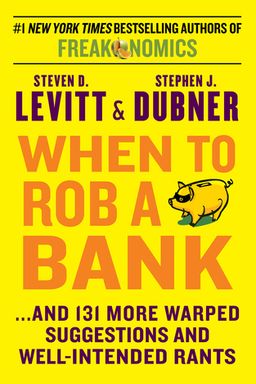
Why does the world often work in ways that seem irrational, illogical, or completely unpredictable? In When to Rob a Bank, the fourth installment of the Freakonomics series by Steven D. Levitt and Stephen J. Dubner, the authors take readers into ten years of curious, mischievous, and endlessly revealing blog posts that challenge everything from politics and morality to car buying, environmentalism, and even naming your baby. The result is a kaleidoscopic view of human behavior through the lens of economic thinking—an invitation to see the hidden incentives, unintended consequences, and overlooked logic shaping everyday life.
Levitt and Dubner argue that economics isn’t just about money—it’s really about incentives. It’s about decoding why people do what they do when prices, emotions, or reputations are in play. They ask inconvenient questions (“If you were a terrorist, how would you attack?”), poke at moral certainties (“Is the Endangered Species Act actually harming the species it’s meant to protect?”), and shine light on the absurd or counterintuitive patterns that explain how systems—from fast food joints to social movements—really work. The whole project began as an extension of their first book, Freakonomics, and morphed into a decade-long conversation with millions of readers who kept sending stories, arguments, and data back to them. The authors distilled that massive dialogue into this book, using their witty curiosity to make economics feel playful yet profound.
The Freakonomics Mindset: Curiosity Over Convention
At its core, When to Rob a Bank celebrates unconventional thinking. Levitt and Dubner treat their own ignorance as a starting point for exploration instead of a weakness. They approach the world like mischievous children: Why do people hate high gas prices when economists celebrate them? Why do we keep pennies even though they cost more to make than they’re worth? Why do we love the illusion of progress, even when it’s inefficient? Their answers often show that most human decisions—moral, political, or emotional—have economic roots buried in incentives and perceived self-interest. Whether talking about cheating schoolteachers, blood injuries in rugby, or incentives for Planned Parenthood donors, the authors keep asking: what’s the underlying motivation?
A Feast of Quirky Economic Questions
Across its twelve themed chapters, the book hops freely between topics: terrorism, sex, the environment, cheating, politics, crime, and more. “We Were Only Trying to Help” opens with Levitt’s infamous blog post suggesting ways terrorists might maximize damage—prompting public outrage and a lesson in how economists think about problem-solving. “Hurray for High Gas Prices!” explores why high fuel costs actually benefit society by reducing congestion, pollution, and accident rates. “If You’re Not Cheating, You’re Not Trying” shows cheating as a rational economic act, from masturbating rugby players to online poker scams. “But Is It Good for the Planet?” examines the economics of green behavior, revealing how moral crusades often backfire when incentives go wrong. Each essay becomes an economic detective story that tests one simple premise: when something seems crazy, dig for the hidden logic.
Why It Matters: Understanding Incentives in Everyday Life
Levitt and Dubner don’t want to give readers more answers—they want to give them better questions. By studying bizarre anecdotes—Limberhand the Masturbator, the economics of chicken pricing, or why poor service strikes KFC—readers learn how to connect everyday frustrations with larger economic principles. For example, Levitt’s complaints about slow KFC service aren’t just restaurant gripes—they turn into insights about class, price elasticity, and the willingness of customers to pay for speed. The book trains you to see economic trade-offs everywhere, reminding you that beneath every moral debate, political argument, or consumer choice, incentives quietly steer behavior. When read as one vast conversation, When to Rob a Bank urges you to replace judgment with curiosity and instinct with reasoning, a shift that can make daily life far more understandable and surprisingly funny.
Put simply, this book captures ten years of playful analysis of human folly while showing the reader how to think like a Freakonomist: question everything, follow the data, and never assume that common sense is actually sense. Whether you’re wondering when to rob a bank, how to name your child, or why the world’s richest athletes complain about taxes, this book gives you a new way to look at life—a way powered by economics, humor, and a healthy dose of disbelief.