
Idea 1
Stones, Texts, and Power in Jerusalem
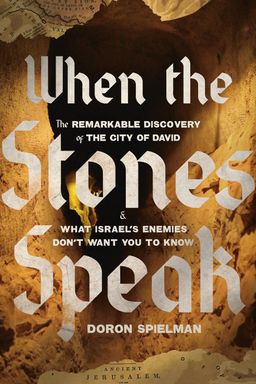
How can you test a people’s story against time, politics, and stone? In this book, the author argues that the City of David—an archaeological ridge just south of Jerusalem’s Ottoman walls—offers unusually direct evidence that Jewish history in Jerusalem is not merely literary memory but material fact. The core claim is bold and simple: when you align bedrock, inscriptions, and ritual infrastructure with biblical and extra-biblical texts, you recover a lived city that anchors Jewish indigeneity—and you watch how that evidence gets contested in courtrooms, newsrooms, and international bodies.
You enter a narrative that braids discovery with struggle. You meet 19th- and 21st-century diggers—Charles Warren, Eli Shukron, Ronny Reich, and Dr. Eilat Mazar—whose trenches traced tunnels, pools, palatial walls, and streets that pilgrims walked toward the Temple. You also meet donors, lawyers, diplomats, and adversaries: Baron Edmund de Rothschild (who bought the land so later archaeology could even happen), Supreme Court justices, UN officials, U.S. political officers, NGO activists, and local leaders who saw in every trench either a bridge to the past or a threat to the present.
The claim and how it’s built
The book builds its case on three pillars—texts, stones, and people—and shows them converging south of the Old City. Texts include the Hebrew Bible, inscriptions like the Siloam Inscription (late 8th century BCE), and external records (Merneptah Stele, Taylor Prism). Stones include Warren’s Shaft, Hezekiah’s Tunnel, the Pool of Siloam, the Herodian Pilgrimage Road, and a monumental structure that Eilat Mazar argued matches a 10th-century BCE royal complex. People include the workers and residents whose lives, seals, and coins reveal administrative, ritual, and everyday rhythms (for example, the Yehuchal ben Shelemiah bulla and rebel prutot stamped “Year Four – For the Freedom of Zion”).
Each line of evidence stands on its own; together they form a composite argument. When you can read an inscription cut into stone that narrates tunnelers meeting underground—and then walk that tunnel—text and trench reinforce each other with uncommon clarity. (Note: this kind of tight fit between artifact and narrative is rare in Near Eastern archaeology; here, the matches are unusually specific.)
Why the evidence triggers conflict
Because stones can legitimize stories, they become targets. Minimalist scholars questioned chronology and scale, proposing a “low chronology” that shrank Davidic Jerusalem to a village; political denialists asserted Jews have no ancient ties to Jerusalem at all. The book shows how skepticism turns from a refining scientific tool into a rhetorical weapon when it ignores inscriptions and contexts, or when bulldozers remove Temple Mount fill without archaeological oversight (as in 1999), forcing salvage analysis later through the Temple Mount Sifting Project.
At ground level, the stakes are personal and dangerous. Excavations sparked threats, arson of Arab supervisors’ cars, worker blacklists, and even attempts to assassinate City of David director David Be’eri (“Davidleh”). In courts and media, opponents alleged tunnels undermined homes. Diplomats weighed in; headlines spiked. The Supreme Court ultimately dismissed claims as baseless (Sept 21, 2009; Justice Edna Arbel), praised the excavation’s global value, and fined petitioners—yet the PR war continued.
What you’ll discover in the story
First, you’ll see how 19th-century forays (Charles Warren following the Gihon Spring) moved biblical Jerusalem south of the familiar Old City and how the Siloam Inscription fused text with engineering. You’ll then watch modern archaeologists extend that map: Eli Shukron and Ronny Reich uncover the Pool of Siloam and Pilgrimage Road; teams crawl the drainage channel to feel the flagstones above; a golden bell emerges from silt near the Western Wall foundations, chiming with Exodus imagery.
Second, you’ll learn why land deeds matter. Rothschild’s Ottoman-era purchases and careful documentation gave later archaeologists legal standing to protect and study the site, avoiding the fiascos of unsanctioned digs (e.g., Montagu Parker’s bribed tunneling under the Dome of the Rock). Ownership created continuity; it also created long-term battles over forged transfers and competing claims, especially after 1948–1967.
Third, you’ll see strategy at work. When litigation paused parts of the Pilgrimage Road excavation, the team pivoted to the Herodian drainage channel—smaller, safer, and politically harder to stop—ultimately exposing the Western Wall’s bedrock foundations and forging an archaeological connection between the City of David and Mount Moriah. Donor timing proved decisive (seed funding of ~$1.04M in 2008; later scale-ups by Sheldon and Miriam Adelson, Larry Ellison, Eugene Shvidler, and Jan Koum).
Why it matters to you
If you care about how societies prove identity, the City of David is a masterclass. You learn to separate evidence from narrative spin, to build alliances across law, engineering, and media, and to anticipate that every trench can become political theater. You also glimpse limits: archaeology can show presence and continuity; it cannot by itself adjudicate modern sovereignty or ethics (the book makes this explicit). But it can cripple myths that deny a people’s past.
Finally, the book gives you human anchors: the Zenati family of Peki’in, whose synagogue inscription mirrors their oral history of continuous Jewish presence, and “Huweida,” whose journey from dialogue to rejectionism illustrates how contested memory hardens politics. Between them, you see why stones become symbols—and why telling their story clearly, with rigor and empathy, changes what people believe is possible in Jerusalem. (If you’ve read Neil Asher Silberman or Finkelstein, you’ll recognize the minimalist–maximalist debate; this book aligns with evidence-forward maximalism while urging methodological care.)