
Idea 1
The McKinsey Paradox: Values, Power, and Consequences
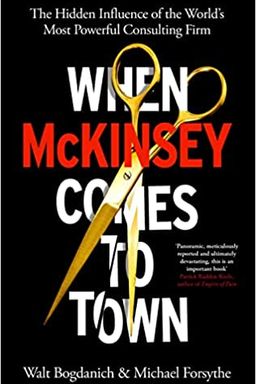
What happens when an institution that preaches virtue also shapes the world’s most controversial decisions? The book dissects McKinsey & Company—the world’s most influential management consultancy—and reveals how its ideals of professionalism, discretion, and excellence coexist with, and sometimes enable, greed, exploitation, and harm. You see a firm that prides itself on moral rigor and intellectual purity but often reinforces structures that deepen inequality, sustain authoritarianism, and sacrifice ethical clarity for commercial gain.
The Firm as Idea and Myth
McKinsey begins with a lofty promise: advising without self-interest, maintaining an obligation to dissent, and serving clients to make "change that matters." Its founder Marvin Bower positioned consulting as a moral profession akin to law or medicine. The firm cultivates an identity as both elite and altruistic, hosting values rituals and recruiting the “best minds” through narratives of impact and public purpose. Yet that mystique depends on secrecy—few outsiders know its clients, fees, or internal debates.
When Values Collide with Markets
Beneath the idealism lies the consulting economy: partners command high margins, power flows to rainmakers, and client screening varies across offices. “Putting clients first” often translates into serving whoever pays—including polluters, autocrats, and corporations under legal scrutiny. The result is a persistent tension between ideals and incentives. McKinsey consultants often justify problematic work by claiming to serve “execution, not policy,” but in practice, their analyses reshape policies and human outcomes—from opioids to immigration detention.
Consulting as an Engine of Modern Capitalism
The book situates McKinsey as an invisible architect of the modern corporate order. Its guidance popularized shareholder-value doctrine, offshoring, efficiency metrics, and managerial financialization. Those techniques increased profits and executive pay but hollowed out job security, weakened unions, and widened inequality. Similar consulting templates extended into public sectors—health care, policing, climate strategy—often amplifying private interests in spaces once dedicated to public good.
Behind the Curtain: Secrecy, Influence, and Conflict
McKinsey’s core asset is discretion. Governments trust it with confidential data; CEOs rely on silence. Yet this confidentiality hides conflicts: the firm worked for tobacco and the FDA, Purdue Pharma and public-health agencies, ICE and human-rights reformers. Its alumni scatter across powerful posts, blurring lines between oversight and influence. (Note: similar revolving-door critiques were previously leveled at Goldman Sachs and other elite institutions.)
The Human Cost
Repeatedly, you see how McKinsey’s analytical brilliance can produce devastating consequences when unmoored from empathy. Cost-cutting in detention centers coincided with human suffering. Opioid marketing advice fed addiction epidemics. Insurance “efficiency” plans traded fairness for profit. Abroad, its strategies aided state-owned enterprises in China that support military expansion and advised autocrats in Saudi Arabia whose regimes silence dissent. The book invites you to see that what seems like neutral problem-solving is, in reality, moral and political decision-making. Each recommendation—every slide deck—reflects a worldview about who deserves efficiency and who bears its cost.
Central premise
The authors argue that McKinsey represents both the apex and the Achilles’ heel of global technocracy: extraordinary intelligence applied without sufficient accountability. The firm’s immense reach—into democracies, dictatorships, corporations, and regulators—makes it one of the most consequential unelected powers on Earth.
If you work in business, policy, or activism, the core message is sobering: expertise is never value-neutral. The question isn’t simply whether McKinsey’s advice works—but whom it works for. The book urges you to demand transparency, ethical consistency, and human judgment where algorithms and incentives dominate.