
Idea 1
Living Well in the Shadow of Death
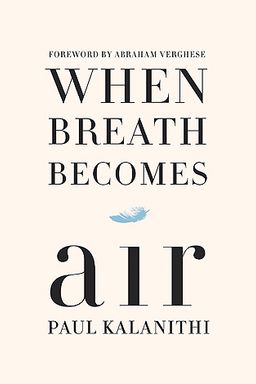
What would you change—today—if a scan tomorrow rewrote the rest of your life? In When Breath Becomes Air, neurosurgeon Paul Kalanithi argues that mortality is not merely an endpoint but a lens that sharpens life’s meaning. He contends that the work of living well is inseparable from facing death honestly; that identity is forged where values, vocation, and relationships meet; and that language—spoken with care between doctor and patient, spouse and spouse, parent and child—can be as healing as any scalpel.
Kalanithi’s key claim is both simple and demanding: you do not need certainty about how long you have to live to choose how to live now. But to do so, you must understand the human stakes beneath clinical facts, the moral work that medicine requires, the cost of excellence, and the courage to revise your purpose when life collapses and remakes you. He writes as both healer and patient—first from the bright, brutal world of neurosurgery, then from the harrowing intimacy of stage IV lung cancer—and his two perspectives braid into a single, searching account of how to live, doctor, love, write, and die with integrity.
What This Book Argues
Across two parts—“In Perfect Health I Begin” and “Cease Not till Death”—Kalanithi shows that life’s meaning arises in relationship: with patients who need more than procedures, with a wife whose love must bend and hold, with a newborn daughter whose presence redefines the future. He insists that the doctor’s role is not only to treat disease but to guide patients through the metaphysical terrain of illness; and, later, that the patient’s role is not only to receive care but to choose values amid uncertainty. Like Atul Gawande’s Being Mortal and Sherwin Nuland’s How We Die, Paul’s book is clinical and lyrical at once—but its singular power lies in the double vision of surgeon-turned-patient.
Why It Matters to You
You may never hold a brain in your hands, but you will sit at bedsides—others’ and, eventually, your own. You’ll navigate tradeoffs between longer life and better life. You’ll decide whether to fight, rest, or redirect. Kalanithi offers a vocabulary and a posture for those moments. He reframes prognoses ("median survival" is not an individual destiny), elevates frank conversations (informed consent as covenant, not paperwork), and shows how to budget time and attention when energy wanes and priorities shift. He also models how vocational excellence and human tenderness can coexist—even when excellence breaks your heart.
How He Makes the Case
Part I traces Paul’s unlikely path from Whitman and Rorty to the operating room—seeking a language that could hold both the physiological and the spiritual. We follow him into cadaver lab, an ob-gyn night where his first birth is followed by the first death, and the crucible of neurosurgery where millimeters mean the difference between a child’s laughter and locked-in silence. We watch him hone judgment, shoulder guilt, and learn that when there’s no place for the scalpel, words are a surgeon’s only tool.
Part II begins with the CT scan that changes everything: “the lungs were matted with innumerable tumors.” We see identity shatter—doctor becomes patient—and then reassemble around new choices: whether to have a child (he and Lucy decide yes), whether to return to the OR (he does, then must stop), whether to write (he races the clock and wins). Alongside their oncologist, Emma Hayward—who refuses to reduce life to Kaplan–Meier curves—Paul learns to live by values rather than estimates. He opts for presence over predictions, craft over fantasy, and, finally, a gentle death over impossible heroics.
Signal Lines You’ll Carry
“When there’s no place for the scalpel, words are the surgeon’s only tool.” “You can’t ever reach perfection, but you can believe in an asymptote toward which you are ceaselessly striving.” “I can’t go on. I’ll go on.” (Kalanithi channels Eliot, Browne, and Beckett, turning literature into lanterns for medicine and mortality.)
What You’ll Learn in This Summary
You’ll see how a literary mind became a technical master (and why meaning—not status—drove that choice). You’ll learn the moral anatomy of the doctor–patient covenant, from hard conversations to honest hope. You’ll enter the OR to grasp the price and promise of excellence, then watch that surgeon learn to be a patient—rethinking hope, marriage, and work. You’ll consider science and faith without cliché, and witness a good death: a BiPAP mask set aside, a family gathered, a baby cradled, gratitude spoken aloud. Finally, you’ll leave with practices for your own crossroads: asking “What matters most now?,” holding statistics lightly, and using language to dignify suffering.
In short, this is a book about meaning under constraint. Kalanithi does not offer bromides about living like you’re dying. He offers something rarer: a companionable mind showing, step by step, how to be fully human when time is short, love is urgent, and the future cannot be known.