
Idea 1
The Rise of Collaborative Consumption
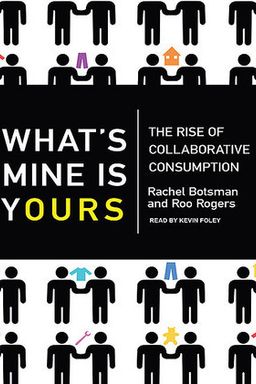
How can you live better with less? In What's Mine Is Yours by Rachel Botsman and Roo Rogers, the authors argue that the way you consume is undergoing one of the biggest cultural transformations since the Industrial Revolution. The old world was built on ownership—having a car, a home, physical media on shelves—but the new economy thrives on access, trust, and participation. Collaborative Consumption, the book’s central concept, captures this shift: instead of owning everything yourself, you gain access through sharing, renting, swapping, lending, and co-creation.
This movement is not idealistic; it’s practical and visible in everyday life. Consider Airbnb, Zipcar, CouchSurfing, Freecycle, Netflix, or Etsy. Each connects idle resources—spare rooms, cars, tools, time, talent—with people who need them. You join not because it’s environmentally noble but because it’s easier, cheaper, or more interesting. These platforms take what used to happen informally in villages and revive it at scale using real-time networks and reputation systems.
Converging Forces Behind the Shift
Several pressures make this possible now. Environmentally, you see tangible consequences of waste—the Great Pacific Garbage Patch shows what “disposability” really costs. Economically, crises like the 2008 recession forced people to find new ways to save and earn. Socially, Millennials embraced the “We” mindset, where reputation and connection matter more than possessions. Technologically, social networks, mapping, and mobile tools bridge trust gaps between strangers. Together, these forces make sharing feasible and scalable.
From Ownership to Access
The book challenges the assumption that owning is the best way to get what you want. Often, you want the outcome—a ride, a clean shirt, a movie—not the object itself. Platforms like Zipcar, Netflix, and Spotify represent what Botsman calls “dematerialization”: the benefit of use without the burden of ownership. Companies learn that offering access can mean recurring revenue and closer relationships, while users enjoy flexibility and savings.
How It Works: Three Organizing Systems
Collaborative Consumption takes many forms but generally falls into three systems:
- Product Service Systems (PSS): Access goods as services—Zipcar, Netflix, SolarCity—where use replaces ownership.
- Redistribution Markets: Move unused goods to where they’re needed—Freecycle, eBay, SwapTree—reducing waste and extending product lives.
- Collaborative Lifestyles: Share time, space, skills, and experiences—Etsy, CouchSurfing, Landshare—creating community value.
All three forms rely on trust and efficient coordination. They tap idling capacity—cars that sit unused for hours, drills used for minutes, spare rooms left empty. In doing so, they redefine value creation. Instead of buying more, you make what exists more useful.
Why It Matters
Botsman and Rogers insist that this is not just a consumer trend—it’s a cultural inflection. People are redefining wealth through reputation, sustainability, and shared participation. Trust becomes your currency, and community becomes your brand. The implications reach beyond economics; they reshape identity, business strategy, and civic life.
Core Insight
Collaborative Consumption revives old patterns of sharing but reinvents them with modern technology and design—transforming how you connect, consume, and create value in the 21st century.
Throughout the book, you learn that sharing works when systems achieve critical mass, trust is measurable, and participation feels meaningful. Businesses that successfully design for these dynamics—whether lending money through Zopa or cleaning up communities with Let’s Do It Estonia—prove that collaboration isn’t a utopian idea. It’s an efficient, human-centered model for progress.