
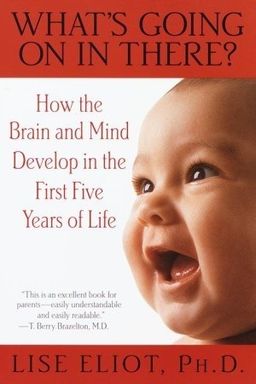
What’s Going on in There cover

What’s Going on in There

by Lise Eliot

What''s Going on in There? explores the fascinating journey of brain and mind development in the first five years of life. Author Lise Eliot reveals how genes and environment influence cognitive growth, offering parents invaluable insights into nurturing their child''s potential through sensory experiences, language, and a stimulating environment.

The Sculpted Mind: How Experience Builds the Brain

How does a child’s brain become the singular mind we recognize as “self”? In What’s Going On in There?, neuroscientist Lise Eliot reveals a grand truth: your baby’s brain is not a fixed machine governed by genes alone—it’s a living, self-wiring system whose architecture evolves through constant negotiation between biology and experience. Genes set the plan, but it’s experience, stimulation, nutrition, and love that refine, prune, and strengthen the circuits that define intelligence, personality, and emotional health.

Eliot’s narrative unfolds from conception to preschool, showing how the developing brain transforms from a single cell into a universe of connections. She connects molecular biology with everyday parenting, translating complex neuroscience into practical wisdom for how you can nurture optimal growth—without the myths of genetic determinism or overzealous enrichment.

From Blueprint to Experience

At conception, the genome launches a precisely timed sequence: neurulation, layer formation, and the emergence of key brain regions. But genes only specify the rough wiring pattern. By birth, the physical structure is largely in place, yet the cortex—especially for higher thinking and language—remains unfinished. Postnatal experience directs the final tuning. This interlocking dance between nature and nurture is the book’s foundational metaphor: the brain as both sculptor and sculpture.

Through vivid examples—such as René Spitz’s 1940s orphanage studies showing cognitive delays from lack of affection, or modern enrichment experiments with rats raised among toys and tunnels—Eliot drives home a biological truth: neurons that fire together wire together. Repeated activity strengthens connections; neglect or inactivity weakens them. The brain’s “use it or lose it” architecture means that your child’s daily sensory, social, and emotional environment literally shapes brain structure.

Critical Periods and Plasticity

Eliot introduces one of neuroscience’s most powerful ideas: critical or sensitive periods. During these windows, experience exerts disproportionate influence. For vision, the window occurs within the first two years; for language, it remains open through early childhood. Amblyopia, for example, becomes irreversible if an eye is deprived of normal input past a certain age. Similarly, linguistic isolation—as in tragic cases like “Genie”—prevents full grammatical mastery even after rescue. These findings underscore timing: early experiences don’t just enrich—they can determine potential.

The Emotional and Social Brain

The mind’s wiring also depends on touch, smell, sound, and emotional feedback. The orbitofrontal cortex and amygdala, shaped by maternal sensitivity and physical contact, anchor emotional regulation and attachment. Gentle, consistent touch lowers stress hormones and promotes growth in both animals and human infants. Conversely, deprivation elevates cortisol, distorting limbic reactivity. Emotional attunement—what psychologists call “serve and return” interaction—literally builds the neural circuits for empathy and trust.

From Biology to Practical Hope

Perhaps Eliot’s most empowering message is that genuine brain-building doesn’t come from flashcards or technology—it comes from ordinary, enriched interactions: holding your baby, speaking often, providing safe sensory play, reading aloud, and surrounding children with care. The book isn’t a parenting manual in disguise; it’s a scientific call for balance. The genome gives you resilience, but environment—especially during pregnancy and the first years—turns potential into capacity. You can’t control every variable, but you can make choices that matter most: nutrition, affection, language, and responsive care.

Core message

Genes build a brain that expects experience. What you provide—sound, touch, motion, interaction—teaches that brain how to think, feel, and connect. This shared construction is both science and love made visible.

Eliot’s synthesis of neuroscience and parenting gives you not anxiety but perspective: early years are powerful, but they don’t require perfection. Understanding how your child’s neural networks adapt offers both humility and hope: the human brain, especially in infancy, is the most malleable organ nature ever designed.


Building the Brain Before Birth

The blueprint for your child’s mind begins long before delivery. In the womb, a symphony of cell division, migration, and connection builds the cerebral scaffolding that later learning will refine. Eliot brings to life this hidden process—from the fertilized zygote to the bulging lobes of a fetal brain—and explains why prenatal health is foundational for everything that follows.

Genes and Timing

Development inside the womb follows a beautifully orchestrated timetable: neurulation by 19 days, closure of the neural tube by four weeks, and the appearance of forebrain, midbrain, and hindbrain by week six. The cerebral cortex begins layering from the inside out as neurons migrate along glial scaffolds. Every step depends on timing. Miss the right moment—say, if folic acid is lacking before the fourth week—and the consequences can be lifelong.

Genes drive this choreography, but environment can distort or enhance it. Prenatal health studies have shown how lead, alcohol, or maternal stress can alter neurogenesis and synapse formation. Conversely, stable nutrition, folic acid supplementation, vaccination, and stress management lay the foundation for orderly growth. Neural tube defects can fall by 60 percent with simple folate intake begun before conception—a public-health triumph Eliot highlights repeatedly.

The First Lessons

Even before birth, the fetus practices the skills life will require. By 24 weeks, hearing circuits are active; soothing maternal rhythms, voices, and even repeated stories or songs train auditory discrimination and memory. Fetuses recognize their mother’s voice, and newborns prefer familiar melodies. They also taste amniotic fluid flavored by the maternal diet, and smell amniotic odors after birth. These early sensory experiences begin tuning cortical circuits before the first breath.

Risks and Resilience

Eliot doesn’t sensationalize prenatal risks but ranks them by timing and severity. Alcohol’s effects range from subtle attention deficits to the severe fetal alcohol syndrome. Tobacco exposure limits oxygen, raising risks of prematurity and SIDS. Certain anticonvulsants—like valproic acid—raise neural tube defect risk tenfold. Ionizing radiation, infections (rubella, CMV), or sustained maternal stress can all alter brain formation during sensitive windows. The message is practical: small, evidence-based precautions—folic acid, infection control, moderate noise and stress—are the real tools of prevention.

Key lesson

The brain’s prenatal blueprint is intricate but not fragile. Good nutrition, safe habits, and emotional stability help genes do their work. Your baby’s brain expects a healthy womb—but also forgives a wide range of normal experience.

In short, prenatal life is more than a waiting period—it’s an active apprenticeship for the senses and circuits that will later love music, flavors, voices, and faces. When you care for your body during pregnancy, you are already teaching your baby’s brain how to thrive.


The Sensory World: Touch, Sound, Sight, and Motion

At birth, your baby enters a flood of sensations—touch, taste, motion, sound, and light—that each shape a different domain of the brain. Eliot’s deep tour through the senses reveals a unifying theme: every sense becomes a neural classroom where experience molds structure.

Touch: The First Language

Touch is the earliest and most vital sense. Long before vision matures, the infant’s brain uses tactile input to regulate growth and calm. Skin-to-skin contact or massage, known as “kangaroo care,” improves weight gain, temperature regulation, and even later cognition in preterm babies. Eliot compares human babies to rat pups: maternal licking yields thicker cortices and lower stress hormones. Deprivation reverses these gains. Touch literally teaches the cortex to map the body and governs how stress systems calibrate for life.

Hearing and Sound

Auditory circuits are active before birth, and postnatal soundscapes refine them further. Newborns already prefer “motherese”—the rhythmic, sing-song speech adults instinctively use with infants—which matches their hearing range and promotes bonding. Language learning begins here: by six months babies begin losing sensitivity to nonnative phonemes, crystallizing a native map that underlies later fluency and accent. Eliot’s examples—from fetal recognition of stories like The Cat in the Hat to early mother–infant turn-taking—illustrate that verbal play is not cute noise but neural exercise.

Vision: From Blur to Precision

Vision matures with astonishing speed. At birth, acuity is about 20/600; within a year, it reaches near-adult levels. Eliot traces every step: foveal maturation, binocular fusion around four months, and the critical role of balanced input between eyes. Drawing on Hubel and Wiesel’s Nobel-winning studies, she shows how deprivation (from cataracts or strabismus) during early months can permanently distort cortical wiring. For parents, that means early detection and correction—patching, surgery, or glasses—can save circuitry that later becomes fixed.

Motion, Smell, and Taste

The vestibular system—responsible for balance—forms early, explaining why gentle rocking soothes and why movement fosters motor milestones. Smell and taste link directly to emotion via the limbic system; newborns recognize amniotic and maternal odors and prefer sweet tastes. Because the mother’s diet flavors both amniotic fluid and breast milk, flavor learning begins prenatally. Introducing variety through your own meals trains flexible preferences later. Eliot uses delightful anecdotes—like babies preferring the scent of garlic when mothers ate it—to show how everyday sensory exposures nudge lifelong likes and dislikes.

Collectively, these systems remind you that sensation isn’t peripheral; it’s foundational. Each sensory channel is a sculptor, reshaping synapses and networks through every cuddle, lullaby, and shaft of light your baby encounters.


Nutrition and the Growing Brain

The developing brain is a metabolic powerhouse—it demands precise fuels at precise times. Eliot emphasizes that feeding is not just about calories; it’s about constructing neural tissue. In both prenatal and early postnatal life, certain nutrients and feeding modes literally determine how well brain cells grow, insulate, and communicate.

The Power of Breast Milk

Human milk remains unmatched for its complexity. Beyond macronutrients, it provides immune cells, enzymes, hormones, and growth factors that guide organ and brain maturation. Studies comparing preterm infants fed breast milk via tube versus formula reveal lasting cognitive benefits, even when physical contact is equal—a striking proof that biochemical components themselves matter. Human milk’s unique fatty acids, such as DHA and arachidonic acid (AA), build myelin and retinal neurons, supporting sharper vision and faster neural communication.

Eliot highlights taurine—a sulfur amino acid abundant in breast milk and vital for the developing brain and retina—as another hero nutrient now added to formulas. Still, she notes, formulas cannot replicate milk’s dynamic composition, which adapts daily and even within each feeding. Breast milk acts like a postnatal placenta, continuing to regulate growth and immunity during a critical period of neural expansion.

Early Flavor Education

Your diet while pregnant or breastfeeding doesn’t just nourish—it teaches. Flavors from garlic, vanilla, or basil pass into milk and amniotic fluid, quietly training your baby to recognize and accept them later. Repeated flavor exposure through breastfeeding predicts greater acceptance of vegetables when solids begin. Eliot’s examples, from Matty’s eagerness for peas to studies showing newborns responding to garlic-scented milk, reveal how even taste is learned experience, not fixed instinct.

Practical Nutrition Path

The practical message is clear: if possible, breastfeed—and make your own diet varied and nutrient-rich, especially in omega-3 sources like fish or eggs. When breastfeeding isn’t possible, choose formulas with DHA, AA, and taurine. Avoid early restrictions on fat during the first two years; the brain’s growth spurt demands high-fat diets for myelination and membrane synthesis. Reinforce these biological needs with responsive feeding—watching cues rather than forcing schedules—to align nutrition with both physical and emotional growth.

Takeaway

Feeding your baby is brainwork. Each nutrient, flavor, and interaction provides raw material for neural wiring—and shapes future tastes, metabolism, and cognition.

Nutrition, in Eliot’s view, is a form of communication between parent and child. Through milk and mealtime, you’re not only sustaining growth—you’re scripting the biochemical rhythm of your child’s mind.


Movement, Milestones, and the Body-Mind Link

Watching your baby move—from the first kick to the first step—is watching the brain at work. Motor milestones trace the maturation of frontal, cerebellar, and spinal circuits as well as practice effects from daily experience. Movement is cognition in action; through it, the child builds maps of space, cause, and self.

The Neural Scaffold of Action

Fetal kicks and prenatal sucking are already rehearsals. Postnatally, reaching, grasping, and crawling depend on myelination of corticospinal tracts. Eliot explains that hand control precedes walking because upper-body fibers myelinate earlier. Practice—tummy time, grasping play, gentle supported stepping—accelerates skill only when underlying circuits are ready; premature drills yield frustration, not progress.

Culture modifies timeline but not sequence. African infants often walk earlier due to daily massage and upright carrying, while Western babies who spend hours in infant seats walk later. These differences underscore that practice refines—but biology still sets—the order.

Balance and Feedback

The vestibular system, mature by birth, gives early reflexes like the asymmetric neck response. Rocking or gentle spinning soothes because it harmonizes these circuits. As your child climbs, jogs, and falls, the cerebellum adjusts increasingly precise timing—the foundation for coordination and even, later, abstract sequencing in cognition. Eliot’s examples of spinning studies and “Jolly Jumper” babies remind you: joy in motion is nature’s way of reinforcing brain growth.

Mind in Motion

Motor experiences reinforce spatial reasoning, attention, and self-confidence. Achieving balance or grasping an object is an early form of problem-solving. The disappearance and reappearance of the stepping reflex show how maturation and context interact—lost temporarily under chubby legs, then returning with strength. Devices like baby walkers, Eliot cautions, may actually delay milestones by short-circuiting proprioceptive learning. Her advice is modest but profound: provide safe floor space, time, and encouragement, not gear or pressure.

Core idea

Movement teaches the brain what the body can do—and by extension, what the self can achieve. Practice and maturation together fuel the learning engine.

Every stretch, crawl, and jump is brainwork in disguise. Motor development doesn’t just produce control—it builds the confidence and neural efficiency that support all later learning.


Emotion, Memory, and the Developing Self

Behind every giggle, tantrum, or shy glance is a maturing limbic system learning how to feel and how to remember. Eliot connects emotional growth and memory formation to anatomy: the amygdala and hippocampus mature early, while frontal circuits for regulation lag behind, producing the big feelings and limited control of early childhood.

Attachment and Emotional Wiring

By six weeks, social smiles appear; by six months, attachment and stranger anxiety emerge. These milestones track frontal-limbic connectivity. Consistent caregivers teach infants that emotions can be predicted and soothed, stabilizing hormonal responses. Studies of monkeys and humans alike show that touch and responsiveness carve lifelong differences in stress reactivity. Eliot reminds you that crying and comfort aren’t mere behaviors—they are neurological events that sculpt emotional circuits.

Temperament and Plasticity

Temperament, the raw material of personality, varies widely. Jerome Kagan’s inhibited versus uninhibited continuum—rooted partly in genetic and physiological differences—shows that biology sets tendencies, not destinies. Warm, encouraging parenting helps wary children expand curiosity without overwhelming them; neglect or excessive intrusion can entrench fear. Eliot’s key message mirrors her broader thesis: biology opens a range, but environment determines direction.

Memory’s Evolution

Memory systems emerge in layers. Implicit or procedural learning exists from infancy, as seen in Rovee-Collier’s mobile-kicking experiments. Recognition memory strengthens over the first year, and by fifteen months, children can reproduce actions after long delays—proof of nascent explicit recall. “Infantile amnesia” arises because hippocampal circuits and language, needed for narrative memory, mature later. By helping children name emotions and recount events, you turn fleeting experience into structured, retrievable memory.

Essential principle

Emotion fuels memory, and memory refines emotion. Nurturing relationships literally anchor both systems in the brain.

Understanding this interplay helps you respond with empathy and patience. Every soothing touch or shared story strengthens not just behavior but biology—the scaffolding of empathy and identity.


Language, Thought, and the Gift of Communication

Nothing shows the brain’s learning power more vividly than language. Eliot’s chapters on speech and language trace a breathtaking transformation: a newborn who cries instinctively becomes a preschooler who negotiates, imagines, and reasons—all by shaping neural circuits for sound and grammar. The secret is early, social immersion.

The Architecture of Speech

Language localizes early in the left hemisphere: Wernicke’s area houses word meanings, Broca’s region handles grammar and production, linked by the arcuate fasciculus. These zones mature at different rates—comprehension before syntax—which explains why your toddler understands far more than she can say. Myelination of Broca’s region continues into childhood, extending the window for grammatical refinement.

Phonemes, Babble, and Bursts

At birth, infants can discriminate nearly all speech sounds humans use. By six to twelve months, they lose sensitivity to distinctions absent in their native tongue—the first “tuning” of auditory cortex. Babbling then takes over as vocal practice; by one year, you can already hear the melody of your language in those syllable chains. Around 18 months, vocabulary explodes (eight new words a day by preschool), soon followed by the grammar burst and charming overgeneralizations like “goed” and “mans.” Those errors prove rule mastery, not random copying.

Critical Windows and Exposure

Case studies—from Genie to deaf children exposed late to sign language—show that grammar acquisition closes around puberty. After age seven, mastery declines steadily. “Motherese” and conversational responsiveness early on function as neural scaffolds, aligning auditory perception, motor control, and meaning. Early hearing loss or isolation delays these patterns; rapid intervention—implant, hearing aid, or signing—preserves linguistic circuitry.

The Power of Talk

Hart and Risley’s landmark study adds a social dimension: children who hear more words—not just commands but rich, positive talk—develop bigger vocabularies, stronger reading skills, and higher IQs. Eliot turns this into simple guidance: talk, read, sing, and narrate daily. Quality and warmth matter more than flashcards.

Guiding insight

Language is not taught—it’s caught. Every conversation wires circuits for thinking, empathy, and imagination.

By talking, listening, and reading with joy, you become your child’s most important language teacher and the architect of her cognitive future.


Intelligence, Frontal Growth, and the Power of Practice

Eliot closes her synthesis by addressing a question that hovers over every chapter: what makes some minds sharper or more adaptable? Her answer unites biology and opportunity. Intelligence, she argues, is less a fixed quantity than a developmental process reflecting brain size, speed, efficiency, and the quality of stimulation the brain receives.

Size, Speed, and Efficiency

Bigger brains offer more neurons, but not necessarily smarter thought. What matters more is processing speed and metabolic efficiency. Higher-IQ individuals show faster sensory discrimination and lower energy consumption for familiar tasks—an efficiency honed through pruning and myelination. Children’s brains, bursting with excess connections, burn glucose extravagantly; pruning during mid-childhood streamlines pathways, paralleling the rise of stable reasoning and attentional control.

The Executive Brain

The frontal lobes, seat of planning and self-control, mature slowly, explaining many childhood frustrations. Delay errors in the A-not-B task, the capacity to resist immediate temptation (“marshmallow tests”), and emerging theory of mind all track frontal circuitry growth. Eliot uses these to show that patience and guidance—not punishment—teach self-regulation, because the neural machinery for inhibition is still under construction well into adolescence.

Genes, Environment, and the Flynn Effect

Behavioral genetics estimates about 50 percent heritability for IQ in adults, but that fraction is dynamic: environment dominates in infancy; genetic influence grows as children choose enrichment. Adoption and intervention studies reveal large environmental gains—up to 15 IQ points from enriched early care. The global Flynn effect—a century-long rise in average IQ—testifies that public health and education can shift entire populations’ cognitive capacity.

Practical Intelligence Builders

Eliot returns to the everyday levers: talk frequently, play music, encourage problem-solving, and support curiosity. Preschool programs help when high quality, but warmth and interaction matter more. Excessive pressure or isolation dull enthusiasm, while joyful challenge cultivates persistence—the most predictive trait of long-term achievement.

Main takeaway

Intelligence grows where biology meets engagement. Practice, conversation, and opportunity refine a brain still wiring itself toward efficiency and insight.

The most optimistic conclusion of Eliot’s science is that potential isn’t set at birth. The developing brain remains open to guidance—by parents, educators, and societies willing to invest in environments where young minds can truly flourish.

Dig Deeper

Get personalized prompts to apply these lessons to your life and deepen your understanding.

Go Deeper

Get the Full Experience

Download Insight Books for AI-powered reflections, quizzes, and more.