
Idea 1
Listening Is the Bridge to Understanding ADHD
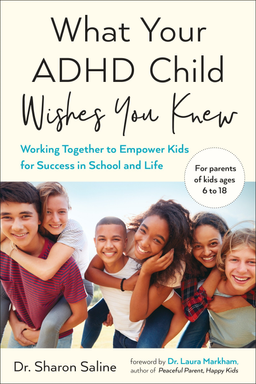
What if your child isn’t being defiant—but simply asking, in their own way, to be understood? Dr. Sharon Saline’s What Your ADHD Child Wishes You Knew begins from this provocative question. In her more than twenty-five years as a clinical psychologist, Saline has heard again and again from children with ADHD that they feel misunderstood, criticized, or unseen. This book flips the usual script by centering those children’s voices and teaching parents how to truly listen—so they can build empathy, cooperation, and confidence instead of confusion, shame, and conflict.
Saline argues that most family struggles around ADHD arise not from unwillingness, but from misalignment. Kids with ADHD usually want to do well, but executive functioning challenges make it harder to follow through. Parents, meanwhile, interpret these stumbles as misbehavior, which triggers frustration and cycles of negativity on both sides. The author’s antidote is deceptively simple: listen first, connect second, correct last. The key, she explains, is to create a foundation of mutual understanding using what she calls the Five C’s of ADHD Parenting—self-Control, Compassion, Collaboration, Consistency, and Celebration.
Why Listening Matters More Than Lecturing
The book’s opening chapters ask you to imagine seeing the world through your child’s eyes—experiencing time, memory, emotion, and distraction the way they do. When nine-year-old Oliver complains that homework with his mother feels like a fight, or seventeen-year-old Amari describes ADHD as “trying to pedal uphill on a bike that’s not in gear,” Saline reminds parents that these aren’t excuses—they’re windows into reality. By listening to these experiences, you shift from judging behavior to understanding capacity. ADHD brains develop more slowly and manage executive functions—planning, emotional regulation, working memory—differently. When you recognize that truth, you respond with empathy rather than anger.
Saline contrasts her empathetic, partnership-based model with the older “authoritarian” style of parenting (“Because I said so”) that dominated past generations. Citing psychologist Diana Baumrind’s research and Alfie Kohn’s advocacy of unconditional parenting, she argues that warmth and collaboration—not punishment—are the true motivators for growth. The parent who listens is, ultimately, the parent who teaches most effectively.
Inside the ADHD Mind
Saline helps parents decode the inner workings of ADHD by combining scientific clarity with real-world examples. ADHD, she explains, is a developmental lag in the brain’s management system, not a moral flaw. The frontal lobes—the brain’s “director”—mature more slowly, delaying skills like impulse control and organization. Neurotransmitters such as dopamine and norepinephrine function differently, making focus and motivation harder to sustain. She introduces the language of “hot” and “cool” executive functions to describe behavioral (hot) versus cognitive (cool) challenges. Children with ADHD are not lazy; their brains simply need extra scaffolding to self-regulate.
The book is filled with kids’ explanations of how this feels: “My brain goes fast and I can’t catch it,” one says. Another jokes she has a “bullet brain.” These voices are poignant, funny, and revealing—and they constantly remind parents that ADHD doesn’t erase intelligence, creativity, or kindness. It just scrambles the timing of how those qualities show up.
The Five C’s: A Framework for Empathic Parenting
From this understanding, Saline leads parents through the Five C’s—each a practical and emotional tool for transforming family life:
- Self-Control: Manage your emotions before addressing your child’s. When you breathe deeply instead of reacting, you model calm for them to imitate.
- Compassion: See your child where they are—not where you wish they were. Compassion replaces criticism with curiosity.
- Collaboration: Work with your child to craft solutions, from chore charts to school routines, rather than imposing rigid rules.
- Consistency: Keep boundaries steady and predictable so trust can grow, without expecting perfection from anyone.
- Celebration: Notice progress constantly. ADHD kids internalize failure easily, so small successes need spotlighting to build self-esteem.
Together these C’s model resilience. They train both parent and child to recognize setbacks as learning opportunities—a philosophy echoed by thinkers like Daniel Goleman (Emotional Intelligence) and Ross Greene (The Explosive Child), who emphasize relationship-based problem solving.
Why It Matters
Understanding your ADHD child changes everything because it alters not just how you discipline, but how you connect. Families learn to replace shouting matches with problem-solving sessions, to focus on effort instead of outcome, and to recognize that emotional regulation is as teachable as reading. Saline’s approach moves families from correction to connection—an idea that resonates deeply in a culture obsessed with fixing kids instead of accepting them.
Ultimately, this book insists that ADHD can be a source of creativity and resilience when nurtured rather than shamed. You become not your child’s manager but their coach and ally. By developing the Five C’s, you help your child move from feeling “broken” to feeling capable, from chaos to cooperation, and from frustration to hope. That shift—from control to connection—is the heart of what your ADHD child most wishes you knew.