
Idea 1
Becoming Confident, Comfortable, and Successful When You’re New
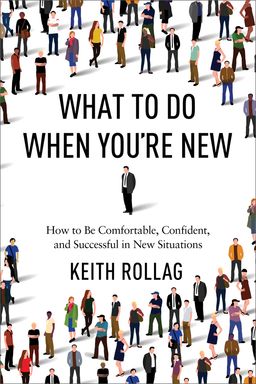
When was the last time you walked into a room full of strangers, started a new job, or joined a new class and felt the anxious flutter of being an outsider? In What to Do When You’re New, organizational researcher Keith Rollag digs deep into this universal human experience—the unease of being new. He argues that success in nearly every domain of life depends on our ability to master the art of starting over. From first impressions at a new job to taking on new hobbies or connecting with neighbors, how we navigate newness strongly shapes our growth, satisfaction, and happiness.
What the Book Argues
Rollag’s central thesis is simple but profound: to achieve almost anything meaningful in life, you must first become skilled at being new. He contends that while humans have evolved to be cautious and even fearful around unfamiliar people or situations, these ancient instincts no longer serve us well in the modern world. Instead of danger, today’s new situations usually present opportunity. Yet our hardwired “stranger danger” reflex and social conditioning can hold us back—keeping us from introducing ourselves, asking questions, or starting relationships that could change our lives.
To solve this tension, Rollag offers a science-backed and practice-driven framework. He identifies five critical newcomer skills that anyone can learn and improve through reflection and practice: introducing yourself, remembering names, asking questions, starting relationships, and performing in front of unfamiliar people. These skills, he explains, underlie success and confidence whenever we’re new—whether taking a leadership role or just attending a neighborhood barbecue.
Why We Struggle with Being New
Rollag blends psychology, anthropology, and neuroscience to show why our anxiety in new situations is not a personal failing—it’s evolutionary baggage. Early humans rarely met strangers. In small hunter-gatherer groups, unfamiliar people often signaled threat, competition, or danger. Being cautious ensured survival. Fast forward to today, and our brains still react as though meeting a new coworker is akin to confronting an intruder on the savanna. Add to this our childhood lessons—“don’t talk to strangers”—and our cultural fear of rejection, and it’s no wonder we hesitate.
Yet, as Rollag reminds us, modern life demands we meet strangers constantly. We change jobs, relocate, attend events, and collaborate across teams and cultures. The very things that bring success—networking, learning, trying new things—are built on comfort with being new. Overcoming this mismatch between ancient instincts and modern realities, he says, requires mindful reflection and deliberate, low-risk practice in these skills.
The Five Skills that Drive Success
Much of the book reads like a practical coaching manual for the newcomer’s journey. Rollag’s research across industries and communities shows that those who thrive in new environments consistently do five things well:
- Introducing themselves: They take initiative and reduce social distance confidently.
- Remembering names: They make people feel seen and build connection faster.
- Asking questions: They accelerate learning and engagement instead of guessing silently.
- Starting relationships: They create trust and belonging through empathy and reciprocity.
- Performing new things publicly: They manage nerves, embrace mistakes, and focus on getting better, not immediately being good.
Each skill has its own psychology, challenges, and improvement techniques. For example, remembering names isn’t about bad memory but about divided attention during introductions. Asking questions effectively depends on overcoming the fear of looking incompetent. Performing in new settings hinges on adopting what he calls a “getting better” mindset rather than a “being good” one (a concept inspired by Carol Dweck’s work on growth mindset).
Overcoming Hardwired Anxiety
Rollag dedicates a significant part of the book to why we feel nervous even when logic says there’s little risk. In a striking example, he cites experiments where researchers told participants they were newcomers in a group—even when that wasn’t true—and those participants immediately became more anxious and less creative. That self-perception of being “new” automatically triggers vigilance and self-doubt. Understanding this is empowering: it means anxiety is a cue, not a command. You can reframe it as alertness or excitement rather than danger.
From Reflection to Mastery
Just as elite athletes analyze and refine their technique, Rollag argues that social confidence also comes from deliberate practice. Using insights from psychologist K. Anders Ericsson’s research on expertise, he encourages readers to treat newcomer situations as structured opportunities to learn. By observing your behavior, questioning your assumptions, and trying micro-experiments—like introducing yourself to a barista or asking one more question in a meeting—you begin to rewire your internal “stranger danger” response. Over time, this builds competence and comfort until confidence becomes second nature.
Why It Matters Now
In a hyperconnected, constantly changing world, our careers and personal growth depend more than ever on adaptability. As Rollag puts it, being new isn’t something to avoid—it’s something to practice. Whether stepping into a leadership role, joining a new team, starting at college, or picking up a new skill later in life, learning how to be at ease with being new can open doors that most people are too nervous to knock on. Rollag’s message is hopeful: with mindful reflection and small, deliberate actions, anyone—introvert or extrovert, seasoned executive or student—can transform anxiety into curiosity and insecurity into confidence.