
Idea 1
Thriving in the Age of Intelligent Machines
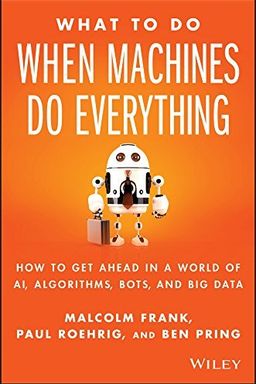
What will you do when machines can do almost everything you can? This is the provocative question that powers What to Do When Machines Do Everything by Malcolm Frank, Paul Roehrig, and Ben Pring. The authors contend that a Fourth Industrial Revolution, driven by artificial intelligence (AI), data analytics, and automation, is rapidly reshaping the foundations of work and industry. Their core message is simple yet urgent: you must learn to partner with technology—to thrive rather than be replaced.
The Age of the New Machine
Frank and his coauthors describe how artificial intelligence has moved from theory to practice. The examples are everywhere: Alexa and Siri manage household tasks, Google’s algorithms outperform humans at complex games, and AI-based diagnostics outshine doctors in speed and accuracy. Yet, this is only the beginning. They capture this moment as one where we move from machines that do to machines that think. These systems of intelligence—software that learns and improves on its own—constitute the foundation of what the World Economic Forum calls the Fourth Industrial Revolution.
The authors argue that previous industrial revolutions transformed manual labor; this one targets knowledge work. What steam engines were to muscle, AI is to the mind. But rather than eliminating work entirely, history suggests that each technological wave has created more prosperity and new types of jobs. The task now is to learn how to get ahead—to act proactively rather than wait for disruption.
Why This Revolution Differs from the Last
The authors place today’s digital transformation into historical perspective using economist Carlota Perez’s idea of technological cycles. Each revolution brings an initial burst of innovation, followed by economic stalls and eventually a boom. We are now completing a stall period where productivity hasn't matched technological promise—but this lull precedes massive digital expansion. The authors foresee technology infiltrating all industries: from finance to healthcare, from education to manufacturing, connecting everything through sensors and data (“ubiquitech”).
They predict that established companies—not just Silicon Valley start-ups—will dominate the coming boom. GE, Toyota, and Nike, for instance, can marry deep industry knowledge with newfound digital capabilities. These are the future winners, the hybrid enterprises that combine muscle with machine intelligence.
The AHEAD Framework
To help organizations adapt pragmatically, the authors introduce a five-part model called AHEAD: Automate, Halo, Enhance, Abundance, and Discovery. Each word represents both a mindset and a strategic directive for thriving amidst AI-driven change:
- Automate: Use machines to take over routine computational tasks to cut costs and increase efficiency.
- Halo: Instrument everything—products, people, and processes—to create “Code Halos,” the digital selves that generate data insights.
- Enhance: Amplify human performance through better tools and intelligent collaboration with machines.
- Abundance: Use technology to reduce prices and open access, thereby growing markets exponentially (as Henry Ford did for cars).
- Discovery: Apply AI-driven data and imagination to innovate continuously, finding new products and industries.
This model is less about waiting to be “disrupted” and more about choosing proactive transformation. The authors advocate courage—leaders must digitize core processes today, not cling to outdated business models. The decision to act now will separate those who use machines from those replaced by them.
From Anxiety to Optimism
While fears of automation dominate headlines, the authors maintain an optimistic lens. They remind us of the Luddites who smashed looms in the 19th century only to be proven wrong—industrial advances created millions of jobs over time. Digital transformation, they argue, will follow the same pattern. AI will augment rather than annihilate most roles. Teachers, nurses, and managers will be empowered by intelligent tools (as GPS enhances drivers or AI tutors help educators). Automation may displace some tasks, but new kinds of knowledge work will emerge at large scale.
Ultimately, Frank, Roehrig, and Pring’s thesis is that it’s not about what machines will do—it’s about what you will do when machines do everything. They call for pragmatic optimism: embrace technology, reimagine work, and focus on creating value where human judgment and creativity remain irreplaceable. Their message to individuals and organizations alike is both hopeful and demanding: act now while opportunities abound, because hesitation will only guarantee obsolescence.