
Idea 1
Inside the Business School Crucible
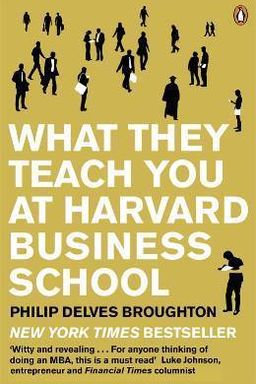
What happens when an institution trains the world’s corporate elite to think, decide, and lead? In this book-length portrait of Harvard Business School (HBS), the author takes you through the intellectual, social, and moral architecture of one of the world’s most influential MBA programs. HBS promises to teach judgment under pressure — not memorization — through a curriculum built around the case method and a culture calibrated for competition, collaboration, and self-discovery. The school’s trademark approach pushes you into ambiguous business situations and asks the relentless question: “What would you do?”
Yet, beyond its classrooms and cases lies a deeper inquiry — into power, values, and the privilege of being trained to command. Across finance, strategy, negotiation, and ethics, the author reveals both the techniques HBS instills and the contradictions it struggles to reconcile: ambition and integrity, self-interest and service, wealth and purpose.
The Discipline of Decision
At HBS, learning means learning to decide. Each day, students analyze intricate case studies — from medieval barons’ bookkeeping puzzles to the Butler Lumber Company’s liquidity crisis — and must recommend actions amid uncertainty. Professors like Mihir Desai and David Hawkins treat the classroom as a “judgment gym,” where you develop intellectual muscle by defending your reasoning before ninety sharp peers. The process is intentionally uncomfortable; it transforms your instinctive reactions into structured, evidence-backed decisions (reminding you that data is always shadowed by bias and interpretation).
A Microcosm of Power
The campus itself mirrors the world it prepares you to inhabit: well‑curated, affluent, and socially charged. With its leather couches, espresso bars, and Four Seasons–like amenities, HBS creates what students call “the bubble.” Section life — ninety people who share every class for a year — becomes both family and theater. Through social rituals like Holidazzle or the Priscilla Ball, friendships are formed and reputations made. But beneath these rituals lies a hierarchy of prestige, ambition, and subtle pressure to conform to the brand’s ideals: polished leadership, relentless energy, and success defined by externals.
The Pressure of Performance
The “RC year” is famously intense: ten courses, hours of preparation per night, forced grading curves, and demanding recruiters all competing for your time. Half your grade depends on class participation, so silence costs you. Recruiting season — nicknamed “hell week” — tests stamina as much as skill. Banks and consultancies parade irresistible offers while students privately admit, “We are insecure overachievers.” The structure works as a crucible: it aims to compress learning and expose values through stress.
Learning to Think in Systems
From finance to strategy, the HBS curriculum teaches frameworks that connect operational decisions to their financial and strategic consequences. Finance courses train you to decipher the relationship between cash flow and value creation; strategy professors like Michael Porter and Felix Oberholzer‑Gee show you how industry forces and activity systems form the backbone of competitive advantage. The same logic applies across fields: the goal is to cultivate integrative thinking — the ability to connect marketing, capital, culture, and ethics into one coherent theory of action.
Leadership, Character, and Choice
As the curriculum turns to leadership and identity, students are confronted with the self behind the analyst. Courses like LEAD and Leadership and Corporate Accountability invite you to confront uncomfortable questions about motives and morals. Through feedback exercises like the Reflected Best‑Self, you collect stories from colleagues and assemble a mosaic of your strengths and blind spots. (In spirit, it resembles Jim Collins’s emphasis on “Level 5 leadership” — humility fused with fierce resolve.) Each reflection pushes you to link results with responsibility and to consider how power should be wielded once earned.
Beyond the Spreadsheet
The school preaches quantitative mastery but increasingly reckons with its social footprint. Debates around private equity, corporate ethics, and the post‑2008 crisis force recognition that financial genius without moral weight can corrode trust and equity. HBS’s belief that MBAs “shape institutions that shape lives” becomes both aspiration and warning — a call to use privilege with conscience. Whether in entrepreneurship or governance, the ultimate lesson is that leadership without moral awareness risks becoming efficient harm.
The Personal Reckoning
As graduation nears, reflection replaces adrenaline. The question shifts from “What can I do?” to “What should I do — and for whom?” The book ends not with a formula but with an invitation: to treat the MBA not as a credential but as a trial of identity. You emerge with sharper analytical tools, powerful networks, and sobering clarity that success has a moral dimension. The real test of the HBS education begins only when you leave the bubble — when you must decide who you want to become with everything you’ve learned.
Thus, the narrative of Harvard Business School is not merely a chronicle of classroom technique or corporate grooming. It is an anatomy of modern ambition: how we teach leaders to act, and what happens when we mistake technical brilliance for wisdom. The case method’s final question — “What would you do?” — lingers as the book’s closing moral, reminding you that judgment is the hardest subject of all.