
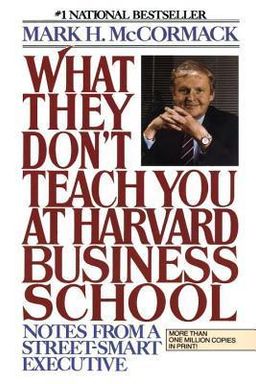
What They Don’t Teach You at Harvard Business School cover

What They Don’t Teach You at Harvard Business School

by Mark H McCormack

Discover the unsung secrets of business success with Mark H McCormack''s ''What They Don’t Teach You at Harvard Business School.'' Learn real-world strategies for making powerful impressions, understanding colleagues, and leveraging discomfort for success-insights only seasoned professionals can offer.

The Real Education of Business: Street Smarts Over Schooling

How much of what truly matters in business can be learned in a classroom? Mark H. McCormack’s What They Don’t Teach You at Harvard Business School argues that the fundamentals of real business success are not found in case studies or academic models but in the messy, human realities of everyday commerce. McCormack—founder of IMG and widely regarded as the father of modern sports marketing—insists that what differentiates the effective from the average is street smarts: the applied awareness of how people behave, how to read them, and how to use instinct and intuition to make things happen.

He wrote this book after years of working alongside athletes like Arnold Palmer, Jack Nicklaus, and Gary Player, building a million-dollar company from a $500 start-up. Drawing on his experiences with executives, athletes, and global corporations, McCormack distills what he calls a real-world MBA—insights about people, negotiation, selling, decision-making, and leadership that every ambitious professional should know but rarely does.

From Theories to Reality: Why Business School Falls Short

At Harvard and places like it, McCormack observed that students tried to fit every question into a tidy theoretical model—as if by turning a crank, a perfect answer would appear. But in real business, there are no formulas that always work because there are no standard people. You must adapt, read emotions, anticipate reactions, and gauge unspoken motives. The heart of business, he argues, is human behavior, not spreadsheets.

This explains why, as McCormack found, some of the smartest MBAs he hired failed at essential tasks like negotiation or sizing up a client. Their knowledge was analytical, not instinctive. Their learning stopped at the surface of logic. He contrasts them with self-made entrepreneurs who, though less educated, mastered the practical skill of knowing people—of sensing when to push, when to pause, and when to close.

The Book’s Three Core Domains

McCormack structures his book around three great capacities: understanding people, selling and negotiating, and running a business. Each section explores the subtle human judgments and micro-behaviors that academics often ignore but that define success in the real world.

  • People: He begins with reading others—why studying their tone, words, body language, and habits can reveal more than their resumes. This is the essence of “people sense.”
  • Sales and Negotiation: He explores how influence works in practice—why silence is often your strongest tool, why timing can make or break a deal, and why small psychological edges matter more than perfect logic.
  • Managing and Execution: He ends with leadership: running systems without letting them run you; decision-making that relies on intuition as much as on data; motivating people and structuring time for maximum output.

Why This Matters: The Human Edge

Throughout the book, McCormack’s argument touches on a larger insight: business is not about products or strategies—it’s about perception, persuasion, and persistence. Every deal, job, and company rises or falls on people’s psychology. If you can grasp what drives people—how they make choices, justify mistakes, or protect their egos—you can lead, sell, and negotiate better than 90 percent of your peers.

This is why the world’s most successful figures—from Arnold Palmer to Lew Wasserman of MCA—shared not just intelligence but perceptiveness. They worked from instinct honed by experience. McCormack’s thesis predicts today’s business reality: emotional intelligence, adaptability, and agility often outperform credentials and IQ.

What You’ll Learn

Across fourteen chapters, you’ll learn how to sharpen your “people radar,” craft impressions that open doors, take the edge in tough situations, and turn crisis into opportunity. You’ll discover how the best salespeople sell without selling, how top negotiators turn emotion into leverage, and how great managers keep organizations dynamic by breaking convention. McCormack even shows that success depends on managing yourself—your time, temperament, and sense of humor—because effectiveness starts within.

Ultimately, McCormack’s message is timeless: success favors those who think less like professors and more like streetwise observers of human nature. Your best classroom, he suggests, is the real world itself. The more you engage with it—by listening, noticing, adapting—the more skillful you become at the one thing they can’t really teach you at Harvard: understanding people.


Reading People Is the Ultimate Business Skill

At the heart of McCormack’s philosophy is a simple assertion: business is people. Products, profits, and plans all depend on understanding human behavior. The ability to read people—to know what they want, what they fear, and what they hide—matters more than data or degrees. It’s what McCormack calls a people sense.

The True Test of Awareness

McCormack opens with two contrasting stories: meeting Richard Nixon in 1963 and working with flamboyant golfer Doug Sanders. Nixon, he recalls, spoke in rehearsed platitudes, using the same robotic sentences every time. Sanders, on the other hand, once mailed a cash commission back to McCormack unprompted after a small event—an act of spontaneous integrity that revealed his character. The lesson? Tiny gestures reveal everything about people’s authenticity. Real insight comes not from what they say, but how they act when unseen.

The Psychology Behind Perception

To read people, McCormack advises that you listen aggressively and observe aggressively. Don’t just hear words; notice tone, pace, eye contact, posture, and subtle contradictions. When a client says, “We’ll think about it,” they may already have. When someone smirks during a meeting, it signals more than amusement—it may be disagreement or insecurity. You’re surrounded by clues. The challenge is tuning into them.

He encourages what he calls a “seven-step plan to reading people”: listen aggressively, observe carefully, talk less, revisit first impressions, take time to use what you learn, be discreet, and stay emotionally detached. In other words, think like a seasoned poker player—attuned to others yet in control of your own reactions.

Seeing Beneath the Ego

Ego, McCormack writes, is the great variable of business. Every company has as many egos as employees. But rather than fight them, learn to understand them. People with strong egos and security in themselves make better partners and faster decisions. Weaker egos delay, vacillate, and hide behind protocol. Learning the ego landscape of a room lets you decide how directly or indirectly to pitch an idea. (This anticipates Daniel Goleman’s work on Emotional Intelligence, two decades later.)

Ultimately, the best readers of people can predict behavior. Just as a seasoned golfer senses the wind without needing a weather app, the street-smart executive can foresee reactions before they occur. That’s not magic—it’s empathy applied as strategy.


Mastering Impressions and Influence

How do people see you—really see you—in business? According to McCormack, every interaction sends signals, whether you intend it or not. Success depends on crafting those signals deliberately. The goal isn’t false charm but strategic authenticity: projecting competence, warmth, and trustworthiness.

Little Details, Big Effects

In business, small cues—how you greet someone, how neatly you type a letter, how efficiently you return a call—shape big impressions. McCormack recalls always reintroducing himself even to people he’d met before (“I’m Mark McCormack”) because assuming recognition risks embarrassment on both sides. Ray Cave of Time magazine used an easy trick: greeting every maître d’ with “Nice to see you again,” even if he’d never met him before. It made people feel valued.

Opposite Expected Behavior

One of McCormack’s favorite tactics is doing the opposite of what people anticipate. If a client expects a hard sell, be disarmingly modest. If you’re seen as uninformed, drop one sharp insight to surprise them. It disarms defenses and resets power dynamics. Similarly, knowing how your secretary, office, or emails reflect on you matters—how they treat outsiders is how you’re perceived internally.

Humor and Humanity

Among all impression tactics, McCormack claims a sense of humor is the most valuable business asset. Humor humanizes you, diffuses tension, and restores perspective. In one Ford Motor board meeting, an impasse over cost-cutting was broken when a veteran joked, “Why don’t we close every plant and really save some money?” Everyone laughed—and the decision shifted. Humor, he argues, creates leverage by softening walls.

The takeaway: success often depends less on logic than on how people feel after dealing with you. Make them feel seen, respected, and at ease—and they’ll keep saying yes.


Taking the Edge Without Losing Integrity

Being “street smart” means knowing when and how to tilt a situation slightly in your favor without crossing ethical lines. McCormack calls this taking the edge—using information, intuition, and timing to create advantage. The idea isn’t manipulation but awareness sharpened into action.

Preparation + Perception

Before you can take an edge, you need facts. McCormack stresses doing the “spadework”—understanding every player, every dynamic, every unspoken rule. During early deals for the British Open’s U.S. TV rights, he noticed negotiations stalled whenever too many decision-makers were present: egos collided, no one yielded. He ended those meetings early, then secured the deal privately the next day with the key executive alone. The result? A long-term contract still active decades later.

The Opportunist’s Mindset

Sometimes the edge appears unexpectedly. Rafael Tudela, a Venezuelan entrepreneur McCormack admired, once turned a $20 million butane deal into a fortune by spotting what others missed: Argentina needed to sell beef. Tudela traded beef for oil shipping contracts and built an empire. As McCormack puts it, “He saw connections others didn’t—even between cows and crude oil.” The lesson: opportunity hides in mismatched needs.

Patience as Power

Taking the edge often means waiting. When crisis strikes, don’t react immediately. Step back, think, then act—from control instead of emotion. McCormack shares that 90% of his company’s successes involved patience, and 90% of failures came from its absence. When Herschel Walker initially signed elsewhere, McCormack waited calmly. A year later, Walker joined IMG—because patience invited timing’s ally: perspective.

The “edge,” then, isn’t trickery. It’s mastery of human tempo: collecting facts, staying alert for cracks, respecting timing, and acting when others overreact.


The Art and Psychology of Selling

McCormack dismantles the myths of selling. Everyone sells, he argues—from teenagers convincing parents to executives pitching clients. What separates pros is their emotional intelligence: sensitivity, persistence, and self-belief.

Fear and Rejection

Most people fail in sales not from lack of technique but from fear—of failing, imposing, or being judged. McCormack insists fear is a good sign. It shows you care. Legends like Bjorn Borg and Arnold Palmer, he recalls, were terrified on match point because they cared so much about winning. The same emotional tension fuels great sellers—the willingness to feel stakes deeply without letting it paralyze action.

Empathy as Strategy

He reframes selling from pushy persuasion to aligned empathy. The best salespeople sense when they’re imposing and wait. Patience and timing, not aggression, build rapport. Selling, he reminds us, is about helping someone buy what already makes sense. That’s why authentic belief in your product is essential: if you think you’re helping, not taking, your tone and timing change naturally.

Selling as Leadership

In his view, all leadership is salesmanship. CEOs persuade employees just like agents persuade clients. Morgan Stanley’s executives, he notes, once “sold” the Teamsters Union by presenting themselves as humble, working-class men—telling personal stories instead of flaunting MBAs. Their empathy bridged class divides better than analytics ever could. Selling, done right, isn’t manipulation; it’s human connection applied with purpose.


Negotiation as a Mind Game

For McCormack, negotiation is applied psychology: the art of making agreements that leave everyone thinking they won. “Toughness” is overrated; preparation, timing, and emotional control matter more. A negotiation begins long before numbers are spoken—it starts the moment impressions are formed.

Structure and Leverage

Every negotiation, he writes, boils down to five questions: What, When, Where, How Exclusive, and How Much. But the real game is trade-offs. During Gary Player’s contract talks with Slazenger, the company demanded only a one-year deal. McCormack proposed an “Australian termination clause”: terminable anytime—with five years’ notice. The formality gave Slazenger control while ensuring Player’s long-term protection. The contract lasted twenty years.

Psychological Currencies

Beyond money, he uses psychological currencies: face-saving options, symbolic gestures, or phrasing that maintains pride. When Allstate Insurance wanted short contracts for Arnold Palmer, McCormack inserted a termination clause that cost slightly more to end than to keep. The result? They never ended it—because ego economics trumped budgets.

Silence, Timing, and Emotional Control

He elevates silence to a tactical art. Once you make your point, shut up. Let the other party break the stillness. In one story, his executive ruined a pitch by restating the positives instead of waiting for the client’s reply. “The joys of silence,” McCormack quips, “can close more deals than another word ever could.”

Negotiation, he concludes, is about curiosity more than control: asking what motivates the other side, trading empathy for advantage, and letting emotion work for you—not against you.


Leading and Growing a Business

McCormack’s insights on management are as pragmatic as his views on selling. Running a company, he writes, is like handling momentum—it slows when bureaucracy thickens. The challenge is to grow without hardening into systems that stifle flexibility.

Start Small, Think Flexible

He recalls how IMG began with $500 and one handshake. By growing slowly, studying each sport before diversifying, and keeping decentralization, he preserved the energy of a start-up even as IMG became global. He divided the company into small autonomous divisions so everyone felt “like a big cog in a small wheel.” The result was agility and ownership—long before “agile management” became a buzzword.

Delegation, Flexibility, and Fairness

One sign of maturity, he says, is learning to delegate what you can—not just what you dislike. Lew Wasserman, his mentor, taught him to hire people smarter than himself and sell the company, not his personal brand. McCormack also stresses fair pay for proven performance, transparency in firings, and treating loyal employees with respect. “Fire people fairly,” he advises—help them land elsewhere if they’ve served well; cut swiftly if they’ve betrayed trust.

Consistency and Innovation

He defines true management philosophy simply: “Be flexible and strive for consistency.” Systems should bend without breaking. He warns against overreaction cycles—companies that cling to old rules, then throw them all out overnight. Effective leadership means steady values with adaptable tactics.

Above all, he sees leadership as teaching: “Take five hours to save five minutes,” meaning, invest in training now to multiply future output. Patience in cultivating people, he argues, builds the only real moat a company can have—trusting, capable humans.


The Inner Game of Business

The book closes with a meditation on psychology—the champion’s mindset that separates the merely good from the truly great. Borrowing from his work with elite athletes, McCormack shows that business success also depends on how you manage your inner dialogue.

Dissatisfaction as Fuel

True performers, he observes, never rest. After every win, they see the next hill. Satisfaction breeds stagnation; dissatisfaction breeds momentum. This mirrors Carol Dweck’s later concept of the growth mindset: seeing achievement not as a destination but a continual process.

Peaking on Command

The best learn to harness intensity. They perform at their peak when stakes are highest, just as champions rise at major tournaments. In business, this means focusing energy under pressure—getting your mental “muscles” ready for defining moments.

The Killer Instinct

Finally, McCormack reframes the so-called killer instinct not as aggression but as perspective. Top achievers distort reality slightly—they tell themselves they’re always behind, even when ahead, which keeps them sharp. During a match between Arnold Palmer and Gary Player, both complained the other “never missed a shot,” unaware they were tied. That illusion of being behind kept them fighting. McCormack leaves readers with this paradoxical advice: stay humble in victory, hungry in progress, and never assume the game is over.

Dig Deeper

Get personalized prompts to apply these lessons to your life and deepen your understanding.

Go Deeper

Get the Full Experience

Download Insight Books for AI-powered reflections, quizzes, and more.