
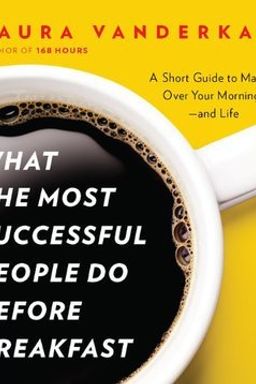
What the Most Successful People Do Before Breakfast cover

What the Most Successful People Do Before Breakfast

by Laura Vanderkam

In ''What the Most Successful People Do Before Breakfast,'' Laura Vanderkam offers a blueprint for seizing the early hours to transform your day. Discover proven strategies to create effective routines, balance work and life, and unlock personal growth. Embrace mornings as your secret weapon to achieving more at work and home.

Transforming Your Mornings, Transforming Your Life

What if the most important hours of your life happen before breakfast? That’s the central question Laura Vanderkam asks in What the Most Successful People Do Before Breakfast. She argues that how you use your early hours—before the world clamors for your attention—determines not just how your day unfolds but how your life evolves. Success, she contends, is not about raw talent or resources but about consistently making space for meaningful, non-urgent priorities when your energy and willpower are strongest.

Vanderkam draws from her deep research in time management and interviews with executives, entrepreneurs, and creatives to reveal a simple truth: mornings are the most underused yet most powerful part of the day. While most people start their mornings in chaos—hitting snooze, racing through routines, and reacting to emails—the most successful people are using those same hours to move toward their long-term goals. They’re running, meditating, writing, planning, and connecting with others before their day officially begins.

Why Mornings Matter More Than You Think

In Vanderkam’s view, mornings are sacred because they come with three rare ingredients: energy, control, and willpower. Psychologist Roy F. Baumeister’s research, which she cites, demonstrates that willpower functions like a muscle—it’s finite and weakens with use over the day. That’s why people are more likely to overeat, skip workouts, or make poor decisions at night. In contrast, mornings offer a fresh supply of willpower. Before distractions pile up, you’re more capable of doing what truly matters. “The hopeful hours before most people eat breakfast,” Vanderkam writes, “are far too precious to be blown on semiconscious activities.”

Successful people don’t leave their priorities to chance. Former PepsiCo CEO Steve Reinemund ran four miles, prayed, and had breakfast with his family before heading to the office every day. Reverend Al Sharpton lost over 100 pounds by committing to early workouts before dawn. These examples reveal that meaningful actions—whether for career, relationships, or health—don’t magically happen later. As Vanderkam notes, “If it has to happen, it has to happen first.”

From Chaos to Choice

Most people think they don’t have time in the mornings because those hours seem consumed by survival tasks: getting kids ready, battling commutes, and rushing into the day. Vanderkam reframes this assumption. Morning chaos is not inevitable—it’s a byproduct of letting other priorities dictate your rhythm. When you consciously design your mornings, you reclaim control. Instead of reacting to life, you start shaping it.

She shares stories of ordinary people who made that transformation. For example, Debbie Moysychyn, a university executive, discovered early mornings were her only uninterrupted hours for deep work. By turning those quiet moments into project time, she achieved more before 8 a.m. than she had in entire days. Similarly, lawyer Kathryn Beaumont Murphy turned her early hours into relaxed “Mommy-and-me” time, replacing frustration over missed family dinners with joyful morning rituals. These stories underscore Vanderkam’s core idea: your mornings should nurture your career, relationships, and self—the three pillars of a fulfilling life.

Small Habits, Big Changes

The book doesn’t romanticize early rising for its own sake. Instead, Vanderkam teaches a system for making mornings productive and meaningful: track your time, imagine your ideal morning, plan the logistics, build habits gradually, and tune them over time. This five-step process connects big aspirations to daily routines. It’s about designing your mornings around what truly matters to you.

“A small daily task, if it be really daily,” she quotes novelist Anthony Trollope, “will beat the labors of a spasmodic Hercules.”

Each morning victory compounds into what happiness researcher Shawn Achor calls a “cascade of success.” Every intentional win—writing a page, exercising, connecting with family—builds optimism and momentum for the day. Ultimately, Vanderkam argues, mornings are not just about productivity but about hope. They remind you that each day is a new chance to live deliberately, starting before breakfast.


The Madness of Mornings

If you’ve ever stumbled through a hectic morning—half-awake, juggling emails, toast, and traffic—Laura Vanderkam understands. In her chapter “The Madness of Mornings,” she paints an all-too-familiar picture: mornings consumed by chaos, leaving no time for reflection or meaningful action. Yet she insists it doesn’t have to be that way. The difference between stressed-out mornings and serene, productive ones lies in intentionality.

From Reactive to Purposeful

Most people start their days reacting—to alarm clocks, children, or overflowing inboxes. Vanderkam found that this reactive start drains mental energy and leaves little space for high-value activities: nurturing career goals, family relationships, or self-care. She calls these our “core competencies,” areas that require time and consistent investment but rarely scream for attention the way urgent, routine tasks do. Without conscious effort, the most precious hours slip away to trivialities.

In contrast, successful people use mornings intentionally. Reverend Al Sharpton works out before dawn in his apartment gym, ensuring his health receives attention before daily demands appear. James Citrin, a leadership consultant, interviews top CEOs and finds they share similar habits: early rising, exercise, reflection, and focus. For them, mornings are not about reacting—they’re about leading.

Owning the Early Hours

What unites these high performers is their understanding that early hours belong to them alone. Before emails arrive or kids wake up, they can run, read, think, or pray without interruption. These quiet rituals build momentum for the day and create a sense of calm control. Vanderkam calls this “paying yourself first”—a metaphor borrowed from personal finance. Just as saving money at the start of each month ensures wealth accumulation, dedicating mornings to what matters most ensures a richer, more purposeful life.

The takeaway? Mornings may be busy, but they hold unlimited potential when designed with care. The key is seizing them before they’re hijacked by routine and noise.


A Matter of Willpower

Why does it seem easier to make good decisions in the morning but nearly impossible after dinner? Vanderkam explores this through behavioral science, particularly the work of psychologist Roy Baumeister. His research shows that willpower functions like a muscle: it gets fatigued through use. By evening, daily decisions and frustrations—traffic jams, demanding bosses, crying kids—have drained your self-control. That’s why diets break at night and gym plans vanish by dusk.

The Willpower Advantage

This depletion means mornings are uniquely suited to tasks requiring discipline and focus. After sleep restores mental energy, you’re more inclined to exercise, plan, and create. Vanderkam’s simple yet powerful insight: treat willpower as a renewable morning resource. Use it early for high-value, internally motivated actions—writing a paper, meditating, or developing a skill—before it’s spent on reacting to the world.

She contrasts this with futile attempts to tackle meaningful work after hours, when distractions and fatigue conspire against you. By moving key tasks to the early hours, you align with how your mind naturally operates. You also create reinforcing habits—automatic behaviors that preserve willpower. Just as brushing your teeth no longer requires effortful decision-making, habitual morning rituals like running or journaling eventually become effortless.

“Getting things down to routines and habits takes willpower at first,” Baumeister explains, “but in the long run conserves willpower.”

That’s the scientific reason early risers gain an edge. They automate success before the world begins to test their energy reserves.


Focus on What Truly Matters

Vanderkam identifies a clear pattern among successful people: their mornings are built around three types of nurturing activities—career, relationships, and self. These aren’t urgent or externally demanded but create long-term happiness and fulfillment when practiced daily.

1. Nurturing Your Career

Morning hours are ideal for deep work, before interruptions and meetings consume the day. Vanderkam features Debbie Moysychyn, who used early mornings for focused writing and strategic work at Brandman University—time that transformed her productivity. Similarly, Charlotte Walker-Said, a University of Chicago historian, writes every morning from 6:00 to 9:00 a.m., advancing her book despite a busy teaching schedule. Their secret is solitude and clarity before email chaos begins.

2. Nurturing Relationships

Morning hours can also strengthen personal bonds. Vanderkam tells of corporate tax attorney Kathryn Beaumont Murphy, who transformed hurried mornings into joyful “Mommy-and-me” time. Instead of battling exhaustion after work, she shared pancakes and storytime with her daughter before school. Other examples include couples like Obie and Mrs. McKenzie, who turn their morning commute into a daily date—a proactive way to stay connected. The lesson: if evenings are chaotic, use mornings to invest in your relationships.

3. Nurturing Yourself

From exercise to meditation, self-care thrives before distractions set in. CEOs like Ursula Burns or Frits van Paasschen start their days with workouts, acknowledging that fitness and mental clarity power everything else. Spiritual practices, too, find sanctuary in early hours. Vanderkam profiles Christine Galib, who begins each day at 5:00 a.m. with reflection and scripture, and Manisha Thakor, who practices meditation to fuel creativity. Each example reinforces a central idea: mornings make space for your best self.


How to Make Over Your Mornings

In the final section, Vanderkam provides a practical five-step process to redesign your mornings and, in turn, your life. This isn’t about waking at 4 a.m. arbitrarily—it’s about aligning your early hours with your deepest values.

1. Track Your Time

Before you change your mornings, understand where your hours currently go. Vanderkam recommends logging an entire week—168 hours—to uncover hidden inefficiencies. Often, the reason mornings feel impossible is because nights are wasteful. Watching TV or scrolling online late consumes sleep time that could fuel a more productive dawn.

2. Picture the Perfect Morning

Once you know your patterns, imagine your ideal start. Maybe it’s a jog, journaling, or breakfast with family. By envisioning the emotional and practical benefits, you transform vague good intentions into motivating goals.

3. Think Through the Logistics

Dreams need structure. Determine wake-up times, bedtime adjustments, and necessary tools. Vanderkam encourages creativity over excuses—find solutions like trading childcare duties, joining a gym with child care, or setting up a home workspace. Removing friction paves the way for consistency.

4. Build the Habit

Changing habits demands willpower, especially initially. Start small—waking 15 minutes earlier, for instance—and reward progress. Vanderkam suggests borrowing ideas from happiness researchers like Shawn Achor, who begins each day listing things he’s grateful for. Creating enjoyable rituals helps you look forward to mornings instead of dreading them.

5. Tune Up as Necessary

Life changes, so your mornings should evolve too. Parenthood, job shifts, or seasons may disrupt your patterns, but the principle remains: mornings are fresh starts. A daily win before breakfast ignites what Achor calls a “cascade of success.” Once your brain registers a morning victory, optimism and motivation ripple across the rest of the day.

Ultimately, Vanderkam leads you back to an empowering truth: you already have the time you need. The question is how you’ll choose to use the precious hours that greet you each sunrise.

Dig Deeper

Get personalized prompts to apply these lessons to your life and deepen your understanding.

Go Deeper

Get the Full Experience

Download Insight Books for AI-powered reflections, quizzes, and more.