
Idea 1
The Moral Limits of Markets
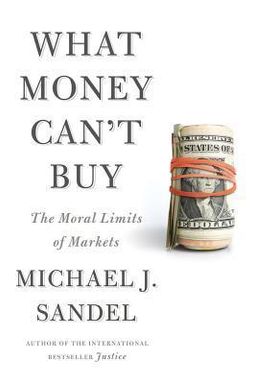
What happens when everything is up for sale—from education and environmental protection to friendship and civic duty? In What Money Can't Buy: The Moral Limits of Markets, philosopher Michael J. Sandel explores one of the most pressing questions of modern life: Are there moral boundaries that markets should not cross?
Sandel argues that over the last few decades, the pervasive reach of market thinking has transformed society. We’ve moved silently from a market economy—a tool for organizing production—to a market society, a way of living where commercial logic governs nearly every human activity. The resulting moral and civic consequences, he asserts, are profound. When everything is for sale, the meaning and value of social goods themselves begin to erode.
A World Saturated by Market Values
From paying for prison cell upgrades to buying access to the carpool lane, from selling naming rights to public spaces to offering cash-for-sterilization programs, Sandel catalogs examples that reveal how the logic of markets has colonized spheres once governed by moral or civic norms. These practices, he insists, are not minor inconveniences but moral turning points. When public goods become private privileges, the sense of shared citizenship and civic equality dissolves.
For Sandel, the key challenge isn’t economic efficiency but moral meaning. Market transactions not only allocate goods—they express the way we value those goods. Paying children to read books might get them to read more, but it teaches them that learning is a chore purchased for money rather than a joy cultivated through curiosity. Selling college admissions to wealthy donors may raise funds but corrupts the ideal of education as a path to merit.
Two Crucial Objections: Fairness and Corruption
Throughout the book, Sandel distinguishes between two main objections to markets: fairness and corruption. The fairness objection centers on inequality—when the poor face coerced choices (like selling organs to survive), market exchanges cease to be truly voluntary. The corruption objection is deeper: even if conditions are fair, putting a price on certain moral or civic goods can degrade them. It changes their meaning, promoting values that corrode the human spirit.
For example, hiring soldiers as private contractors may seem efficient, but it commodifies civic responsibility and weakens the bonds of citizenship. Selling pollution rights might reduce emissions cheaply, but it reframes environmental stewardship as a transaction rather than a shared obligation. These cases demonstrate that markets inject a logic of utility and profit into spheres where dignity and virtue should prevail.
From Economic Success to Moral Crisis
Sandel situates this transformation within what he calls the era of market triumphalism, spanning from the 1980s Reagan-Thatcher period to the post-Cold War boom. Economists celebrated markets as mechanisms for producing wealth, while governments worldwide privatized public functions. After the 2008 financial crisis, however, the moral legitimacy of this faith began to fray. Sandel saw a chance to ask not only whether the markets worked—but whether they should rule our lives.
Drawing on examples from civic life, health, education, sports, and even death, he shows how the hidden costs of commodification aren’t measured in dollars but in the degradation of values. When friendship can be bought, it ceases to be friendship; when loyalty is priced, it becomes labor. This insight, resonant with Aristotle’s notion that virtue is cultivated through practice, underscores Sandel’s central moral vision: markets alter the character of the goods they touch.
Why This Debate Matters
The problem, Sandel warns, is not moralizing against markets but rediscovering public conversation about what goods mean. In an age of partisan shouting and moral silence, he offers a new civic dialogue—a chance to decide, collectively, where markets serve the public good and where they destroy it. Only by reclaiming our role as moral agents, he says, can we stop money’s encroachment into domains of love, virtue, and justice.
“The question of markets,” Sandel writes, “is really a question about how we want to live together. Do we want a society where everything is up for sale, or are there certain moral and civic goods that markets do not honor and money cannot buy?”
In essence, Sandel challenges you to see economics as inseparable from ethics. Understanding what money cannot buy, he insists, teaches us not only how to value markets—but what we truly value as human beings.