
Idea 1
What Matters Most in the Modern World
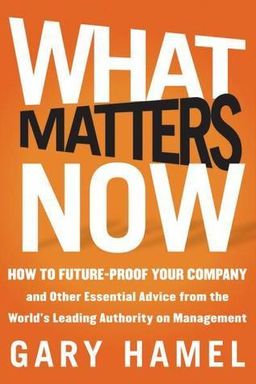
What does it take to thrive in a world of relentless change, ferocious competition, and unstoppable innovation? Gary Hamel’s What Matters Now argues that the practices and principles guiding most organizations are dangerously outdated. He contends that survival and success today hinge on five make-or-break priorities: values, innovation, adaptability, passion, and ideology. Each, Hamel insists, represents not a buzzword but a fundamental necessity for building organizations “fit for the future and fit for human beings.”
The book opens with a call for reinvention: we don't need marginal adjustments or new efficiency drills; we need a complete rethink of management itself. Hamel’s argument is that traditional management—rooted in control and hierarchy—has reached the end of its usefulness. Born during the Industrial Revolution and crafted to maximize predictability and discipline, this model worked when change was slow and markets were local. But now, in an era defined by digital networks, global connectivity, and exponential disruption, these habits strangle creativity and responsiveness.
Values: Rediscovering Moral Leadership
The first of Hamel’s five pillars focuses on values. After repeated economic scandals—from Enron to Lehman Brothers—trust in business has collapsed. Hamel argues that capitalism itself is at risk unless leaders embrace stewardship over self-interest. To repair that trust, managers must prioritize fealty, charity, prudence, accountability, and equity. In his view, launching a moral renaissance isn’t optional—it’s existential. Without ethical behavior, the free market devolves into chaos and greed. He warns, “Executives languish near the bottom of the trust table” and reminds readers that moral decline rarely comes suddenly—it creeps in through small compromises.
Innovation: The Only Sustainable Strategy
Hamel portrays innovation as the lifeblood of enduring success. With ideas spreading globally in seconds, only organizations that innovate constantly can survive. Yet, he laments, “Innovation still happens despite the system, not because of it.” The best contemporary exemplars—like Apple or Google—have embedded innovation into their DNA. For Hamel, sustainable creative energy requires an institutional shift: companies must dismantle bureaucratic barriers so every person can become an innovator. This democratization of creativity is the only defense against commoditization.
Adaptability: Reinventing Success Before It’s Too Late
Adaptability is another recurring theme. Many companies change reactively, in crisis, which makes transformation traumatic and expensive. Hamel challenges leaders to build proactive adaptability into the DNA of their organizations. He draws metaphors from biology—evolution rewards flexibility, not size—and urges managers to act like ranchers moving their herds, not farmers fixed to one patch of land. As examples, he contrasts General Motors’ sluggish fall with newer models like Toyota or Virgin, which reinvented themselves continuously instead of defending the past.
Passion: The Human Energy of Change
Hamel’s fourth pillar is passion—the emotional force behind innovation and adaptability. Modern work environments, he argues, often extinguish enthusiasm with layers of control and risk aversion. In the creative economy, however, competence isn’t enough; it’s ardor that drives breakthroughs. The difference between “insipid and inspired” is passion. Companies must transform workplaces from bureaucratic cages to communities where people bring their whole humanity—emotion, imagination, and voice. Apple’s culture of obsession and Whole Foods’ philosophy of love illustrate what’s possible when organizations kindle genuine excitement.
Ideology: Liberating Organizations from the Creed of Control
Finally, Hamel attacks the reigning ideology behind management: control. Most corporate systems, he writes, “deify control” and crush creative vigor. In a world that rewards uniqueness and flexibility, command-and-control structures are liabilities. Hamel’s antidote is freedom—self-management, transparency, and distributed authority. He highlights pioneers like W.L. Gore and Morning Star, which operate without traditional hierarchies, proving that discipline and freedom can coexist. The overarching message: better business cannot emerge from better controls or processes but from better principles. In short, rethinking management is not about efficiency—it’s about humanity.