
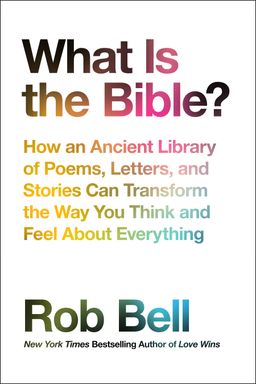
What Is the Bible cover

What Is the Bible

by Rob Bell

Rob Bell''s ''What Is the Bible?'' invites readers to explore the Bible''s historical context, revealing its timeless lessons and transformative power. By understanding the Bible''s narratives and contradictions, readers can apply its wisdom to modern life.

Reading the Bible as a Living Library

What if you've been reading the Bible wrong your whole life—not as an ancient rule book or mystical oracle, but as a living, breathing library about what it means to be human? That’s the radical question at the heart of Rob Bell’s What Is the Bible? The book reshapes how you view Scripture: not as an authoritarian manuscript from the sky, but as a dynamic collection of stories, poems, and letters written by people trying to make sense of life, God, hope, and suffering. For Bell, the Bible isn’t a static artifact—it’s a vibrant record of human progress and divine participation.

Understanding Bell’s Core Argument

Bell contends that the Bible was written by real people in real places at real times, each responding to the world they found themselves in. These writers weren’t divinely possessed stenographers—they were poets, priests, prophets, and storytellers giving voice to their deepest experiences of what it means to live in relationship with the divine. Recognizing that context is crucial: you must read the Bible literately, not literally, engaging it like any other form of literature—stories meant to teach, provoke, and awaken curiosity. He repeats again and again that the Bible is profoundly human, and it’s precisely through that human lens that the divine shines most brightly.

From Interpretation to Incarnation

One of Bell’s most powerful claims centers on how Jesus read the Bible. In the first century, there was no such thing as a personal Bible; only scrolls accessible in the community lived, danced, and argued over. Interpretation was collaborative. In contrast to modern readers who expect the Bible to end discussions, Jesus saw Scripture as the start of the conversation—a springboard for questioning and reinterpretation. When he said he came not to abolish the Law but to fulfill it, Bell notes that fulfillment meant embodying it—incarnation in motion. God’s word didn’t stop on scrolls; it took flesh, lived, moved, healed, and reconciled. You are invited to do the same: interpret it in ways that give it life in your own world.

Why This Shift Matters

Bell argues that misunderstanding the Bible has caused enormous harm—political exclusion, moral rigidity, and spiritual stagnation. But when you read it as people did in Jesus's day—as poetry, prophecy, and a discussion starter—you rediscover it as an invitation to wrestle with God, not obey without question. He paints the Bible as deeply progressive: early flood stories, for example, weren’t primitive tales of wrath but radical steps toward conceiving of a compassionate God who wants relationship instead of bloodshed. Throughout history, humanity’s vision of God has evolved—moving from gods of vengeance to a divine being of love, grace, and mercy. The Bible captures that arc of human consciousness, and reading it in this way liberates you from fear-based religion into creative participation.

The Trajectory of Transformation

Bell’s ultimate invitation is to see history—and your life—as unfolding in this same divine narrative. The Bible is a record of continual transformation, a movement toward inclusion, justice, compassion, and joy. From Abraham trusting a new kind of God who blesses rather than demands sacrifice, to Jesus embodying forgiveness even for enemies, the Bible keeps pulling humanity forward. When you stop treating it like a fixed rulebook and start engaging it as conversation, you join that movement. You find that the divine and human are intertwined, and you yourself become part of the ongoing incarnation. In short, the Bible isn’t just a story about God—it’s a story about us trying to grow up into love.


Interpretation: Turning the Gem Together

Bell introduces the ancient rabbinic metaphor of “turning the gem” to describe how Scripture should be explored. Each time you turn it, new facets reflect the light differently. That’s how Jewish readers in Jesus’s time approached the Torah—not as final answers but as living questions debated around community tables. The word itself was alive, a spark for dialogue that shaped how to love, forgive, and act justly.

Communal Reading in Jesus’s World

In Jesus’s day, Bell explains, there were no personal Bibles. Villagers gathered in synagogues, where the hazzan paraded the Torah scroll through the crowd and readings were followed by vibrant discussions. Everyone was expected to join in—even disagreement was holy. Contrast that with how many modern believers read Scripture in isolation or listen to sermons that end dialogue. The Torah, Bell insists, began the conversation, never ended it.

The Purpose of Interpretation

Interpretation wasn’t intellectual gymnastics—it was ethics in action. The question wasn’t “What does it mean?” but “How do we live this?” When Jesus taught, he didn’t offer definitive answers; he asked, “How do you read it?” and “What do you think it says?” Life was a test of interpretation through action. To interpret badly—to use scripture for violence or exclusion—was to “abolish” Torah; to interpret with compassion was to “fulfill” it.

Application for Today

Bell invites you back into that dance of debate. The Bible isn’t meant to shut down inquiry but provoke it. Keep turning the gem, he says—keep asking, keep wrestling. Each new situation calls for a fresh interpretation. By doing this, you join an ancient lineage of readers seeking what love demands right now. That’s how Scripture stays alive.


Incarnation: Putting Flesh on the Words

One of Bell’s most striking ideas is how incarnation—the act of divine truth becoming flesh—applies not only to Jesus but to you. When Jesus says he came to fulfill the Law, Bell reminds us that fulfillment meant embodying it, showing what Torah looks like when lived. Words are powerful, but they remain incomplete until enacted in real life. Incarnation transforms Scripture from abstract theology into embodied compassion.

Jesus as Living Interpretation

In Matthew’s Gospel, when Jesus announces he’s not abolishing the Law but fulfilling it, he’s joining a familiar conversation. Rabbis used those terms to judge interpretations: “You abolished the Torah” meant “you’ve missed the point,” while “you fulfilled the Torah” meant “you lived it well.” Jesus’s “You have heard... but I say to you” reframes old teachings into life-giving actions—blessing enemies, embracing the unclean, resisting violence. He embodies Torah by putting skin on love itself.

Incarnation as a Universal Invitation

Bell expands incarnation beyond theology—it’s a metaphor for human life. The divine and human dance in the same space. Are we just dust and synapses, or is there spirit within us? Jesus’s life insists the two coexist. To incarnate truth is to give divine realities—justice, mercy, peace—real-world expression through your body and choices. The Word isn’t finished until you live it.

Living as the Fulfillment

Jesus tells his followers that they now have authority to “bind and loose”—to interpret and apply Scripture. Bell translates this as: you watched me do it, now it’s your turn. Put flesh on the words in your world. Incarnation is ongoing. Every act of forgiveness, justice, or creativity continues the divine story. As John wrote, “The Word became flesh and moved into the neighborhood.” Bell invites you to move into yours with that same divine presence.


Invitation: The Bible as Conversation

Bell’s third theme—invitation—extends interpretation and incarnation into action. Jesus didn’t merely reinterpret Scripture; he empowered others to do so. When he told his disciples that whatever they bind or loose will be bound or loosed, he handed them authority to carry the discussion forward. The Bible wasn’t meant to be frozen in ancient words but continually reimagined for new situations.

Binding and Loosing

Bell explains that “binding and loosing” were rabbinic terms for interpretation—deciding what was obligatory or optional. Jesus’s radical invitation was simple: you’ve seen how I read these texts, now continue that work. Find fresh meaning in your own era. The Bible isn’t a cage; it’s a storehouse of treasures, and you’re called to keep bringing out new ones.

Our Turn in the Story

The disciples and early Christians took this literally—they debated endlessly about how divine love looked in their cultures. Bell emphasizes that this is the point: ongoing interpretation is faithfulness, not disobedience. Even Jesus promised, “You’ll do greater things than these.” The gem keeps turning, generating new colors of wisdom for every generation.

Never Stop Turning the Gem

Today, the invitation still stands. You’re called not to memorize ancient rules but to wrestle with them, dance with them, adapt them. The divine movement continues through you. Reading the Bible this way transforms it from an artifact into a living conversation where your story merges with its story—and together, you keep rewriting the love narrative.


The Bible’s Human Evolution of God

One of Bell’s most illuminating ideas is the Bible as an evolutionary record of human understanding of God. Instead of a static portrait, Scripture charts humanity’s growing consciousness—from fear-driven religion to love-centered spirituality. He shows how ancient people projected their own anxieties onto their gods, and how Israel’s story gradually moved humanity beyond sacrifice and violence into grace and relationship.

From Child Sacrifice to Trust

Take Genesis 22: Abraham’s willingness to sacrifice Isaac seems barbaric until you grasp its cultural backdrop. Early religions taught that gods required endless offerings—even children—to earn favor. Abraham’s story subverts this by introducing a God who stops the sacrifice and provides instead. Bell calls this “a mind-blowing leap forward”—a new vision of a God who gives rather than demands, who blesses all nations.

Progressive Revelation

Bell interprets such stories as chapters in humanity’s spiritual maturation. Violence diminishes, compassion grows. Each generation wrestles with the divine and emerges with deeper understanding. From Abraham’s trust to prophets’ justice to Jesus’s radical nonviolence, the Bible’s arc bends toward love. It’s not contradiction—it’s evolution.

Reading with Evolution in Mind

Rather than defending every verse as equally valid, Bell urges you to read for trajectory. The Bible moves from primitive fear toward enlightened grace. If you can see that movement, you can spot similar evolution in your own life—how you mature spiritually through struggle and experience. The story keeps going; the divine keeps growing with us.


Finding the Divine in the Human

“The Bible was written by humans,” Bell repeats like a refrain. Yet within that humanity lies the divine. This paradox—human words bearing transcendent meaning—reveals how Spirit works through ordinary life. He points to the resurrection accounts, filled with differing details and messy inconsistencies, as proof of authenticity rather than error. Real humans experienced something so extraordinary they could barely articulate it coherently.

Messy Details and Honest Witness

Bell walks through the Gospels: one says two angels, another says one; one mentions earthquakes, another omits them. Far from undermining belief, these contradictions testify to lived truth. People don’t recount miracles tidily—real experience is chaotic. A perfect, error-free record would look like propaganda. Hashtag: “Worst propaganda ever.” The rough edges make it sacred.

Women as Witnesses

Each Gospel insists women were first to witness the resurrection—a shocking claim in a patriarchal world where women’s testimony was discounted. Why include it? Because it happened. Truth transcends cultural limits. Bell asks why the writers would risk credibility unless they were committed to truth beyond societal norms. The human imperfections illuminate divine honesty.

Discovering the Divine Through Humanity

For Bell, you find God through human fingerprints. The sacred arises not when humanity is erased, but when it’s embraced. Listening to the doubts, diversity, and humor within Scripture reveals its soul. The divine emerges through struggle, not perfection. As Bell says, “You start with the human, and when you go all the way in, you just may find the divine.”


Violence, Progress, and the Movement of Consciousness

Bell tackles one of the Bible’s thorniest issues: violence. He argues that its presence isn’t divine endorsement but historical honesty. The Hebrews lived amid brutal tribal warfare; stories reflect that world. Yet buried within those violent texts are sparks of moral evolution—commands to care for widows, laws protecting refugees, and poems envisioning peace. Scripture contains humanity’s worst and best instincts side by side, mirroring our own inner battle.

Violent Contexts, Nonviolent Dreams

In Judges, blood flows freely, but in Deuteronomy and Leviticus, we see revolutionary compassion. The same culture that justified killing also birthed commands to love neighbors and care for outsiders. Bell suggests the editors who compiled these texts after Babylonian exile were traumatized by violence and deliberately preserved it as critique—a mirror reflecting how senseless violence is. The horror is the point.

Jesus’s Response to Violence

Fast-forward to Jesus. He refuses to perpetuate violence, responding to murder and injustice with forgiveness. He never quotes the bloody book of Judges; instead, he hugs outcasts and heals wounds. The arc of scripture culminates in love overcoming retribution—a lesson that redefines divine justice.

Practical Implications

For you, this means every violent text can become a conversation about evolution. Ask, “Where is this story headed?” When read this way, the Bible provokes ethical growth instead of blind obedience. It reveals what happens when fear rules—and why love must replace it. Bell’s message: the divine keeps pulling humanity forward, even through its bloodiest chapters.


The Arc of Restoration: All Things Renewed

Bell explores Paul’s mysterious Greek word anakephalaiossathai—meaning to gather or retell everything under one head—as the lens for understanding the Bible’s overarching story. This isn’t about escape to heaven but reunion on earth. God’s pleasure, says Paul, is to restore and reconcile all things—pas in Greek, meaning everything. Bell sees this as the heartbeat of Scripture: a cosmic narrative of redemption and renewal.

Retelling Reality

Bell compares God’s retelling to how we recount painful stories later with laughter and perspective. The worst parts become the best parts when reframed. Similarly, history’s pain—wars, oppression, loss—belongs to a grand retelling that transforms suffering into wisdom and reconciliation. Nothing is wasted in divine storytelling.

Unity and Inclusion

Across the Bible, themes of “all things” repeat: restoration in Acts, reconciliation in Colossians, renewal in Matthew. Bell emphasizes that this inclusivity redefines grace. It’s not selective salvation but universal healing. The divine story encompasses everything—your wounds, your hopes, even your enemies—in the process of being made whole.

Living the Retelling Today

To live as part of this retelling is to participate in ongoing restoration. The divine is not finished; creation is still being renewed. When you forgive, rebuild, or create beauty from loss, you echo that cosmic reconciliation. Bell’s message resonates with the mystic Teilhard de Chardin: evolution pulls us toward unity. You aren’t merely reading the Bible—you are writing its next chapters through your own life.


Reading the Bible for Now, Not Then

One of Bell’s final urgings is that the Bible isn’t about escaping this world but transforming it. He critiques apocalyptic obsessions with end times and instead reframes revelation as unveiling, not destruction. Apocalypse, he says, literally means “disclosure.” It’s about seeing reality clearly—recognizing injustice, awakening compassion, and participating in renewal here and now.

The True Apocalypse

Bell outlines three kinds of apocalypse: disastrous (the uncontrollable end), cause-driven (human-caused destruction through greed and pollution), and revelatory (spiritual awakening). The last kind—the true kind—is celebration. It’s revelation of truth that leads to transformation. Every act of justice or forgiveness speeds the coming of this “new world.”

Revelation as Resistance

Bell reinterprets the Book of Revelation as satire against empire. John’s visions parody Rome’s propaganda, showing that real power belongs not to Caesar but to sacrificial love. Revelation isn’t predicting destruction—it’s inspiring resistance. When you oppose exploitation or dehumanization, you join Revelation’s song of the Lamb who conquers by love.

This World Matters

The Bible’s finale mirrors its beginning: peace restored in a garden-city. We live “between the trees,” Bell says—from Eden’s tree to Revelation’s tree of life. That means your work now—caring, creating, loving—is part of God’s restoration project. The end isn’t destruction but resurrection. You don’t wait for heaven; you build it. Right here.

Dig Deeper

Get personalized prompts to apply these lessons to your life and deepen your understanding.

Go Deeper

Get the Full Experience

Download Insight Books for AI-powered reflections, quizzes, and more.