
Idea 1
From What’s Wrong to What Happened
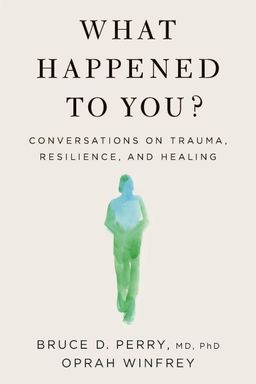
When someone snaps at you, can you catch yourself before judging and instead ask, What happened to you? In What Happened to You?, Bruce D. Perry (a child psychiatrist and neuroscientist) and Oprah Winfrey argue that this simple question can transform how you understand behavior, your own and others’. Their core claim: much of what we label as attitude problems, learning issues, addiction, or relationship drama is rooted in the brain’s adaptations to stress and trauma—and healing begins when you shift from blame to curiosity and from isolation to connection.
Perry contends that your brain is a meaning-making organ that develops from the bottom up. It processes threat faster than thought, stores early experiences as templates, and then uses them—often unconsciously—to interpret what’s happening now. When you’ve been frightened, ignored, or shamed, the stress-response systems can become sensitized and overreactive. That’s why a motorcycle backfiring can send a combat veteran flat to the pavement, or why a cologne (Old Spice) can make a boy rage at a teacher who smells like his abusive father. If you want to change current behavior, you must understand the “catalog” of past associations underneath it.
Why This Shift Matters
This perspective is not soft—it’s scientific. Perry shows that stress patterns sculpt the brain’s core regulatory networks, shaping attention, sleep, appetite, learning, impulse control, and even immunity. Oprah adds the lived experience: beatings and enforced silence in childhood trained her to be an expert people pleaser well into adulthood. Seeing the biology under the biography reframed her story—not as weakness, but as adaptation. (Compare: Bessel van der Kolk’s The Body Keeps the Score also shows how experiences write themselves into brain and body.)
How the Brain Really Works
All experience enters your brain through lower, faster networks (brainstem and diencephalon) before reaching the reflective cortex. Threat cues—sights, sounds, smells—are matched to old memories. If the match feels dangerous, your body mobilizes to fight, flee, or, if escape is impossible, to dissociate (space out, go numb, comply). That’s why you feel and act before you think. And it’s why reasoning with a dysregulated person rarely works. First help the body regulate, then connect, then reason. As Perry summarizes: regulate, relate, then reason.
The Pattern of Stress Is the Point
Stress isn’t inherently bad; predictable, moderate, and controllable doses build resilience (think sports practice or learning an instrument). But prolonged, extreme, or unpredictable stress sensitizes the stress-response systems. For babies, that’s especially damaging because the earliest years are when the brain is exploding with connections. If cries bring warm, consistent care, the infant’s brain wires relationship=regulation=reward. If cries bring nothing—or pain—the brain wires for fear and shutdown. The question What happened to you? becomes literal: timing, dose, and pattern of stress write lasting code.
Love as Action, Healing as Rhythm
Perry and Oprah keep returning to essentials: rhythm, relationship, and reward. Rocking a baby; walking, dancing, drumming; breathing with someone upset—these rhythmic patterns quiet the lower brain. Kind, predictable caregivers build a “Tree of Regulation” that stabilizes heart rate, sleep, and mood. And because humans are contagious to each other’s states, your calm can become someone else’s calm. Connection isn’t a nice-to-have; it’s medicine. (Vivek Murthy makes a similar case in Together.)
Why This Concerns All of Us
These ideas ripple from personal relationships into classrooms, clinics, courts, and communities. Without a developmental, trauma-aware lens, schools can mistake fear for defiance, clinics can label trauma symptoms as purely “behavioral,” and justice systems can punish survival adaptations. The book shows how to apply practical neuro-informed steps—sequencing support from regulation to relationship to reasoning; dosing hard conversations in brief, controllable bits; building therapeutic webs (not just therapy hours); and creating policies that are both trauma-aware and anti-racist.
Key Reframe
“Belonging is biology.” When people are excluded or shamed, their bodies suffer; when they are connected, they heal. That’s as true for a dysregulated child in a classroom as it is for a traumatized city after a tragedy.
In the pages ahead, you’ll see how state-dependent brains operate, why rhythm is regulating, how early love (or its absence) shapes a lifetime, what the science says about trauma and ACEs, how pain and bias travel across generations, and how everyday dosing of safe connection grows post-traumatic wisdom. You’ll meet Mike, whose cortex “comes online” after a backfire; Sam, whose teacher’s deodorant evoked terror; Gloria and her daughter Tilly, loved back to each other with sugar-free candy and fierce foster care; Jesse, who rebuilt a life inside a retirement community; and a 3-year-old who could only face grief in five-second sips at a grocery checkout. The message is hopeful: your brain is malleable, relationships are medicine, and small, intentional moments—done in the right sequence—change everything.