
Idea 1
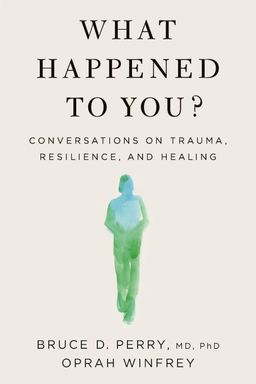
What Happened to You: How Early Experience Shapes Who We Become
Why do you react to stress the way you do? Why do love, fear, and trust feel easier—or harder—for you than for someone else? In What Happened to You?, Oprah Winfrey and Dr. Bruce D. Perry invite you to rethink everything you believe about personal struggle, resilience, and healing. Instead of asking, “What’s wrong with you?” they challenge us to ask, “What happened to you?”—a deceptively simple shift that transforms blame into understanding.
At its core, this book argues that early experiences—especially trauma and love—literally shape the architecture of the brain. From the moment we’re born, our interactions with caregivers create neural patterns that determine our ability to self-regulate, connect with others, and cope with stress. Trauma and neglect distort this wiring, but the authors show that through connection and compassion, the brain can heal itself. Oprah provides deeply personal stories of her own childhood abuse and disconnection, while Dr. Perry translates neuroscience into everyday understanding of behavior.
The Central Question: What Happened?
Dr. Perry’s neuroscience framework emerges from decades of treating traumatized children. He uncovers how “bad behavior” and emotional volatility are rarely intentional—they are the brain’s adaptive response to past suffering. Trauma wires the brain for survival, not trust. What looks like anger or defiance may actually be the fight-or-flight circuits activated by fear. Using stories of clients like Mike, a war veteran haunted by PTSD, and children like Jesse and Gloria, Perry demonstrates that the brain acts before it can think—and that healing requires rebuilding those foundational networks, not just correcting surface actions.
Oprah’s Human Lens
Oprah brings emotional texture to Perry’s science, connecting the dots between personal pain and universal longing. She recalls being beaten as a child and forced to hide her feelings, an experience that created lifelong people-pleasing tendencies. Her story grounds Perry’s theory: trauma creates psychological survival patterns that persist into adulthood. Through forty years of interviewing thousands of people, Oprah observes that everyone—politicians, artists, parents, prisoners—shares one question: “Did you see me? Did what I say matter?” This yearning for validation, she argues, comes from how we were loved—or not loved—early on.
Neuroplasticity and Hope
While the book explores how adversity can scar the brain, it also celebrates the incredible power of neuroplasticity—the ability to rewire through patterned, loving experiences. Just as trauma alters our biology, connection can restore it. Using stories of foster parents, teachers, and communities, Perry shows that the brain is “use-dependent”: practice builds capacity. You love as you’ve been loved, but you can also learn to love differently.
A Framework for Understanding Humanity
Throughout the book, Oprah and Perry blend scientific insight with empathy, offering a new framework for interpreting human behavior: regulation before reasoning, relationship before resolution, compassion before correction. They move across chapters exploring rhythm and regulation, trauma’s biological imprint, patterns of neglect, inherited fear, resilience after pain, community healing, and relational hunger in the modern world. Ultimately, they offer a message of grace: when we replace judgment with curiosity—when we ask what happened—we open the door to healing ourselves and others. (Comparable texts include The Body Keeps the Score by Bessel van der Kolk and Born for Love by Perry himself, both exploring trauma’s embodied nature and the biology of empathy.)