
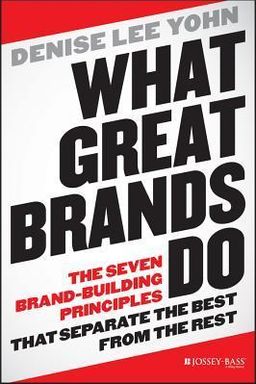
What Great Brands Do cover

What Great Brands Do

by Denise Lee Yohn

In What Great Brands Do, Denise Lee Yohn unveils the secrets behind iconic brands like Nike, Apple, and Starbucks. Learn the principles that define successful branding, from creating emotional connections to maintaining brand integrity, ensuring your brand becomes a leader in its industry.

What Great Brands Do—Turning Brands into Business Engines

How can you build a brand that customers love—and that drives every aspect of your business forward? In What Great Brands Do, Denise Lee Yohn argues that the world’s most successful companies don’t treat their brands as marketing tools, but as strategic engines that power the entire organization. A great brand, she contends, is not simply a logo or slogan—it’s the core operating philosophy. When you manage your brand as your business itself, it infiltrates your culture, your strategy, your customer experience, and even your social impact.

Yohn’s central claim is that great brands operationalize their brand identities across the entire business. They start inside—with a strong culture—and radiate outward through every touchpoint customers see. Instead of chasing trends or pleasing everyone, they remain steadfast in their core values and use them to inspire innovation, cultivate loyalty, and deliver meaningful experiences. Her framework unveils seven key principles—plus an eighth overarching one—that differentiate lasting, admired brands from the rest.

Why Brand-as-Business Matters

Yohn introduces the idea of brand as business—a management philosophy in which your brand drives everything the company does, not just how it markets itself. Unlike traditional branding focused on image and communication, this model integrates the brand into core operations and cultural DNA. Kodak’s downfall illustrates the opposite approach. Despite inventing the first digital camera, Kodak failed to evolve its brand meaning beyond film and photography. It focused on technology, not on helping people express memories—the emotional promise that once defined it. By contrast, firms like IBM, Nike, and Starbucks succeeded because they operationalized their brand ideals through culture and experience rather than relying solely on advertising.

The Seven Pillars of Great Brands

Yohn’s seven brand-building principles form a progression—starting from culture, moving through strategy, and culminating in execution. Each is illustrated with vivid examples:

  • Start Inside: IBM reinvented itself by restructuring company culture through a global “ValuesJam,” reconnecting employees with timeless principles of innovation and trust.
  • Avoid Selling Products: Nike’s “Just Do It” campaign proves that emotional resonance trumps product features—it invites people to express their aspirations, not just buy sneakers.
  • Ignore Trends: Rather than chasing short-lived fashion, Chipotle and Starbucks challenge conventions and lead cultural movements toward authenticity and sustainability.
  • Don’t Chase Customers: Lululemon, Trader Joe’s, and Red Bull attract their ideal audiences through magnetic identity and self-confidence, refusing to lower standards simply to appeal to everyone.
  • Sweat the Small Stuff: Brands like REI and Singapore Airlines execute on the details. Every package, website, and conversation embodies their core promise.
  • Commit and Stay Committed: Shake Shack, Southwest Airlines, and Vanguard show how staying loyal to core ideology—even when tempted by growth—builds trust and longevity.
  • Never Have to Give Back: Patagonia and Ben & Jerry’s embed social good into their business model, proving that creating shared value is better than “giving back” after the fact.

The Eighth Principle: Brand as Business

Yohn concludes with the eighth principle: Great brands do brand as business. This synthesis integrates all seven ideas into one discipline—aligning culture, planning, and execution around a unified brand identity. When your brand drives decisions across strategy, employee experience, and operations, its values become the company’s guiding GPS. It’s how Apple maintains design obsession, how Amazon builds customer-centric ecosystems, and how Virgin ventures into multiple industries without losing coherence.

Core Message

The secret of enduring brand greatness lies in consistency, authenticity, and cultural alignment. When every employee, partner, and product reflects the brand’s essence, you don’t just communicate a promise—you deliver it. Yohn’s seven principles culminate in the realization that managing your brand is managing your business itself.

In today’s fast-changing economy, your brand isn’t a logo or a slogan—it’s your identity, operating philosophy, and growth engine. Yohn invites you to stop treating your brand as decoration and start running it as your business. That’s what great brands do.


Start Inside: Culture Before Marketing

Denise Lee Yohn opens her brand-building framework with a deceptively simple idea: before you sell to the world, you must inspire within. A great brand is born from a clear and vibrant internal culture. Every external expression—logo, advertising, customer experience—derives from internal conviction. Without that, no amount of marketing can sustain authenticity.

IBM’s ValuesJam: Culture as Compass

In 2003, IBM’s CEO Sam Palmisano faced a crisis of relevance. With 300,000 employees spread across 170 countries, IBM was losing coherence after decades of upheaval. Instead of rolling out a glossy ad campaign, Palmisano launched an unprecedented intranet event—a seventy-two-hour global “ValuesJam.” More than 50,000 employees posted messages debating IBM’s purpose, while algorithms organized common themes. Out of one million words emerged three core values: dedication to every client’s success, innovation that matters, and trust in all relationships.

This wasn’t branding by decree—it was branding through conversation. Employees helped write their own cultural constitution, transforming values from slogans into living principles that guided decision-making. (Jim Collins makes a similar argument in Built to Last: enduring companies set immutable ideologies that act as organizational glue.)

The Brand Toolbox: Teaching Culture in Practice

Yohn explains that culture must influence behavior—not merely sentiment. Method Products, the eco-friendly cleaning brand, faced a similar challenge as it scaled. Founders Eric Ryan and Adam Lowry created a deck of flashcards representing key cultural values (“Keep Method Weird,” “What Would MacGyver Do?”). Each card described real actions—like creative problem-solving or customer empathy. Hung on key rings, they became daily reminders of how to live the brand.

According to Yohn, this kind of Brand Toolbox institutionalizes the “head, heart, hands, and feet” model of engagement—employees understand (head), care (heart), act (hands), and embody (feet) the brand. You can’t mandate genius, but you can design cultures that inspire it.

Extend Culture Beyond Employees

Great brands also extend culture outward to partners and stakeholders. IKEA’s “IWAY” code of conduct aligns thousands of suppliers around its ethical, sustainable values. By treating supply chain partners as cultural participants, not contractors, IKEA ensures consistency from raw materials to showroom experience. Similarly, Wegmans trains employees for forty hours before they meet customers—sinking culture deep into daily operations, not HR manuals.

Key Takeaway

Brand greatness begins inside. When culture, behavior, and business strategy harmonize, your employees don’t just represent your brand—they embody it. As Yohn puts it, “Your brand isn’t what you say; it’s what you do.”


Avoid Selling Products—Sell Emotion

If you’ve ever wondered why Nike’s three-word slogan resonates across cultures and decades, Denise Lee Yohn’s answer is clear: because Nike doesn’t sell shoes—it sells self-belief. In the second principle, Yohn demonstrates how great brands forge emotional bonds that transcend product features or technical innovation.

Nike’s Lesson in Emotional Branding

In 1987, Nike’s agency Wieden+Kennedy scrapped a self-congratulatory ad about jogging history and replaced it with a raw, human message: athletes of every shape and age speaking from their hearts, ending with “Just Do It.” As Scott Bedbury (then head of marketing) noted, it wasn’t about sneakers—it was about values and empowerment. Viewers wrote letters describing how those words helped them quit smoking, leave toxic jobs, or start new habits. Nike had unlocked its brand’s “genetic code”—the emotional DNA connecting aspiration and action.

Emotional appeal dwarfs product efficacy. Competitors like Adidas competed on technology, but Nike’s quiet “Find Your Greatness” campaign during the 2012 Olympics (non‑sponsored!) sparked fifteen times more online buzz than Adidas’ high-production ads. (Compare this with Simon Sinek’s Start With Why, which similarly argues that people buy purpose before product.)

Anthropology, Empathy, and Research

Yohn encourages brands to study emotions like anthropologists. Pampers reinvented itself when research revealed that mothers don’t merely want dry diapers—they want healthy, developing babies. Procter & Gamble shifted its focus from “absorbency” to “developmental delight,” redesigning diaper stages and offering parenting guidance. The brand stopped selling diapers and started selling care.

Similarly, Sony discovered through empathic research that users enjoyed digital cameras for instant sharing, not memory preservation. This insight led to bigger displays, smaller cameras, and products that captured fun in the moment. Emotional understanding drove product design—proving that empathy is a competitive advantage.

Long-Term Relationships, Not Transactions

Great brands focus on lifelong connection, not short-term revenue. Amazon sacrifices margin selling its Kindle Fire nearly at cost because it’s nurturing an ecosystem of relationship-based consumption. Customers trust Amazon enough to pay premiums later. Emotional bonds create “switching costs”—the reluctance to leave a brand you love. Just as Toyota fans defended the company during its recall crisis, emotionally engaged customers protect their brands like family.

Lesson for You

Don’t market what your product does—market what it means. Emotional resonance transforms customers into evangelists and makes your brand tattoo-worthy. You sell not objects, but identity.


Ignore Trends and Lead Movements

Trends tempt businesses with immediate visibility, but Denise Lee Yohn warns they’re whirlpools of distraction. Great brands, she says, lead cultural movements instead of chasing fads. They challenge their industries, defy norms, and express timeless authenticity.

Chipotle: Challenging Fast-Food Rules

In 1993, chef Steve Ells launched Chipotle in Boulder, Colorado—a burrito shop that ignored every rule of fast food. No freezers, limited menu, ethically sourced meats, and minimalist store design. While Taco Bell slashed prices with “59–79–99” bargain menus, Ells raised them, betting on flavor and integrity. By refusing to follow industry habits, Chipotle became the model for a new category—“fast casual”—and redefined customer expectations. Even when McDonald’s invested, Ells refused to sell cookies or coffee, protecting the brand’s focus. He proved differentiation comes from values, not gimmicks.

Leading Culture, Not Chasing Cool

Yohn distinguishes between trend following and cultural leadership. A trend is fleeting; a movement shifts enduring behavior. TED transformed elitist conferences into global democratized idea platforms via TEDx—freely licensed local events. By “giving the brand away,” TED built worldwide community, turning exclusivity into accessibility. Starbucks similarly anticipated the cultural craving for connection by redefining cafés as “third places,” where people belong—even before social media made digital belonging mainstream.

Detecting Movements: The Brand Diagnostic

To lead movements, Yohn offers a Brand Diagnostic: analyze your customers (their needs and aspirations), context (competitors and cultural shifts), and company (strengths and purpose). Conduct audits and research to expose “value denials”—unfulfilled desires, similar to the Blue Ocean Strategy’s untapped demand spaces. Cirque du Soleil did this by reinventing circus as artistry for adults. Chipotle did it by turning lunch into a moral choice.

Key Lesson

Stop chasing fashion. Question where culture is heading and align your movement with your brand’s essence. When you define what’s next, you’ll attract people who aren’t just buying—they’re joining.


Don’t Chase Customers—Attract the Right Ones

It’s one of Yohn’s boldest prescriptions: the customer isn’t always right—only the right customer is. Great brands don’t dilute their identity trying to please everyone. Instead, they magnetize ideal audiences through confidence and clarity.

Lululemon and the Power of Selectivity

Rather than chasing consumers, Lululemon cultivates community and scarcity. Stores host free yoga classes but never hold sales; returns are restricted to maintain quality perception. “We aren’t Nordstrom,” said CEO Christine Day. The brand’s clarity shows up in price: high, unapologetic, and anchored in innovation. Customers know Lululemon’s ethos—excellence, self-betterment, and mindfulness—and self-select accordingly. Community ambassadors, not ads, spread the message, creating “magnetic appeal.”

The Lighthouse Identity

Yohn borrows Adam Morgan’s metaphor of “lighthouse brands”: companies that shine clearly and attract attention even from afar. The Rolling Stones, for example, projected confident, rebellious identity against the sunny Beatles—a brand of authenticity that endured decades. Trader Joe’s and Red Bull are modern analogs. Trader Joe’s sells narrow assortments for niche adventurers; Red Bull sells energy drink culture for risk-takers. Both exclude broad audiences yet convert their tribes into evangelists.

Segmenting by Need, Not Demographics

Customer segmentation must go beyond demographics. Yohn advocates “needs-based segmentation” that identifies emotional and situational drivers—what customers truly want and when they want it. American Express exemplifies this approach by tailoring services for high-value segments—business travelers and entrepreneurs—rather than chasing mass credit markets. The brand builds premium intimacy, offering lounge access and concierge care for profitable loyalty.

Takeaway

Be unapologetic about who you serve. Clarity attracts devotion and respect. In branding, less audience often means more value—the lighthouse shines farthest when it’s focused.


Sweat the Small Stuff—Design Every Detail

“The small stuff is the big stuff,” Yohn proclaims. Great brands turn every microscopic detail into an orchestrated moment of truth. Design, smell, sound, touch—each is a word in the brand’s vocabulary. Neglecting those subtleties erodes trust; mastering them makes loyalty automatic.

Design as Brand Language

Apple shows how aesthetic clarity translates into emotional meaning. Steve Jobs and designer Jony Ive obsessed not only over product form but packaging—the “ritual of unpacking.” Chobani’s founder Hamdi Ulukaya approached yogurt design the same way: a wider European-style cup and vibrant sleeve communicated abundance and freshness. Without big advertising, Chobani became America’s leading yogurt by selling an experience, not dairy.

A Multisensory Experience

Starwood Hotels created proprietary scents for each brand; Williams-Sonoma seduced with in-store cooking aromas; Trader Joe’s wooden fixtures and Hawaiian shirts deliver a “quirky discovery zone.” These sensory signatures turn routine transactions into immersive journeys. REI extended design to authenticity—walk-in freezers for sleeping bag tests, reclaimed industrial materials, and etched maps reminding visitors that “the outdoors is right around the corner.”

Seeing Through the Customer’s Eyes

Yohn insists you physically experience what customers do: sit in your own restroom, call your own support line, unbox your own product. A fast-food CEO learned this viscerally when inspecting her chain’s bathrooms under assignment—realizing neglected cleanliness shattered brand trust. Chick-fil-A embodies this awareness with its “Second Mile Service”: folded toilet paper corners, “my pleasure” scripts, and drink refills, trained into every employee. This discipline turns service into theater.

Architecting Seamless Experiences

To unify details, Yohn recommends tools like the Brand Touchpoint Wheel and Customer Experience Architecture—visual audits that map every customer interaction. Sony used them to align overlooked touchpoints like recruitment ads and packaging inserts with its cultural essence. The result: coherence. Customers encounter one brand voice across all channels.

Core Idea

Excellence is cumulative. Every minute detail communicates. When execution meets empathy at every touchpoint, your brand story becomes a lived experience—no advertisement required.


Commit and Stay Committed—Focus with Discipline

When success tempts you to expand, diversify, or take shortcuts, your brand’s identity faces its greatest test. Denise Lee Yohn explores how commitment—not flexibility—builds enduring greatness. Great brands say “no” far more often than “yes.”

Shake Shack’s Anti-Chain Ethos

CEO Randy Garutti refuses lucrative side ventures like catering or food trucks. “We want you to come to Shake Shack,” he insists—because the brand experience depends on in-store energy and hospitality. Even after buying a truck, he scrapped the plan to preserve food quality. This ruthless consistency earned Shake Shack its label as the “anti-chain chain.” Growth only happens when leaders are ready to replicate culture, not just open new units—a model that echoes Jim Collins’ advice in Good to Great: opportunity selection requires discipline.

Preserve the Core, Expand with Purpose

Yohn credits companies like Vanguard and Amazon for balancing tradition and evolution. Vanguard avoided risky mortgage-backed securities because they violated the brand’s “non-negotiables”—safety and integrity. Amazon asked a different question: “What will never change in the next ten years?” Jeff Bezos focused relentlessly on selection, low prices, and fast delivery—eternal customer needs—allowing flexibility without losing core ideology.

Sacrifice as Strategy

Sometimes commitment demands sacrifice. Southwest Airlines defied luxury conventions—no first class, no meals, short-haul focus—and became the most consistently profitable U.S. carrier. Johnson & Johnson spent $100 million recalling Tylenol after tampering deaths, acting on its credo of customer safety. The recall, though costly, restored trust within months. Commitment builds credibility precisely because it costs something.

Lesson

You can’t focus everywhere. By staying true to your beliefs and refusing tempting revenue, you create a long-term equilibrium where loyalty, profitability, and purpose reinforce each other. Great brands thrive on selective persistence.


Never Have to Give Back—Create Shared Value

Corporate social responsibility often feels like philanthropy stapled onto business. Denise Lee Yohn flips the script: great brands embed social good into their business model, creating shared value (CSV) instead of “giving back.” When your brand genuinely improves lives, generosity isn’t an add-on—it’s how you operate.

Patagonia: Values as Action

In 2011, Patagonia ran a full-page New York Times ad declaring, “Don’t Buy This Jacket.” It urged customers to consume less and repair more—introducing the Common Threads Initiative and The Footprint Chronicles, a transparent database of product origins. This wasn’t marketing contrition; it was consistent with Yvon Chouinard’s mission to make “the best product, cause no unnecessary harm, and use business to inspire solutions.” Patagonia turned restraint into attraction. (Compare with Yvon Chouinard’s Let My People Go Surfing for similar philosophy.)

From CSR to CSV

Yohn contrasts shallow donations—Mark Zuckerberg’s $100 million for Newark schools—with integrated programs like Starbucks’ “Create Jobs for USA” and AT&T’s “Aspire.” The latter align directly with company capabilities, engaging employees and communities through mentorship, technology, and education. True responsibility merges fairness, success, trust, and integrity, as John Gerzema and David Roth’s model shows—elements woven throughout operations, not tacked onto them.

Level 5 Relevance

Yohn introduces the Level 5 Relevance Framework, showing how brands can escalate impact from industry relevance (e.g., healthy kids initiatives) to values relevance (e.g., inclusion, stewardship). Firehouse Subs achieved this evolution by focusing its charity on firefighter safety—a cause organic to its founding story. Sales and employee engagement soared 35% as social purpose strengthened brand trust. GE’s Ecomagination and IKEA’s affordable sustainability follow similar patterns—building profit through purpose.

The Ultimate Shift

Don’t balance business and good—merge them. When your operations inherently benefit customers, communities, and the planet, you never need to “give back.” You’re already contributing through excellence.


Do Brand as Business—Integrate Culture, Planning, and Execution

The final principle ties all others together: great brands integrate. Denise Lee Yohn’s “brand-as-business” philosophy means managing your brand isn’t a marketing function—it’s your operating system. Each principle fuels the next, combining culture, planning, and execution into one loop.

Culture, Planning, Execution—the Trilogy

Culture forms the foundation: values unify stakeholders (see IBM, Method). Planning involves strategic choices—avoiding product obsession, ignoring trends, and targeting ideal customers (Nike, Chipotle, Lululemon). Execution converts vision to experience—sweating details, staying committed, and creating shared value (REI, Shake Shack, Patagonia). Together, they generate cohesive brand direction.

Integrating Across the Business

Yohn lists four brand-as-business competencies: implementation knowledge, planning, coordination, and translation. These skills embed brand thinking into every decision—from hiring and product design to finance. At Zappos, these principles guide hiring practices (“Deliver WOW through service”), while Sony used brand engagement sessions to align engineers and marketers under one theme—“technologies that inspire joy.”

When companies like Sharp Healthcare hold All‑Staff assemblies to reflect on “the purpose and worth of our work,” brand becomes the moral spine, not a marketing veneer. Employees act not for slogans, but significance.

Leadership Challenge: From Branding to Brand Building

Yohn challenges leaders to shift branding from communications to orchestration. Your brand is a verb—it’s what you do. Treating it as an internal compass transforms decision making, aligns investments, and eliminates the myth that marketing alone drives growth. Printing slogans on ads costs money; aligning culture around mission creates value.

Final Takeaway

Brand-as-business converts ideals into daily action. When culture, strategy, and execution harmonize, your brand doesn’t just represent your business—it is your business. That’s what great brands do.

Dig Deeper

Get personalized prompts to apply these lessons to your life and deepen your understanding.

Go Deeper

Get the Full Experience

Download Insight Books for AI-powered reflections, quizzes, and more.