
Idea 1
Reclaiming Strength Through Cold, Stress, and Environment
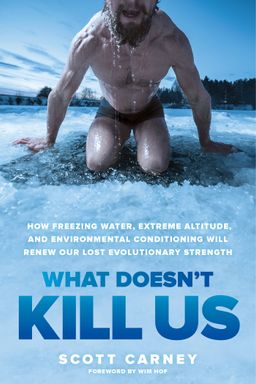
Why have we become so fragile in a world that does everything to keep us comfortable? In What Doesn’t Kill Us, investigative journalist and anthropologist Scott Carney explores one of the paradoxes of modern existence: that by eliminating discomfort, we've weakened our bodies and minds. Carney argues that humans evolved to adapt to environmental challenges, but our constant pursuit of comfort—heated homes, climate control, processed foods, and convenience—has dulled that adaptive edge. His core contention is that by intentionally reintroducing natural stressors—cold, heat, fasting, altitude, and even mental strain—we can awaken dormant powers and restore resilience, health, and strength.
Through a blend of immersive journalism, evolutionary science, and hard-won personal transformation, Carney’s narrative follows his journey from skeptical reporter to self-experimenter. Initially set on debunking the so-called 'Iceman'—Wim Hof, a Dutch endurance athlete famous for surviving subzero extremes—Carney instead discovers how deliberate exposure to stress unlocks human potential. His exploration leads through icy Polish mountains, military research labs, Spartan races, surfer training pools, and even an ascent up Mount Kilimanjaro—shirtless, in record time. The message is simple but profound: stress, when wisely harnessed, can make you stronger, healthier, and more human.
The Comfort Crisis
Carney begins by pointing out how relentlessly our society insulates itself from discomfort. Modern living means temperature-controlled environments, constant food abundance, and an almost complete absence of strenuous survival challenges. But looking through the lens of evolution, he shows that our ancestors’ strength came precisely from battling extremes of cold, hunger, and exertion. When those pressures disappeared, our physiology faltered. Diseases of excess—obesity, diabetes, autoimmune disorders, and depression—took their place.
He illustrates this point with rich anthropological perspective: Indigenous groups who slept in freezing weather or fasted through seasonal scarcity not only survived but thrived. Ancient Spartans trained without shoes in the snow to sharpen endurance. Eastern monks practiced ascetic cold exposure to reach transcendence. By contrast, our perpetual homeostasis weakens circulation, dulls immune responses, and erodes metabolic flexibility. As Carney puts it, «comfort has become our greatest disease».
Meeting the Iceman
Determined to expose charlatanism, Carney travels to Wim Hof’s training camp in Poland. Hof’s method—a blend of deep breathing, cold immersion, and meditation—supposedly allows practitioners to control their autonomic nervous systems, generating heat and even influencing immune function. Carney joins a group of trainees plunging into icy waterfalls and hiking through snow in minimal clothing. Expecting hypothermia, he instead finds his body adapting with surprising speed. Within days he completes a shirtless climb up a snow-covered mountain, feeling exhilarated instead of freezing.
The experience shifts Carney’s worldview. What Hof calls 'awakening the inner fire' turns out to have measurable physiological effects. Studies from Dutch scientists Peter Pickkers and Matthijs Kox confirm that Hof and his students can consciously suppress inflammatory immune responses—a feat once deemed impossible. For Carney, this discovery marks the start of redefining wellness itself: the body’s hidden capacities flourish when invited to struggle.
Evolution’s Forgotten Tools
Drawing on evolutionary biology, Carney explains that the human body possesses built-in systems for adaptation—muscle growth, mitochondrial energy production, and metabolic flexibility—that only activate when we face shifting environments. Without those triggers, they atrophy. A key example is brown adipose tissue (brown fat), a heat-generating fat once vital for surviving cold. Modern lifestyles suppress it, but cold exposure reawakens its function—burning calories and balancing hormones naturally.
This concept, which Carney terms the 'Wedge,' describes the conscious space between stimulus and response. By learning to insert awareness between environmental stress and automatic reaction—between cold and shivering, anxiety and panic—you can reclaim control over your physiology. This insight bridges ancient practices like Tummo meditation and modern stress research, revealing how voluntary discomfort can re-tune the autonomic nervous system.
A New Vision of Human Potential
By the book’s end, Carney has transformed from skeptic to practitioner. His breathing, cold exposure, and endurance training redefine what his body—and any body—is capable of. He tests these changes scientifically with sports physiologists, who verify improvements in metabolism, fat oxidation, and endurance equal to adding hours of weekly exercise. He also finds emotional resilience: discomfort becomes empowerment, anxiety becomes awareness, and exhaustion becomes focus.
The takeaway is both scientific and philosophical. To regain our evolutionary strength, Carney urges you to cultivate controlled stress—a cold shower, a barefoot walk on winter snow, a run in the rain, or breathwork at the edge of your comfort zone. In rediscovering discomfort, you also rediscover yourself.
«What doesn’t kill us, if managed properly, makes us human again.»