
Idea 1
Building a Self-Directed Career in a Changing World
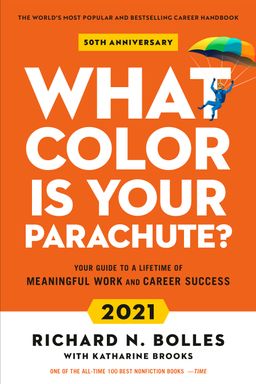
When job markets shift quickly and technology redefines work, waiting for opportunity to find you no longer works. In What Color Is Your Parachute?, Richard N. Bolles argues that the most successful career seekers are those who reverse the usual logic. Instead of asking "Who will hire me?", they first ask "Who am I, and where can I make the best contribution?" His central claim is simple yet revolutionary: you must begin with self-knowledge, not job postings.
Bolles contrasts two models—the Traditional Approach and the Parachute Approach. The former starts with external need, treating the job hunt like a lottery: you send out resumes hoping one lands. The latter starts with internal discovery through a structured self-inventory, then strategically aligns your top strengths with employers who can benefit from them. The rest of the book is both a philosophy and a toolkit for living that philosophy.
From Job Search to Life Design
Bolles treats job seeking not as a desperate scramble but as a design project for your working life. You chart where joy and competence intersect by dissecting your past successes, values, preferred environments, and mission. It’s no coincidence that later editions of Parachute heavily influenced career design and coaching movements (Katharine Brooks’s work in cognitive design and Stanford’s Designing Your Life echo many of these principles).
The process begins with reflective exercises and moves toward concrete strategy—making the book both introspective and tactical. As Bolles says, knowing who you are is half the battle; translating that into meaningful action is the other half.
Why the Old Model Fails
Bolles dissects a core mismatch: job hunters chase convenience, while employers chase certainty. Sending dozens of resumes online saves time but produces little proof of fit. Employers usually prefer hiring someone they know, have seen perform, or who comes recommended. This is why networking and informational interviews outperform online applications despite taking longer. Your task, then, is to transform yourself from a stranger into a known quantity.
Core Principle
“Who precedes what.” Begin with your identity and capabilities before chasing named roles or companies. Employers respond best when they meet a person who knows themself clearly and shows how they can solve problems.
Adapting to Modern Realities
The 21st-century job hunt adds digital complexity: LinkedIn replaces first impressions; AI filters resumes; gig work erodes stability. Bolles acknowledges these realities but insists the human fundamentals remain: curiosity, clarity, and conversation. Your online profile is now part of your résumé. The key is to intentionally curate your presence, not disappear. Nearly half of employers won’t consider candidates they can’t find online. That’s why today, your digital footprint is your new handshake.
From Self-Reflection to Mission
The book ends where it began: with purpose. Bolles invites readers to look beyond employment and consider vocation—work that expresses who you are and what you care about. Through a three-stage model (Being, Doing, and Calling), he connects spiritual reflection to career decision-making. The premise isn’t religious dogma but wholeness: when you align values, gifts, and social needs, work becomes more than wages—it becomes contribution.
How Readers Use the Book
Decades of readers—from graduates to late-career changers—have used Bolles’s worksheets, especially the Flower Exercise, to pivot careers, rediscover joy at work, and even start businesses. The structure of the book mirrors that process: (1) understand your skills through stories, (2) translate findings into your seven-petal Flower Diagram, (3) use that to target organizations and conduct informational interviews, (4) master interviews and negotiation, and (5) if no job fits, build your own path through entrepreneurship.
Viewed as a whole, What Color Is Your Parachute? is not just a job-hunting manual—it’s a practical philosophy of choice, agency, and alignment. It teaches you to work from the inside out, turning uncertainty into experimentation and crisis into discovery. The job hunt becomes a mirror of a larger search: for meaning, mastery, and belonging in the modern world.