
Idea 1
The Owl Advantage at Night
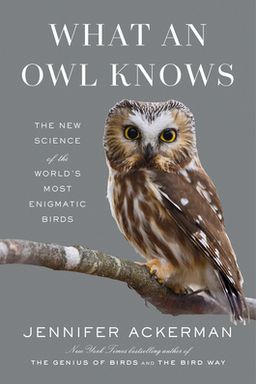
How do owls turn darkness into an ally? This book argues that owls succeed not because of a single trick but because of an integrated system: hyper-tuned senses, quiet aerodynamics, flexible life histories, and a brain that computes under uncertainty. Layer on human culture, field ingenuity, and modern conservation, and you get a 360-degree portrait of an animal that is both exquisitely specialized and surprisingly adaptable.
Sensory computation as a competitive edge
You begin with sensing. Researchers like Masakazu (Mark) Konishi and Eric Knudsen show that barn owls build neural maps of sound; Christine Köppl documents an oversized cochlea loaded with timing-sensitive hair cells; José Luis Peña demonstrates that owl auditory circuits perform Bayesian-like computations in milliseconds. Add asymmetrical ears and a steerable facial disk, and you see how owls can locate rustles to within a few degrees. Vision complements hearing: big tubular eyes, rod-dominated retinas, and even UV sensitivity keep owls effective when photons are scarce. Avinash Bala’s discovery that pupils dilate to sounds bridges sight and sound, inspiring a child hearing test that reads pupil changes.
Engineering silence
Chris Clark shows that quiet flight is a three-part feather technology: leading-edge combs, velvet-like pennula, and trailing-edge fringes. Owls are not truly silent, but they are quiet enough to avoid alerting prey and to hear their own targets. Great Grays sit at the extreme, using exceptional velvet and long combs to hover over voles and plunge through snow. Quiet, here, is both morphology and behavior.
Communication, courtship, and family drama
Owls speak a rich acoustic language. Karla Bloem catalogs 15 or more call types in Great Horned Owls that signal identity, sex, state, and pair bond. Pavel Linhart’s analyses and Marjon Savelsberg’s musician’s ear show how individuals are identifiable by voice, enabling low-impact monitoring. Courtship is subtle and efficient: food gifts, pitch-coded size, aerial dances, and strategic nest choices. Parenting is intense and risky, with sibling rivalry and, in some barn owls, surprising sibling generosity.
Roosts, routes, and nomads
Movement patterns are as varied as owl species. Long-eared Owls form vast winter roosts in Kikinda, Serbia, where culture and ecology meet public plazas. Tiny Northern Saw-whet Owls migrate quietly in the dark; Project Owlnet reveals their pulses and biases via volunteer banding and audio lures. Snowy Owls roam the Arctic and beyond, breeding in lemming booms and wintering even on sea ice; satellite tags from Project SNOWstorm and others reveal their astonishing flexibility and site fidelity.
Origins, diversity, and modern tools
Fossils place owls in the Paleocene, and modern genomics splits familiar forms into cryptic species. CT scans unpack ear and eye anatomy; acoustic analysis and DNA redraw the tree; telemetry rewrites maps of movement. Diversity clusters in climate-stable, topographically varied regions, shaping where discovery and conservation must focus.
How we know what we know
Fieldwork blends low-tech craft with high-tech tools: playback and passive acoustic monitoring, dogs that sniff pellets, drones that scout nests, tags that follow far-wandering birds, and nest cams that reveal hidden family life. Long-term projects by Denver Holt, David Johnson, and others supply the trendlines management needs.
Minds, myths, and moral choices
New neuroscience finds hippocampal place cells active during owl flight, reframing intelligence as task-specific. Cultural meanings range from omens to icons; captive ambassador owls teach empathy, body-language reading, and species needs. Conservation then becomes both science and storytelling: you avoid rodenticides, protect nesting cavities, support monitoring, and work with culture to build stewardship.
Key Idea
An owl is a system: senses that compute, wings that hush, voices that signal, movements that adapt, and people who shape outcomes. You read this book not just to admire the parts, but to see how they interlock to master the night.