
Idea 1
The Hidden Wealth of Nations
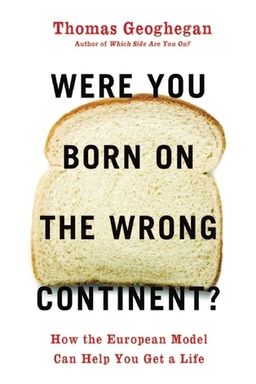
What makes a society truly rich? Thomas Geoghegan’s book overturns the standard answer of economists: gross domestic product. Through vivid travelogue and comparative observation — from Chicago’s crumbling parks to Zurich’s perfumed streets and Berlin’s lively cafés — he argues that wealth lies less in monetary output and more in public goods, leisure, security, and civic culture. GDP, he insists, blinds Americans to forms of prosperity that can’t be bought: clean cities, time to read, universal health care, reliable pensions, and a sense of order in daily life.
Across his chapters, Geoghegan introduces you to a gallery of scenes and characters — lawyers in Bonn, union leaders in Frankfurt, apprentices and artists in Berlin — all illustrating how Germany’s institutions convert social democracy into lived comfort. He layers personal narrative with economic insight to show how a country can be both capitalist and humane, productive yet slow, industrial yet green.
Rethinking prosperity beyond GDP
Geoghegan begins with sensory wealth. Walking through Zurich, he notes the scent of violets, gleaming muesli bowls, and public cleanliness — signals of hidden affluence that no GDP table records. Compare that to the disrepair of American parks, where poverty renders public life unpleasant. He argues that when public goods work — when health, education, and transit run efficiently — individuals consume less privately yet live better collectively. GDP overstates U.S. prosperity because it counts money spent to patch the gaps left by public neglect: extra security, private schooling, full-cost childcare. The numbers glow, but the lives they mask grow harried.
Time as the new currency
For Geoghegan, the ultimate form of wealth is time. Europeans, working hundreds of hours less per year, enjoy an asset Americans give away cheaply: leisure. His own struggle to leave his Chicago law practice exposes the cultural trap of long hours and constant connection. When he finally spends evenings in German cafés, he rediscovers what American productivity erases — slow reading, argument, and contemplation. (Note: This echoes Keynes’s 1930 vision of a 15-hour week as civilization’s crowning achievement.) Germans haven’t abolished work, but they’ve balanced life to leave room for the pleasures that make it worth living.
Institutions that hold capitalism accountable
Germany’s ability to combine prosperity with social equity rests on its institutions of Mitbestimmung — works councils and co-determined corporate boards — which give workers real influence over layoffs, scheduling, and strategy. Geoghegan immerses you in this system through encounters with Wigand, a union trainer, and Eckhardt, a Berlin labor lawyer. These arrangements transform labor from a commodity into a civic actor. Half a million Germans serve on councils, learning deliberation and negotiation much as Americans learn shareholder rights. This is democracy pushed into the workplace — an apprenticeship for citizenship itself.
Education, skill, and dignity
Beneath that civic architecture runs the “Dual Track” education system: one road to university and another to paid apprenticeships. By paying young people to master trades, Germany maintains a skilled industrial class bound to the firms and unions that train them. Apprentices acquire both competence and political literacy — an awareness of how to use skill collectively. In contrast, U.S. education isolates learning from earning, producing debt without social integration. (Think of Isabel, the German apprentice, versus Barbara, the debt‑laden Chicago manager from Geoghegan’s comparative example.)
Industrial strength with moral restraint
A paradox sustains the German model: high wages and worker power have not killed competitiveness. On the contrary, they foster quality and specialization. Firms, constrained by labor law and mutual trust, invest in long-term tooling and export high‑value goods. Geoghegan connects this industrial edge to the national character: a society “Green” in environmental ethic and “Dark” in moral vigilance. Ecological restraint and memory of past horrors cultivate a collective conscience that curbs reckless market excess. The bells of Frankfurt Cathedral, he writes, still “bong” to signal limits — an audible reminder that wealth without reflection risks catastrophe.
From welfare to resilience
The book also tracks the evolution and strain of this model — through unification’s fiscal shock, the Agenda 2010 reforms, and the 2008–09 financial “Krise.” Unification forced social democrats to balance solidarity with austerity, and Agenda 2010 became the “dirty deal” that slimmed welfare while preserving its core. Even so, Germany weathered the crisis better than most, thanks in part to public Sparkassen banks and subsidies that kept workers employed. Institutional design mattered more than ideology: when capital and labor share power, panic finds less purchase.
Culture, youth, and the democratic commons
Finally, Geoghegan invites you to see culture as infrastructure. Berlin’s cafés, free universities, and train corridors create time and space for reading and civic talk. The young who fill its squares, often supported by their parents, sustain not just creative industries but the deliberative habits that underpin democracy. Public trains, thick broadsheets, and cheap housing together form an ecology of attention — something invisible to GDP but invaluable to society’s depth.
Core argument
Measured only by GDP, America wins on paper. Measured by time, security, civic literacy, and joy, Germany may be richer. Geoghegan’s book is both diagnosis and invitation: to think of prosperity as a shared experience, not a private balance sheet.