
Idea 1
Building a Culture of Net Thriving
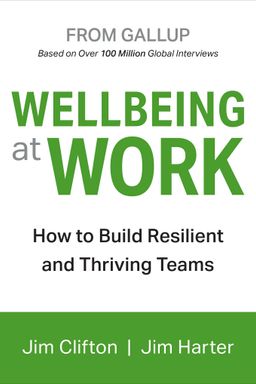
Have you ever wondered why some workplaces seem to hum with energy while others feel drained and lifeless, despite offering similar pay and benefits? In Wellbeing at Work, Jim Clifton and Jim Harter, two of Gallup’s leading thinkers, argue that the secret lies in creating a culture of net thriving — a workplace where employees are not just engaged in their jobs but also thriving in every dimension of their lives. The authors contend that wellbeing is not a perk or a program — it’s a strategic imperative that shapes organizational success, employee health, and societal resilience.
At its core, Gallup’s research shows that the world is facing a mental health pandemic — one defined not only by anxiety and depression but by lives spent suffering or struggling. Their data reveal that roughly seven in 10 people globally are not thriving. This crisis undermines productivity, innovation, and humanity's collective sense of hope. The book’s goal is to provide a scientifically grounded roadmap to reverse this trend, starting with the place where we spend most of our waking hours: our jobs.
The Foundation: Gallup Net Thriving
Gallup’s concept of Net Thriving (GNT) is measured through the “Best Possible Life Scale,” a two-question ladder that asks people where they see themselves now and five years into the future. These seemingly simple questions quantify the difference between those who are thriving, struggling, and suffering. The authors note that thriving employees report less worry, stress, sadness, and anger — and more energy, respect, and happiness. But engagement at work by itself isn’t enough. Engaged employees who aren’t thriving are far more vulnerable to burnout and health problems. Gallup’s data makes this starkly clear: engaged but non-thriving employees are 61% more likely to experience frequent burnout.
Five Interconnected Dimensions
Clifton and Harter organize wellbeing around five essential elements: career, social, financial, physical, and community wellbeing. These elements are globally validated across more than 160 countries — representing nearly all of humanity. The authors explain that thriving in all five acts like a multiplier: each boosts health, performance, and longevity. Their data show that individuals thriving in all five elements are 98% likely to thrive in life overall, have vastly fewer unhealthy days, and present half the disease burden compared to those who thrive in none. Interestingly, career wellbeing emerges as the most foundational — because everything starts with “liking what you do every day.”
The book walks through each of these elements with concrete examples: how career wellbeing reduces stress hormones, how social wellbeing at work reduces safety incidents, how financial wellbeing alleviates anxiety more effectively than income alone, and how physical and community wellbeing shape resilience in crises like COVID-19. None of these elements operate in isolation — they form a system of interdependence that mirrors the complexity of human life.
The New Leadership Imperative
Clifton and Harter call on leaders to move beyond wellness perks and toward systemic cultural change. The traditional focus on exercise programs or nutrition plans helps only the already motivated. True wellbeing transformation begins with engagement and trust. Managers — not policies — are the linchpins. Gallup’s research shows that engaged teams lead with clarity, focus on talent, and encourage development, all of which propel people toward thriving. Leaders who are thriving themselves spark ripple effects throughout their organizations; thriving managers make their employees 15% more likely to thrive.
The authors also lay out the risks organizations face if they ignore wellbeing: poor mental health, lack of clarity and purpose, overreliance on superficial perks, and poorly skilled managers. These “Four Risks” are silent killers of culture. A company might offer yoga classes and snacks but still harbor burnout and distrust — because no one clarifies expectations or connects work to meaning. The path to sustainable thriving, Gallup argues, is built through leadership accountability, authentic purpose, and the daily conversations managers have with employees.
The Science Behind the Strategy
The backbone of this book is data. Gallup draws from more than 42 million employee surveys, 5 million teams, and decades of meta-analysis linking engagement to outcomes. Their studies across industries show that teams scoring high in engagement have 23% higher profitability, 18% higher productivity, and 81% less absenteeism. The relationship between engagement and wellbeing isn’t a fluke — it’s generalizable across countries and crises. Even during recessions or pandemics, engagement proves to be a stabilizing force.
Why It Matters — Now
You can’t build a thriving organization without building thriving people. The authors position wellbeing as the next frontier of corporate value creation, akin to ESG principles for human capital. As work and life blend more than ever, the workplace becomes humanity’s most powerful lever for improving global wellbeing. In their words, “What the world wants is a good job — one that uses your strengths daily with a manager who encourages your development.” From that starting point radiates hope, health, and human progress. Gallup promises that if leaders measure and manage wellbeing with the same rigor they apply to financial metrics, they can create teams that not only perform but flourish — turning work from a source of stress into a foundation for thriving lives.