
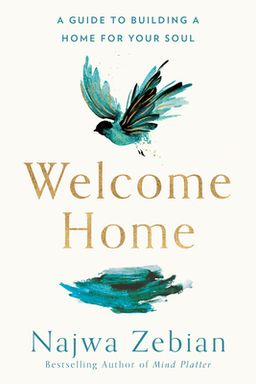
Welcome Home cover

Welcome Home

by Najwa Zebian

Welcome Home by Najwa Zebian is a profound guide to nurturing your soul. Through personal stories and practical advice, it helps you build a sanctuary within yourself, fostering self-worth, forgiveness, and emotional clarity, leading to a fulfilling and authentic life.

Building a Home Within Yourself

Have you ever felt as if you were searching for home in all the wrong places—in relationships, careers, or the approval of others—only to find yourself feeling even more lost? In Welcome Home, author and poet Najwa Zebian invites you to stop chasing external validation and start constructing a true home within yourself. Drawing from her personal story of displacement, heartbreak, and the long path back to belonging, Zebian argues that healing begins when you build your own emotional and spiritual home—a place where your worth, voice, and dreams can live safely, independent of others' acceptance.

This book isn’t just a metaphor—it’s a blueprint. Zebian organizes the process of healing into a series of “rooms,” each representing an essential aspect of self-discovery: the Foundation of self-awareness, rooms of Self-Love, Forgiveness, Compassion, Clarity, and Surrender, followed by a Dream Garden, Listening to Yourself, and finally, Adapting to Your New Reality. Each room contains what she calls tools, practical exercises for reflection that help you furnish your inner home with strength, peace, and authenticity. She replaces the language of self-help checklists with a deeply human invitation to feel, reflect, and rebuild.

From Homelessness to Wholeness

Zebian begins her journey with a realization that many readers will recognize—the feeling of “homelessness” even when surrounded by people and success. As a Lebanese Canadian who experienced cultural displacement, patriarchy, and isolation, she shares how emotional abandonment in childhood shaped her constant search for belonging in others. The turning point came when she recognized that this external dependence only deepened her wounds. “When you build your home in other people,” she writes, “you give them the power to make you homeless.” This insight becomes the philosophical foundation of the entire book: you cannot find peace in someone else’s acceptance; you must become your own sanctuary.

The Philosophy of Home

Home, for Zebian, is not a static destination but a living structure that evolves with your self-understanding. Building it requires two essential materials: self-awareness and self-acceptance. Self-awareness allows you to see the blueprints of your conditioning—to recognize how societal roles, family expectations, and cultural beliefs have shaped the “you” the world sees. Self-acceptance is the choice to love yourself in totality, not because you’ve “fixed” yourself but because you’ve embraced every unfinished room inside you. The metaphor of home is both sturdy and fluid: homes need foundations, repairs, and renovations, just as we do. And while storms—trauma, rejection, or change—may rattle your walls, the foundation you build in self-acceptance ensures that you always have somewhere to return to.

Pain as a Teacher, Writing as a Revolution

Zebian writes vulnerably about her experiences with sexism, gaslighting, and personal loss, but instead of framing pain as an endpoint, she presents it as a teacher. Her metaphor of “rooms” functions as a cognitive therapy of sorts: revisiting inner spaces where unresolved pain lives and transforming them into sacred, livable areas. She calls this process a revolution—not against people, but against silence. “Writing was my revolution,” she declares, describing how she used the pen to reclaim her voice and defy labels imposed by both Western media and her community. This mirrors what Brené Brown calls “the power of owning our story”—the transformative courage of vulnerability.

For Zebian, storytelling functions as both mirror and key. By narrating her trauma—losing her voice under patriarchal systems, enduring public scrutiny for taking off her hijab—she builds a bridge for others who feel unseen. “I am not free because I took my hijab off,” she insists. “I am free because I made that choice.” Her message is not prescribed liberation but individualized authenticity: freedom comes from alignment between your inner truth and outer life.

The Architecture of Emotional Healing

Each chapter offers psychological scaffolding—prompts and metaphors to help you engage actively with your emotions rather than avoiding them. For instance, in the Forgiveness Room, she likens self-forgiveness to cutting the cords that tether you to the past; in the Surrender Room, she teaches readers to stop resisting their emotions and “have tea with their pain.” Her style is lyrical but grounded, blending memoir with mindfulness practice. Throughout, she emphasizes praxis—the shift from intellectual understanding to lived experience. Knowing self-love, she reminds us, is not the same as practicing it.

Ultimately, Welcome Home serves both as memoir and manual, offering readers a map to emotional independence. Whether you’re grieving a relationship, suffering from burnout, or simply feeling misplaced in your own life, Zebian’s framework helps you reconnect to what she calls your “at-home self”—the version of you who feels whole without needing anyone’s approval. The book’s structure moves like a guided tour through heart and mind, and by its end, you’re not invited to move into someone else’s vision of peace but rather to declare, “Home is me.”


Laying the Foundation: Self-Awareness and Self-Acceptance

Every strong home begins with a foundation—and for your inner home, that foundation is made of self-awareness and self-acceptance. Zebian explains that many people try to build their identity out of scattered rooms—career, relationships, external approval—without establishing the groundwork that keeps everything stable. Without this internal base, life’s smallest tremors—conflict, rejection, or loss—can make you feel uprooted. The work begins when you ask: Who am I without the labels I wear?

Self-Awareness: Seeing the Real Structure

Zebian links awareness to excavation—you dig into the soil of your past to see how your beliefs and behaviors were built. When she recalls entering adulthood as a Lebanese Muslim woman in Canada, she identifies how her silent compliance was taught, not chosen. Cultural messages told her that “good girls” stayed quiet and self-sacrificing. Realizing that this identity was constructed by others, not by her authentic self, became her first act of self-awareness. She invites readers to write down all the “versions” of oneself—the daughter, worker, spouse—and ask which ones feel natural versus imposed. Only then can you distinguish performance from truth.

Self-Acceptance: Owning Every Imperfect Brick

Acceptance, she insists, is not passive or indulgent. It’s radical honesty: recognizing all the mess and still deciding you are worthy of love. In Zebian’s analogy, this means pouring concrete that will hold through storms. Acceptance is incompatible with “ifs.” Statements like “I’ll love myself if I lose weight” or “I’ll be confident if I get promoted” outsource your foundation to external weather. Accepting yourself as a work in progress doesn’t mean you stop improving—it means you stop waiting for perfection to allow belonging. This mirrors psychological research such as Kristin Neff’s work on self-compassion, which shows that accepting imperfection actually fosters resilience and motivation.

Her exercises—called “anchors”—guide you into this practice. One prompt asks you to sit in silence and listen to the voice in your mind. Is it truly yours, or is it society’s expectations talking? When you separate the authentic voice from the noise, you’ve begun to lay your foundation. Over time, this awareness strengthens your emotional architecture so that external rejection no longer feels like demolition. You become both builder and occupant of your own house.


The Practice of Self-Love

In the Self-Love room, Zebian dismantles the pop-culture notion that self-love is bubble baths and positive affirmations. True self-love, she argues, is a disciplined practice—an everyday conversation between you and the person in the mirror. It means you stop waiting for others to answer your call for love and start answering it yourself.

Love as Responsibility

Zebian likens loving yourself to being the CEO of your own company. You are not an employee seeking performance reviews—you are the executive responsible for your wellbeing. In her teaching years, she learned this from compassion fatigue: giving endlessly without replenishment only leads to collapse. She introduces the metaphor of a protective bubble: a boundary that lets you be empathetic without absorbing everyone’s pain. Each time you say “no” to depletion, you are saying “yes” to self-love.

Balancing Empathy and Boundaries

As an empath, Zebian absorbed others’ struggles—students, friends, even those who hurt her—until she realized that overextending compassion is not kindness but self-abandonment. Through reflection exercises she calls “gems,” she teaches practical ways to balance giving and keeping. One gem prompts readers to review the kind of love they’re blind to. Do you notice affection only when it fits your expectations? Her story about her niece Leena cradling her face reminds her that love has always been around—she had simply stopped seeing it. Love expands only when you are open to receiving it.

Answering Your Own Call

Perhaps Zebian’s most transformative tool is “Answer Your Own Call.” When you catch yourself waiting for a text, praise, or apology to feel okay, you turn inward and ask: What am I needing right now that I can give myself? It’s not arrogance—it’s emotional maturity. This self-sufficiency echoes stoic philosophy and mindfulness traditions, where inner stability frees you from external turbulence. As she writes, “When you look in the mirror and say ‘Here is your home country,’ you’ll never need to beg for shelter again.”


Healing Through Forgiveness

Forgiveness, for Zebian, isn’t about absolving someone else—it’s about cutting the cords that still keep you bound to the pain. Entering the Forgiveness room means reclaiming your power from those who wronged you, including past versions of yourself. “The one who broke you cannot heal you,” she writes, reminding us that no apology will ever remove an internal wound. Only self-forgiveness transforms pain into strength.

From Victimhood to Ownership

In a pivotal story from her teaching career, Zebian recounts reporting workplace harassment, only to be dismissed by the very system that had promised to protect her. That moment—walking out of a superior’s office in tears—became her emotional breaking point. Yet years later, she interpreted it differently: that system’s failure forced her to become her own advocate. She could remain imprisoned in bitterness or step into agency. Choosing forgiveness didn’t mean condoning injustice; it meant refusing to remain trapped in it.

Forgiving the Past Self

Her process begins with forgiving herself—for not knowing better, for believing attention was love, for mistaking silence for strength. She calls this stitching your soul with gold, a nod to the Japanese art of kintsugi, where broken pottery is repaired with golden lacquer. The cracks aren’t concealed—they’re honored as part of the artifact’s beauty. Similarly, your scars become proof that you’ve survived, not marks of shame. Forgiving yourself becomes the foundation for all other forgiveness.

Her simple but profound exercise uses “I statements”: rather than “They hurt me,” she suggests “I feel pain when…” This linguistic shift, borrowed from conflict psychology, re-centers healing inside your home rather than under someone else’s roof. Words rebuild boundaries, and in naming emotions as yours, you begin to release them.


Compassion and Boundaries

The Compassion room explores how empathy without boundaries leads to exhaustion. Zebian distinguishes between feeling for others and feeling with others. True compassion coexists with discernment—it invites connection without sacrificing protection. This lesson was shaped by her upbringing in which religious and social rules often conflated kindness with self-erasure.

From Cultural Conditioning to Authentic Care

As a Muslim girl in Lebanon, she learned that self-denial equated to virtue. Compassion meant always saying yes. But this cost her identity. The adult Zebian reframes compassion as sacred stewardship: you are the host of your home—you decide who enters. She introduces binding blocks, techniques for establishing emotional boundaries. Step one, she says, is remembering that you are the host, not the servant. Loving people doesn’t obligate you to endure harm in the name of kindness.

The Guest List of Your Life

Her metaphor of a “guest list” is both witty and practical. Write down who you allow into your home—friends, thoughts, even cultural expectations. Who consistently shows compassion toward you? Who drains your energy? Boundaries, she clarifies, don’t control others; they protect yourself. When she publicly removed her hijab and faced hatred online, she practiced this by filtering who she listened to: “Peace and love to you, even if you hate me,” she wrote. That statement, firm yet kind, embodies fierce compassion—strength wrapped in understanding.


Clarity and Unveiling the Authentic Self

Zebian calls the Clarity room “a hall of mirrors”—a place where you remove the blur between who you are and who the world told you to be. This chapter explores identity reconstruction after years of being defined by labels and expectations. For her, clarity came through literal unveiling—both emotional and physical—when she removed her hijab at twenty-eight.

Seeing Beyond Labels

In her poem “What Story Do I Tell You?” Zebian challenges the audience’s assumptions: Muslim, immigrant, oppressed. By reciting the poem on stage, she began to reclaim authorship over her own narrative. She realized she had been asking others for permission to reveal her pain instead of granting it herself. The key to clarity, then, is unveiling—the courage to see yourself independent of external definitions. This echoes James Clear’s concept in Atomic Habits that identity, not goals, drives change; until you know who you are, you can’t build the life you want.

From Confusion to Courage

Her story about being shamed on a bus in Canada for “dressing like that” reveals the complexity of identity between cultures. At nineteen, she chose to continue wearing her hijab out of conviction, not fear. At twenty-eight, she chose to remove it for the same reason—conviction. What unites both choices is courage. True clarity, she explains, doesn’t come from defiance but alignment: quieting the noise enough to hear your truth. One practical mirror exercise asks: “If I had a choice, is this what I’d choose?” That question can shatter decades of unconscious conformity.


Surrender and the Art of Emotional Release

In the Surrender room, Zebian teaches that feeling isn’t weakness—it’s wisdom. Resistance to emotion, she says, is what prolongs suffering. By surrendering, you stop labeling pain as an enemy and start inviting it as a teacher. “Have tea with your pain,” she writes, describing a mindful dialogue with emotion rather than suppression.

Emotions as Visitors, Not Tenants

Zebian borrows from mindfulness and Acceptance and Commitment Therapy when she calls emotions “visitors.” They arrive, teach, and leave. The problem arises when negative emotions overstay their visa because you resist them. She outlines a seven-step “submission” process, from identifying emotional debt to expressing gratitude for positive feelings. Her gratitude practice—sending daily voice notes with a friend—shows how noticing joy rewires habitual negativity (echoing neuroscience studies on gratitude’s impact on the brain).

Transforming Familiar Pain

Surrender also means confronting why familiar pain feels safer than unfamiliar peace. Zebian candidly admits she once sought love in rejection because it reenacted old wounds of unworthiness. Healing required unlearning that pattern and choosing new “familiarities”: stability, respect, and wholeness. Her mantra captures this evolution—“Don’t rush to your happy ending; live in your becoming.” Surrendering, then, is not giving up—it’s letting go of the illusion of control and trusting that the new you will know how to rise.


Living Your Dream with Authenticity

The Dream Garden, one of the book’s most inspiring sections, reframes ambition as an act of alignment, not hustle. Zebian warns against “fake it till you make it” culture. Instead, she champions “live it, and it will lead you.” Dreams should feel like home, not like masks. Through her own pivot from aspiring teacher to writer and activist, she illustrates that purpose evolves as you do.

Lanterns and Watering Cans

Each lesson is framed as a “Lantern” lighting your path and a “Watering Can” nurturing growth. Her Lanterns include reminders like “Unblind yourself,” “Take it step by step,” and “Be original.” They translate ambition into mindfulness. For example, in rejecting comparison, she notes, “Why build a home that looks like someone else’s when you’ve never stepped inside?” Watering cans invite reflection through questions such as “What is screaming at you?”—urging you to listen to the dream already whispering from within.

Work as Love, Not Validation

To Zebian, purpose is not a fixed goalpost but a living garden that requires patience and authenticity. Even after global fame, she insists her success is not measured by income or followers, but by integrity. “My pen is my weapon,” she writes, “and the battlefield is the world that tells me I don’t belong.” Her honesty demystifies creative courage: you don’t need to chase the dream—you need to live it through small, consistent steps. The garden grows when you do.


Listening to Yourself and Adapting to Your New Reality

The book closes with two crucial chapters—on listening inwardly and adapting to the new reality of wholeness. Zebian calls listening “an art of silence.” Just as you create physical quiet to hear music, you must cultivate inner silence to hear your authentic voice. She distinguishes three types of silence: listening to others, using silence to communicate boundaries, and listening to yourself. Most people master the first two but neglect the third.

Transformative Silence

When Zebian moved into her own apartment, the physical silence was terrifying at first—it echoed loneliness. But as she built her inner home, that same silence became comforting. Through solitude, she learned to separate her ego’s noise (“You’re not enough”) from her soul’s truth (“You are home”). This clarity allowed her to let go of the drama of old narratives and listen for peace. It parallels mindfulness teacher Tara Brach’s idea of “radical acceptance”: hearing your internal critic without obeying it.

Adapting to Wholeness

Finally, the book addresses what happens after healing. Once you build your home, people from your past may knock, asking where the old version of you has gone. Her advice: “Say, she doesn’t live here anymore.” Healing brings freedom but also responsibility—to maintain, repair, and occasionally renovate your home. You will still experience setbacks, but now you know the way home. As she concludes: “Home is you.” The moment you truly internalize this, the search ends. You stop building in others and start welcoming yourself.

Dig Deeper

Get personalized prompts to apply these lessons to your life and deepen your understanding.

Go Deeper

Get the Full Experience

Download Insight Books for AI-powered reflections, quizzes, and more.