
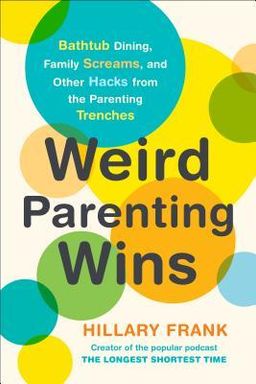
Weird Parenting Wins cover

Weird Parenting Wins

by Hillary Frank

Weird Parenting Wins by Hillary Frank reveals creative hacks to tackle parenting challenges with humor and imagination. Discover how to transform daily struggles into playful adventures, calming fears, managing sibling rivalry, and channeling stress into positive family interactions.

Parenting Through Creativity, Chaos, and Connection

What if every parenting crisis—every tantrum, every sleepless night, every moment that makes you want to scream—was actually an opportunity for creativity? In Weird Parenting Wins, Hillary Frank argues that the secret to surviving parenthood isn't following strict expert advice, but embracing the strange, spontaneous, and deeply human improvisations that real parents invent in moments of desperation. These weird, funny, and unexpectedly profound 'wins'—as Frank calls them—form a collective guide to parenting that feels more like trading stories with exhausted friends than being lectured by a guru.

Frank, creator of the award-winning podcast The Longest Shortest Time, began collecting these need-born hacks from parents around the world, pairing them with her own witty and heartfelt reflections. The result is a book that argues parenting doesn’t get easier through perfection, but through playfulness. The approach relies on the idea that when you meet chaos with imagination, you not only calm your child—you also soothe yourself.

From Exhaustion to Innovation

Frank begins by describing her own disastrous introduction to motherhood: a traumatic birth, botched stitches, and newborn sleep deprivation that bordered on delirium. Like many new parents, she turned to baby-care books for salvation, only to find that their rigid advice often made things worse. Her breakthrough came from a simple truth: when you stop trying to do parenting 'right,' you free yourself to do what actually works. Out of desperation came creativity—she started singing blues songs with her fussy daughter in the cold, making misery laughable instead of unbearable. That moment became the blueprint for every other story in the book: parent first loses control, then regains power through imagination.

A Patchwork of Parental Ingenuity

Each chapter explores a major parenting battlefield—from getting kids to sleep or eat to handling fear, rivalry, or embarrassment—through hundreds of 'weird wins' shared by parents. Frank weaves these anecdotes into themes that reveal deeper truths about resilience, humor, and empathy. One parent soothes a crying infant by putting an electric toothbrush near their bassinet. Another calms a car freak-out with Tuvan throat singing. Others transform tantrums into games, bedtime battles into rituals, fear of monsters into creativity. There’s a collective spirit behind it all: no one has all the answers, but everyone has something that worked once—and that’s enough.

Why It Matters

Beneath the humor, Weird Parenting Wins speaks to a deeper cultural anxiety: modern parenting is saturated with contradicting advice and constant comparison. Frank offers liberation from the 'Mommy Wars' by normalizing imperfection and emotional honesty. Her crowdsourced wisdom dismantles the myth of the expert and shows that the real authority on your child is you. It also reframes creativity as a survival instinct: whether it’s singing ridiculous songs, inventing magic spells against monsters, or celebrating failures with humor, imagination restores control in the most powerless moments.

A Playful Philosophy of Parenthood

Frank’s philosophy blends empathy and absurdity. She doesn’t romanticize parenting, but insists that laughter and flexibility are the only way through its impossibility. Each 'win' is both solution and story—a little reminder that connection is more powerful than control. By collecting these stories, Frank also democratizes parenthood: single moms, foster parents, LGBTQ parents, and stepparents all contribute, revealing that creativity transcends circumstance. What unites them is not method but mindset: curiosity over correctness, invention over instruction, and love disguised as silliness. As Frank puts it, weird wins don’t make you weird—they make you work.

Over the rest of the book, Frank explores how this weird wisdom plays out across every stage of childhood—from calming infant cries to talking about death, puberty, and independence. It’s less a manual and more a permission slip—a reminder that as a parent, your strangest moments may also be your most brilliant ones.


Turning Chaos into Creativity

Frank’s first major insight comes from a moment of maternal despair—her daughter screaming in the cold as they both waited in line for skis. In that instant, she realized that logic and authority often fail with children, but creativity rarely does. So she improvised: 'If you’re gonna whine,' she told her daughter, 'you’ve gotta sing the blues.' Suddenly, frustration became fun, and a miserable day became a bonding moment. It’s a tiny story with a big message: parenting breakthroughs often arise when you stop resisting reality and start reshaping it with imagination.

The Science of Soothing

Frank explains that infant cries are evolutionarily designed to grab attention—they activate the same brain regions associated with alarm (a fact supported by psychologists such as Alison Gopnik in The Gardener and the Carpenter). That’s why even loving parents can feel rage or panic when babies scream. For Frank, the key was finding playful rituals to transform distress into connection. In her home, Beatles covers became scream duets, bedtime story endings became call-and-response games, and car rides morphed into musical performances. Across hundreds of parent stories, that creative spark—singing, pretending, laughing—proved far more effective than standard 'soothing techniques.'

Parenting Wins Born of Exhaustion

Parents in Frank’s collection discover similarly bizarre methods: one father quiets his baby with the hum of an electric toothbrush; another calms car freak-outs by barking like a dog. Many hacks emerge from sleep deprivation, that shared delirium of early parenthood where normal logic breaks down—yet creative logic thrives. These improvisations echo psychologist Donald Winnicott’s theory of the 'good enough parent': it’s not perfection but responsiveness and play that build secure attachment. Frank’s stories show this in action. A mom invents 'boob snuggles' from bra cups; another distracts toddlers from tantrums by pretending to bake them into pizzas. The absurdity isn’t just humor—it’s human connection.

From Control to Connection

By embracing chaos instead of fighting it, parents reclaim power through collaboration. Frank argues that this shift—from commanding to connecting—turns impossible moments into learning experiences. A meltdown becomes theater; a bedtime protest becomes an improv routine. When you improvise with your child instead of against them, you teach resilience, empathy, and flexibility by example. Weirdness, in her world, is not dysfunction but adaptation: a reminder that every family culture is an ongoing creative act.


Feeding with Humor and Illusion

In one of the book’s funniest sections, Frank explores the dark art of getting a toddler to eat. Her mother once convinced her that dinner was 'a snack' by renaming homemade chicken cutlets 'chicken snack' and serving them with toothpicks. Years later, Frank realizes that every modern parent must become a kind of food illusionist—rebranding nutrients as adventures. This chapter reframes mealtime not as a battle but as theater, where your best props are humor, context, and outright deception.

White Lies and Magic Menus

Parents in her collection share brilliant culinary tricks. One mother reuses branded takeout boxes to disguise homemade leftovers as restaurant food. Another rebrands pumpernickel toast as 'chocolate bread.' Others define greens as 'adventure food,' where each bite earns points toward dessert. The underlying wisdom is simple but profound: context shapes appetite. When kids feel playful ownership of the experience—when food looks like fun—they respond differently. It mirrors behavioral economist Dan Ariely’s findings that reframing choices transforms behavior more effectively than enforcing rules.

Breaking the Power Struggle

Food fights often symbolize broader parent-child tensions: the struggle over control. By turning meals into games—'crunch contests,' 'adventure bites,' or 'marrow money' competitions—parents redirect that power dynamic toward collaboration. Frank laughs at the irony of elaborate bribery systems but also recognizes their value: they shift focus from defiance to anticipation. Eating broccoli because it might turn your poop pink? That’s not manipulation—it’s imaginative marketing.

Why Laughter Works Better Than Lectures

The genius of these 'weird wins' lies in humor’s neurological impact: laughter releases dopamine, which improves openness to new experiences. Whether through frozen spinach 'lollipops' or father-daughter 'boxing for veggies' games, joy rewires behavior faster than discipline ever could. Frank’s takeaway: stop trying to make your child eat right. Make eating funny, curious, even weird—and nutrition takes care of itself.


Taming Fear with Imagination

How do you help a child terrified of monsters, shadows, or automatic toilets? By weaponizing the same tool that created the fear: imagination. Frank’s chapter on fear—particularly about monsters and death—is one of her most poignant. As a child, she believed a lion lived in her closet until her mother wrote a 'No Lions Allowed' sign. The paper didn’t just ban predators; it validated her agency. That small ritual illustrates an important theme: play doesn’t deny fear—it transforms it.

Inventing Protection Magic

Parents worldwide contributed a stunning variety of monster deterrents. Some mixed lavender sprays labeled 'anti-ghoul mist.' Others drew 'No T-Rex' signs modeled after 'No Smoking' icons. One mother built a nightly séance with pots and pans to send ghosts home. The details differ, but the psychology is the same: imagination restores control to frightened minds. As child psychologist Bruno Bettelheim argued in The Uses of Enchantment, fantasy helps children process anxiety by projecting it into stories they can resolve themselves. Frank’s anthology brings that theory to life in real kitchens and bedrooms.

Facing Real-World Fears

In a darker turn, Frank addresses how children perceive real threats—gun violence, illness, or death itself. Her daughter Sasha, after learning Martin Luther King Jr. was assassinated, experienced panic attacks about mortality. Frank admits she couldn’t protect her from that knowledge, but through play—skeleton pajamas, glow-in-the-dark costumes, and mock hunts—Sasha learned to laugh at the thing that scared her. 'Our job,' Frank notes, 'isn’t to erase fear but to give it shape so kids can dance with it.'

Creativity as Courage

This chapter reveals the soul of Frank’s philosophy: humor is emotional armor. When a child learns she can turn horror into art—a painting, a chant, a costume—she internalizes resilience. And when parents join in, pretending to die dramatically from 'monster attacks,' fear becomes not a private torment but a shared comedy. Weirdness, at its core, becomes courage.


Keeping Your Cool by Getting Weird

Parenting rage is real, and Frank refuses to pretend otherwise. Instead of preaching patience, she shows how real parents channel frustration into cathartic absurdity. Screaming into dish towels, dancing like maniacs, inventing 'Family Screams'—these rituals transform tension into laughter before it turns into harm. This chapter serves as a gentle manifesto for mental health: give yourself permission to lose it, creatively.

Defusing the Bomb

Frank’s contributors reveal hundreds of coping rituals. One mom takes headphones to the car for five-minute naps instead of yelling. Another hides in the pantry eating animal crackers in the dark. Some parents invent alter egos—'Nutso Mommy,' 'Bath Monster,' 'Freud Dad'—to parody their frustration. Each story reframes anger as a performance instead of a weapon. It’s improvisational therapy, echoing the psychology behind play-based stress management.

Why Humor Heals

Laughter short-circuits the fight-or-flight response by triggering endorphins, a physiological truth Frank experiences firsthand after bawling at a movie about parenthood and feeling instantly lighter. She calls these outbursts 'Big Cries'—emotional resets parents should schedule like workouts. The message aligns with Brené Brown’s work on vulnerability: allowing yourself to feel deeply, even messily, is what restores empathy.

Emotional Honesty Over Perfection

The real 'win' here isn’t keeping composure but modeling how to recover from losing it. When parents scream, apologize, and joke afterward, children learn self-regulation through example. Frank’s mantra—'It’s not crazy; it’s just my crazy'—captures that grace. Weirdness becomes self-care disguised as silliness, proving that stability often requires letting yourself come unhinged first.


Love, Sex, and Survival After Kids

In a raw and moving later chapter, Frank tackles the most taboo parental topic: sex after childbirth. She recounts her traumatic episiotomy and three-year recovery, turning what could be mere confession into meditation on intimacy, identity, and survival. Beneath the physical pain lies a deeper wound: the loss of self that many caregivers experience. Slowly, through therapy, humor, and medical persistence, Frank reclaims not just her body but her desire—for life itself.

From Pain to Pleasure Again

Frank’s story of misdiagnosis after misdiagnosis culminates in a near-comical savior: a surgeon nicknamed 'the Count' who finally discovers her neuroma and restores her health. What follows is not a fairytale but an honest map of healing—through acknowledgment, not denial. She reframes sexuality as another form of weirdness: awkward, funny, resilient. Her candor reminds readers that rediscovering intimacy is both physical and creative work, much like parenting itself.

Redefining Intimacy

The surrounding parent stories recreate this radical openness. Couples schedule 'microdates' during daycare hours, use hotel rooms by the hour, or turn co-sleeping logistics into erotic scavenger hunts. These anecdotes don’t romanticize exhaustion; they normalize it. Passion, Frank shows, doesn’t disappear—it mutates into humor, teamwork, and survival. Making love after parenthood becomes less about spontaneity and more about complicity—the shared mischief of still trying.

The Antidote to Shame

By discussing sex in the same tone as potty training or tantrums, Frank destigmatizes it. Parenthood and sexuality, she argues, belong to the same continuum of embodiment. The more you treat both with laughter and grace, the more human you remain. Her 'weird wins' here are not erotic tips but existential ones: that pleasure, like parenting, demands patience, curiosity, and sometimes, very creative scheduling.


Letting Kids Grow and Letting Go

In the final chapter, Frank explores how weirdness evolves as children grow older. The same humor that once soothed toddlers becomes a lifeline for navigating adolescence. She shares stories of parents who throw 'period parties' with black forest cake and empowering music, those who negotiate curfews with laughter, and others who fight eye-rolling teens by dancing ballet in public. Each story radiates the same ethos that began with infant cries: connection over control.

Authority Through Authenticity

Frank emphasizes that as kids mature, the parental role shifts from director to collaborator. Parents earn trust not through discipline but honesty—sharing their own mistakes, fears, and even sexual awkwardness. The 'fuck cake' family ritual exemplifies this: one day a year when everyone, kids included, decorates a cake with all the profanities they’ve suppressed, eating away not just frosting but shame. It’s funny and profound: a ceremony of emotional transparency disguised as dessert.

Letting Kids Self-Regulate

The teenage years, Frank suggests, require a balanced withdrawal. Parents shift from enforcing to empowering—helping kids set their own curfews, manage their own chores, and make moral decisions within shared contracts. Weird wins like 'mental health days,' 'driving contracts,' or 'allowance experiments' prepare kids for autonomy by treating them as partners. Psychologically, this fosters intrinsic motivation more effectively than punishment ever could.

The Art of Letting Go

Ultimately, Frank’s message is that weirdness grows with your child. Each stage demands a new kind of invention: lullabies evolve into family jokes, tantrums into debates, rituals into traditions. Parenting isn’t a linear curriculum—it’s an ongoing improv show, one that ends not in mastery but mutual respect. When you can laugh together through every phase, you’ve already won.

Dig Deeper

Get personalized prompts to apply these lessons to your life and deepen your understanding.

Go Deeper

Get the Full Experience

Download Insight Books for AI-powered reflections, quizzes, and more.