
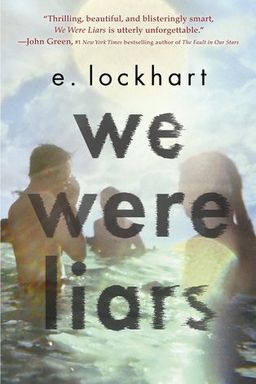
We Were Liars cover

We Were Liars

by E Lockhart

We Were Liars is a suspenseful tale of the wealthy Sinclair family, unraveling as dark secrets surface. Through Cadence''s unreliable narration, explore themes of privilege, trauma, and the quest for truth. A gripping story of love and family betrayal.

The Lies That Bind a Family

What happens when the stories your family tells—about love, appearance, success, and belonging—turn out to be lies? In Family of Liars, E. Lockhart takes readers deep beneath the glossy perfection of the Sinclair family to reveal the secrets that haunt their private island and the generational pain buried under manners and money. This prequel to We Were Liars centers on seventeen-year-old Carrie Sinclair, exploring the summer that defined her life—a summer of ghosts, addiction, and death.

Lockhart’s argument is that wealth and reputation do not insulate a family from tragedy. In fact, the very effort to maintain appearances—to preserve the myths of elegance and success—can destroy the people living inside them. Through Carrie’s narration to the ghost of her son Johnny, Lockhart weaves a tale that’s part confession, part exorcism. The result is an unflinching meditation on guilt, complicity, and the lies required to survive the unbearable.

A Story About the Power and Cost of Silence

The Sinclairs pride themselves on restraint and composure—“never complain, never explain”—a motto that runs through the generations. But that stoicism is a cage. Beneath the facade of pristine summer houses on Beechwood Island lies emotional decay: addictions, betrayals, and a culture of repression so deep that truth itself becomes unthinkable. Carrie, our narrator, embodies this paradox: a daughter trained to manage, soothe, and lead—but denied the space to feel.

When she addresses her ghostly son Johnny, it is both a haunting and a confession. The narrative invites you to consider your own family’s unspoken rules: What aren’t you allowed to say? Which lies keep the peace—and which quietly destroy it?

Ghosts, Addiction, and Inherited Damage

Literally and metaphorically, this is a ghost story. Carrie’s dead sister Rosemary reappears throughout the summer in spectral form. She isn’t there to seek revenge but to remind Carrie of the emotional debts unpaid—the grief ignored, the guilt denied. Lockhart’s ghosts aren’t supernatural monsters; they’re embodiments of memory, trauma, and shame that the family refuses to acknowledge. When Carrie medicates herself with Halcion and codeine, she’s not just numbing pain—she’s trying to silence those ghosts.

Lockhart uses addiction as a stand-in for generational trauma: each generation of Sinclairs substitutes one anesthetic or illusion for another, from pills and alcohol to money and status. The book asks whether confronting the truth is even possible when your identity has been built on pretense.

Privilege as a Prison

Beechwood Island, with its elegant houses and manicured lawns, is as much a character as any of the humans. Lockhart situates privilege as both setting and trap: a world so insulated that morality becomes a matter of convenience. While the Sinclair family claims to embody ideals of grace and success, their history—from colonial exploitation to modern deceit—reveals ugliness under the surface of refinement. Carrie’s discovery that her biological father is a man her mother once loved but was forbidden to marry because of religious prejudice dismantles her sense of belonging. Her very face, reshaped by her father’s insistence on jaw surgery, becomes a symbol of conformity to the Sinclair image.

This obsession with appearances—beautiful homes, beautiful daughters, beautiful lies—becomes the novel’s moral rot. Even when tragedy strikes, the family’s first instinct is containment, not compassion. It’s a portrait of privilege turned pathological.

Truth, Storytelling, and Redemption

The book is ultimately structured as moral reckoning. Carrie’s stories to Johnny blend fiction, confession, and fairy tale, borrowing motifs (“Cinderella,” “Mr. Fox”) to frame real-life horror. Storytelling itself becomes a way to process guilt—to transform the unbearable into manageable myth. Through these tales, Carrie both exposes and perpetuates deception. Like the Grimm stories they echo, Lockhart’s fables carry jagged morality: no one emerges innocent, but telling the story might save the soul.

By the novel’s end, Carrie accepts who she really is—not a polished Sinclair princess but a flawed, haunted woman who must learn to “live a joyful but conscious life.” Her confession is her redemption. In this sense, Family of Liars argues that liberation begins only when the lies end—when you pull the severed hand from the pocket of your wedding dress, as the tale of Mr. Fox demands, and say: this is the worst I have done. Please, bear witness.

Lockhart’s story resonates because it’s not only about ghosts and privilege; it’s about every family that hides truth behind etiquette, every person who’s carried guilt in silence. Through Carrie, we’re forced to ask: What family stories do you tell to keep yourself afloat—and what would happen if you told the truth?


Carrie Sinclair’s Coming of Age in Ruins

The world introduces Carrie Sinclair as a girl built to be perfect. Born into generational wealth, raised in homes of salt-weathered wood and white cotton, she should embody the Sinclair ideal—grace, beauty, composure. But her coming of age is not about becoming perfect; it’s about realizing perfection itself is a cage.

The Shaping of a Sinclair

From childhood, Carrie absorbs her father Harris’s creed: Be a credit to the family. She’s told to stand straight, never show pain, always smile. When doctors recommend jaw surgery to “fix” her weak chin, Harris insists. To him, beauty equals strength; any sign of physical imperfection is weakness. Carrie’s jaw literally broken and remade, her face becomes an emblem of obedience. But it also severs her from authenticity. Every glance in the mirror reminds her she’s been sculpted to suit someone else’s image.

Through this, Lockhart dramatizes how appearances consume identity: Carrie’s emotional fractures mirror her physical reconstruction. She learns pain should look beautiful. Even when her little sister Rosemary drowns, Carrie’s parents respond with poise, not grief. “A joyful life,” her mother insists. That façade of composure becomes Carrie’s inheritance—and her undoing.

Addiction as Control and Escape

The codeine and sleeping pills begin as medical necessity after her operation but soon morph into coping mechanisms. Carrie uses drugs to manage unbearable silence—the silence about Rosemary, about her pain, about being “wrong.” The narcotics are both rebellion and obedience: she defies the family’s demand to “never complain,” yet the drugs also help her continue faking normalcy. Addiction, for Carrie, becomes a perverse form of emotional etiquette.

Lockhart connects Carrie’s dependence to a broader cultural disease: the Sinclair pride in burying discomfort. Her descent into pills mirrors society’s treatment of discomfort with women’s pain—sedate it, hide it, smile through it. The narcotics let her escape the feeling of being unchosen, unwanted, the daughter conceived by another man, yet claimed for appearances. Every dose is a denial of identity and a way to sustain the lie.

The Lonely Task of the Eldest Daughter

As the eldest sister, Carrie plays protector, mediator, fixer. To her younger sisters Bess and Penny, she is both rival and guardian. She manages everyone’s needs until her own collapse arrives. The intimacy between her and deceased Rosemary—her confidant, her conscience—reveals that Carrie’s role as caretaker never ends. When her family refuses to grieve, Rosemary’s ghost returns as the only person still willing to confront truth. Carrie’s coming of age is not marked by rebellion or romance but by the realization that control and caretaking cannot save anyone, least of all herself.


The Ghosts of Beechwood Island

Ghosts fill every corner of Family of Liars. They are memories made flesh, unspoken stories demanding voice. Rosemary, Carrie’s dead sister, visits in pajamas shaped like a cheetah, cracking jokes and requesting bedtime stories. These encounters are eerie but tender—the ghost is both child and conscience.

Why Rosemary Returns

Rosemary’s death—an accidental drowning when a young au pair looks away—creates the unhealable wound of the novel. Her return is not terror but truth. She comes back because no one else will name what happened. Their mother Tipper literally cleans Rosemary out of the house, boxing her toys and clothes, replacing her room with guest furniture. In doing so, Tipper enacts the family’s ethos: Don’t dwell on pain. Beautify it. But ghosts rise from what’s repressed. Rosemary’s laughter is a crack in the Sinclair silence.

Haunting as Healing

Carrie and Rosemary’s interactions are bittersweet: they play games, eat chips, and watch Saturday Night Live together. Yet every moment reveals the cost of unprocessed grief. Rosemary’s presence asks her sister to face loss without sedation. When Rosemary finally departs, she tells Carrie, “I can rest now.” Lockhart uses this supernatural closure to dramatize emotional truth—ghosts don’t torment us for revenge; they stay because love has unfinished business.

The Expanding Haunting

Later, another ghost appears: Pfeff, the boy Carrie kills. His spirit, angry and unrepentant, forces Carrie to see both her guilt and her righteousness. By giving him spectral form, Lockhart equates guilt with haunting—each lie is a revenant we carry. In the book’s gothic logic, the island itself is haunted not by restless dead, but by the living who cannot tell the truth.


The Summer of Pfeff and the Death of Innocence

The arrival of three boys—George, Major, and Lawrence “Pfeff” Pfefferman—transforms Beechwood’s sterile elegance into chaos. They are outsiders, full of noise, humor, and rough energy that the Sinclair sisters both crave and fear. Their intrusion sets the novel’s tragic machinery in motion.

The Allure of Pfeff

Pfeff is everything the Sinclair men are not: spontaneous, irreverent, messy. Carrie’s infatuation with him is not just romantic—it’s existential. Through him, she tastes imperfection. Their early flirtations—the moonlit kisses, morning boat rides—feel like rebellion against the family’s suffocating decorum. Yet Pfeff’s charisma hides rot. He’s impulsive, dishonest about his college admission, and dangerously entitled. Lockhart laces every scene with foreshadowing: his jokes about being “a guy who makes bad choices” are self-indictments.

The heartbreak is inevitable. Pfeff betrays Carrie with her sister Penny, igniting the family’s deepest fault line—envy and competition among women raised to equate beauty with approval. This act, seared by humiliation and rage, transforms Carrie from wounded girl to instrument of violence.

The Crime

When Bess, the youngest, attacks Pfeff to stop him from assaulting Penny, she kills him unintentionally. Carrie’s decision to cover it up—bleaching the dock, lying to police, weighting the body with an anchor—marks the moral crux of the novel. In her mind, she’s protecting her sisters and family name. In truth, she’s perpetuating the very corruption she loathes.

This night of death echoes earlier tragedies. Just as the Sinclair adults hid Rosemary’s drowning beneath ritual and denial, the daughters now inherit their method of coping: erase it, reframe it, move on.

The End of Innocence

Lockhart turns a romantic coming-of-age into a gothic morality play. Carrie begins summer yearning for adventure; she ends it an accomplice to murder. Her act isn’t just crime—it’s inheritance. When her father silently covers up the evidence, Carrie realizes complicity is the family legacy. The true loss of innocence in Family of Liars isn’t sexual or emotional—it’s moral.


The Legacy of Lies and Privilege

Lockhart peels back the veneer of wealth to expose its moral emptiness. The Sinclair family history—built on colonial sugar money, exploited labor, and corrupt journalism—forms the moral backdrop against which personal sins are played. Carrie’s generation inherits the riches and the rot.

Ugly Money, Beautiful Table

Every Sinclair tradition—the Midsummer Ice Cream party, Lemon Hunt, Bonfire Night—is ornamental camouflage. While guests admire civility, Harris hides pills, Tipper hides infidelity, and the daughters hide death. Lockhart shows how etiquette, in elite culture, functions not as kindness but control. “Manners are kindness,” Tipper tells Carrie, “because they show you value other people.” But that mantra becomes twisted; manners are weaponized to suppress genuine emotion.

Repetition and Reinvention

The adult Carrie's later success—her house on the island, her marriage, her children—replays her parents’ script. Yet she tries to rewrite it through truth. When her father literally rebuilds the dock, erasing physical evidence of crime, he’s replicating the family’s founding act: build over blood. When Carrie tells her son Johnny the story decades later, she finally stops construction. She digs back down to the foundation of guilt and corruption.

Inheritance as Curse

Beechwood Island symbolizes this cursed inheritance: beauty built on bones. From its Indigenous dispossession to new houses named after literary families, Beechwood is a monument to selective memory. By exposing that history, Lockhart argues that privilege always contains a lie—it depends on forgetting whose suffering built your comfort. Carrie’s story pushes against that forgetting, turning memory itself into rebellion.


Fairy Tales as Mirrors of Truth

Throughout Family of Liars, Carrie retells old fairy tales—“Cinderella,” “The Stolen Pennies,” “Mr. Fox”—to decode her family’s behavior and her own moral descent. These stories offer symbolic language when literal truth is too painful.

Cinderella: Beauty and Violence

In Carrie’s version, Cinderella isn’t just an oppressed heroine—she’s both victim and villain. She identifies with Cinderella, “the good sister” who longs to be loved, but also with the cruel stepsisters who mutilate themselves to fit into the shoe. Lockhart turns this imagery into metaphor for body image and familial jealousy: Carrie’s carved jaw and Penny’s “perfect” face are modern glass slippers. The blood in the shoe mirrors the blood on Carrie’s hands after Pfeff’s death.

The Stolen Pennies: The Unrested Soul

Carrie tells this rare Grimm tale, in which a dead child haunts her family until the pennies she hid are given to charity. She recognizes herself as the ghost—unrested because of hidden guilt. Rosemary plays the child who cannot rest. Together, they represent the sins a family pretends to outlive. (This echoes Toni Morrison’s Beloved, another haunted story of suppressed memory returning for justice.)

Mr. Fox: Violence and Exposure

The final tale, “Mr. Fox,” becomes Carrie’s framework for confession. In the story, Lady Mary proves her fiancé a murderer by holding up the severed hand of one of his victims. Carrie compares her own storytelling to Lady Mary’s act: pulling a body part from hiding to reveal the truth. After decades of secrecy, her narration to Johnny serves the same purpose. The moral across all these tales is painfully clear—silence protects the monster. Speech sets you free.


Mothers, Daughters, and the Cost of Perfection

Lockhart’s women are trapped in the demand to be lovely and loyal. From Tipper’s hospitality to Penny’s charm, femininity in the Sinclair world is both currency and prison sentence. Each generation inherits the burden to appear flawless, no matter the cost.

Tipper: The Art of Denial

Tipper Sinclair is a master hostess who believes that “manners are kindness.” Her talent for beauty—arranging flowers, baking pies, hosting parties—masks her terror of disorder. When Rosemary dies, she copes by erasing all evidence, insisting on joy. Her perfectionism is maternal and fatal; it forbids authenticity. By burying her own grief, she teaches her daughters to fear truth.

Penny and Bess: Mirrors of Carrie

Penny is the adored beauty; Bess the helper. Carrie envies Penny yet also loves her fiercely. Their dynamic exposes how patriarchy—embodied by Harris’s authority—turns sisterhood into rivalry. When Penny betrays Carrie with Pfeff, the violence between them literalizes emotional competition bred by their upbringing. Bess’s innocent attempt to stop an assault and her resulting guilt show another feminine tragedy: being punished for trying to do right.

Redefining Motherhood

In the novel’s final chapters, Carrie evolves beyond her mother’s script. Telling the story to her son Johnny allows her to practice a different motherhood—one based on truth, not image. She breaks the Sinclair curse by choosing honesty over hospitality. For readers, this transformation reframes motherhood as moral courage, not composure.


Confession as Redemption

Lockhart frames the entire book as a confessional ritual. Carrie’s narration to Johnny, decades later, is an act of exorcism. “I owe him everything,” she says. By recounting her crime and the family’s countless lies, she transforms guilt into wisdom.

Storytelling as Moral Reckoning

The structure mirrors memoir and myth: a mother confessing to her ghost son the truths she never told the living. Each retelling—Rosemary’s fairy tales, the murder confession, the revelation of her paternity—moves Carrie closer to moral adulthood. Lockhart draws on the therapeutic tradition of narrative healing (akin to memoirists like Mary Karr or Maya Angelou): to tell your shame is to survive it.

Exposure as Inheritance

By “pulling out the severed hand from the pocket of her dress,” as the book’s final metaphor declares, Carrie forces herself and her family to witness what’s been denied. The act of confession doesn’t erase wrongdoing—it changes its meaning. Silence makes guilt toxic; speech renders it human. In a family of liars, Carrie becomes the first truth-teller.

Lockhart closes not with punishment but continuity: a breakfast scene where Carrie gathers her remaining family. The ghosts may still linger, but the truth has been spoken. Like fairy tales, this ending isn’t “happy” but moral—it restores balance between the living and the dead.

Dig Deeper

Get personalized prompts to apply these lessons to your life and deepen your understanding.

Go Deeper

Get the Full Experience

Download Insight Books for AI-powered reflections, quizzes, and more.