
Idea 1
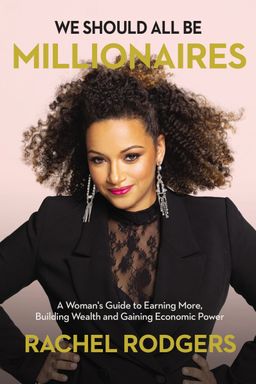
We Should All Be Millionaires: Rewriting the Rules of Wealth
How can you move from scarcity thinking to financial freedom? In We Should All Be Millionaires, Rachel Rodgers argues that women—especially women of color—have been systematically excluded from wealth for centuries. She insists that reclaiming your right to be rich is not arrogance or greed but economic self-defense. The book blends personal story, historical context, and behavioral strategy into one roadmap: you change your money stories, make Million Dollar Decisions, set Million Dollar Boundaries, and build systems that sustain both wealth and wellbeing.
The core argument: mindset and system
Rodgers rejects the idea that financial struggle is solely personal failure. She shows that centuries of laws—from the Married Women’s Property Act to the Equal Credit Opportunity Act—limited ownership and credit for women. Structural bias persists today through wage gaps, venture funding disparities, and cultural norms about self-sacrifice. But she refuses fatalism: once you recognize systemic roots, you can design counter-systems—mindset tools, pricing strategies, and operational structures—to break the cycle.
Inside every chapter, Rodgers draws from her own life—from rolling coins as a child to earning her first seven figures—to prove that wealth is both psychological and practical. You must run two economies simultaneously: one inside your head and one in the world.
Thought work and money stories
Your thoughts precede your outcomes. Early money experiences—standing in line with food stamps, watching relatives struggle, hearing cultural scripts—imitate an invisible software. Rodgers asks: “Where did this belief come from?” and gives a four-step thought work ritual: identify facts, trace origins, evaluate effects, and reframe to a Million Dollar Thought. Instead of saying “I’m not good with money,” you learn to say “Money is a skill; I will learn it.” Like cognitive behavioral therapy applied to finance, it turns judgment into agency.
Location of power: decisions and boundaries
Thinking rich must lead to acting rich. Rodgers introduces Million Dollar Decisions—choices that expand time, money, and energy. Using her WSABM formula (Want, Shoulds, Action, Body, More), she teaches you to pick options that feel expansive rather than depleting. A “Broke Boo” does everything for free and runs out of steam; a “Rich Boo” charges properly, delegates tasks, and uses negotiation as liberation. Boundaries extend this same logic: saying “No” becomes an economic act. Each enforced limit—on unpaid labor, on client abuse, on open-ended chores—protects the core resource you can never replace: time.
Community and structural counterweight
Rodgers declares that your squad determines your speed of ascent. Like mountaineers supported by Sherpas, you cannot summit alone. The people you spend time with shape your identity and ambition. By curating a Million Dollar Squad—friends and colleagues who model thriving and expansion—you fight isolation and exclusion from dominant (often white-male) networks. Joining aligned groups, initiating connections, and performing annual “Friend Reviews” become business strategies, not social pastimes.
From imagination to infrastructure
Rodgers integrates vision-setting with daily systems. “Be Her Now” means embodying the habits of your future self without reckless spending—wear the confidence, operate with discipline, calculate what your dream life actually costs, and create a Big Hairy Audacious Goal (BHAG). Then build the scaffolding: bank accounts, bookkeeping, net-worth tracking, and weekly “Money Church” rituals that keep you financially literate and emotionally grounded.
The final imperative: wealth as moral power
Rodgers concludes with a moral inversion: money amplifies your capacity for good. Wealth allows women to fund schools, pay parents’ mortgages, launch equity-focused foundations, and change narratives for future generations. Instead of philanthropy through burnout, she advocates for capitalization through abundance. Her call to action—“We should all be millionaires”—is not hyperbole but a reclamation of agency: when women hold economic power, communities thrive.
The book synthesizes psychology, history, and entrepreneurship into one manifesto. It teaches that liberation from scarcity is not about self-denial but disciplined construction of possibility. By pairing internal healing with external infrastructure, Rodgers turns wealth-building into a feminist and structural intervention.