
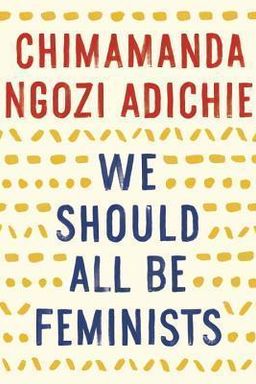
We Should All Be Feminists cover

We Should All Be Feminists

by Chimamanda Ngozi Adichie

In ''We Should All Be Feminists,'' Chimamanda Ngozi Adichie explores the necessity of feminism in today''s world. Through personal anecdotes and insightful analysis, she dismantles misconceptions and highlights the ongoing inequalities women face, urging society to embrace equality and redefine gender roles.

Redefining Feminism for Everyone

Have you ever hesitated to call yourself a feminist because of the word’s baggage? In We Should All Be Feminists, Chimamanda Ngozi Adichie invites you to look beyond stereotypes and reclaim feminism as something vital, hopeful, and universal. She argues that feminism isn’t about hating men or rejecting femininity—it’s about demanding fairness, dignity, and opportunity for everyone. In her view, gender equality isn’t a niche issue. It shapes every part of life: education, work, love, identity, and how we see ourselves as human beings.

This book, adapted from her acclaimed TEDx talk, asks you to rethink inherited assumptions about gender and culture. Adichie blends sharp social observation with heartfelt personal stories, from her childhood in Nigeria to adulthood straddling two cultures. She shows how easily inequality becomes normalized—how we accept subtle forms of bias until they shape our belief of what’s ‘natural.’ Her core message is powerful: if we truly believed in equality, we would raise boys and girls differently, and we’d all be freer to be our authentic selves.

The Baggage of Feminism

For Adichie, the word “feminist” came with loaded connotations—women who are angry, unmarriable, unfeminine, and possibly anti-cultural. From being called a feminist at fourteen in a tone of accusation, to being told her novel was ‘too feminist,’ she realized how the term had been distorted. People warned her feminism was un-African, or that it represented unhappiness, but she proudly reclaimed it. The problem wasn’t the word itself, but what people projected onto it. That projection leads women to overcompensate—calling themselves ‘happy feminists’ or denying anger to seem likable. Adichie’s journey from self-conscious identification to confident declaration embodies how feminism should be owned, not apologized for.

Systemic Normalization of Inequality

The author reminds us that systems of inequality persist because they become invisible. Childhood lessons—like being denied class monitor because she was a girl—teach powerful subtext: authority belongs to males. Repetition turns prejudice into tradition. Similarly, societal interactions in Lagos, from waiters ignoring women to hotel guards suspecting them of immorality, reinforce male privilege. Through these anecdotes, Adichie exposes how discrimination operates not just through laws or overt violence but through ordinary, everyday assumptions.

Why Feminism Still Matters

You might wonder—do we still need feminism today? Adichie’s answer is unequivocal: yes. Despite progress, inequality persists in pay gaps, leadership representation, and social expectations. She responds to arguments that feminism divides rather than unites by reframing it as a necessary response to centuries of exclusion. To say ‘I believe in human rights’ isn’t enough, because it blurs the specific issue—gender. Women have historically borne the brunt of systemic bias, so recognition must be explicit. For Adichie, feminism isn’t about biology; it’s about opportunity. Physical strength no longer determines success. Intelligence, creativity, and empathy do—and those qualities have no gender.

Culture and Change

Adichie dismantles the excuse that patriarchy is simply ‘our culture.’ Culture, she insists, is made by people and can be remade by people. The fact that Igbo culture once viewed twins as evil but now celebrates them shows how flexible cultural norms can be. If equality isn’t part of our culture yet, that’s not a reason to resist it—it’s a reason to shape culture anew. Her statement “culture does not make people; people make culture” encapsulates her vision for transformation rooted not in rebellion but in agency.

A Call to Personal and Collective Change

Adichie ends with a challenge both intimate and global: raise your sons and daughters differently. Boys are trapped in false ideals of masculinity that demand hardness; girls are taught to shrink themselves to preserve male ego. Everyone loses. The path forward begins in families, classrooms, workplaces, and daily conversations. Feminism requires courage and empathy—the courage to speak out when unfairness seems small and the empathy to see how deeply conditioning runs. Through this book, Adichie doesn’t just advocate equality; she models what it looks like to live it—unapologetically feminine, open to dialogue, and fiercely human.

Ultimately, We Should All Be Feminists is an invitation to rebuild the world through awareness and possibility. It’s a reminder that equality starts not with slogans but with how you think, speak, and raise the next generation. In reclaiming feminism as something joyful and inclusive, Adichie offers you a simple but profound truth: when women and men are truly equal, everyone wins.


The Formation and Power of Gender Norms

Adichie reveals how gender norms begin early and silently dictate behavior. You learn these rules before you can question them: boys lead, girls follow; men pay, women thank; girls cook, boys eat. The author’s childhood story—being denied the role of class monitor despite earning the top score—captures how easily fairness is compromised when bias feels ‘normal.’ Once established, such expectations shape social hierarchies and limit both sexes.

How Tradition Masks Bias

Tradition often hides inequality behind notions of propriety or ‘how things are done.’ In Nigeria, a woman entering a hotel alone might be presumed a sex worker; in restaurants, waiters address men first. These small gestures reflect centuries of conditioning that equate maleness with legitimacy and femaleness with suspicion. Adichie points out the irony: people act kindly, yet still perpetuate systems that make her feel invisible. You see how politeness can coexist with prejudice.

Normalization through Repetition

Humans adapt quickly. When inequality repeats daily, it becomes invisible. Adichie’s line—‘If we see the same thing over and over, it becomes normal’—highlights this conditioning. If every leader or hero you know is male, leadership begins to seem inherently masculine. Feminism, therefore, must challenge not only laws but assumptions. It asks you to notice what has gone unquestioned in your family or workplace and see it as changeable.

The Role of Awareness

Her conversation with Louis—who claimed women’s issues were over—is a lesson in perspective. Privilege often makes inequality invisible; only experience exposes it. Like Adichie’s experience of being dismissed or misread, awareness is the first step toward dismantling norms. When you look closely at daily interactions through her lens, you begin to see how gender bias isn’t exceptional—it’s ordinary, and that’s precisely the problem.


The Politics of Likability and Anger

Adichie boldly explores how women are socialized to suppress anger and prioritize being liked. The idea that a woman must be endlessly agreeable—never too ambitious or outspoken—runs deep. Through stories of her friends in America, she shows how professional women tone down their voices to avoid being seen as ‘aggressive,’ while men exhibiting the same behavior are applauded as decisive.

The Emotional Conditioning of Women

In one example, a friend disciplined an employee exactly as her male predecessor had done, yet was labeled difficult. Another cried in private after being ignored in meetings, afraid to speak up. These women aren’t unique—they reflect a global trend where women’s assertiveness is punished while men’s is rewarded. Adichie interprets this emotional conditioning as systemic: girls are raised to be pleasant, not powerful.

Reclaiming Anger as Agency

Anger, she contends, is not destructive but liberating. History shows anger sparks reform—it’s a moral response to sexism. When told her writing was too angry, Adichie refused to apologize. She insists that women’s anger is justified because gender inequality is a moral injustice. This echoes Audre Lorde’s belief (in “The Uses of Anger”) that women’s anger clarifies truth and mobilizes change.

Beyond the Fear of Disapproval

To be feminist is to defy the mandate of constant likability. As Adichie reminds you, pursuing fairness will often make you unpopular—but approval shouldn’t be the measure of morality. Her lesson resonates personally: when you stop fearing disapproval, you gain energy to be authentic. Feminism begins there, in the permission to feel, speak, and challenge without apology.


Raising Daughters and Sons Differently

Central to Adichie’s vision is the idea that if we raised boys and girls differently, society itself would change. She views gender bias as learned, not innate. Boys are conditioned toward dominance; girls toward service. Both lose humanity in the process. By redefining upbringing, you can help end this cycle of distortion.

The Cage of Masculinity

Adichie describes masculinity as a ‘hard, small cage’ that imprisons boys in fear of vulnerability. They must appear strong, never show emotion, and link worth to money. In Nigerian schools, teenage boys are expected to pay when dating, reinforcing material masculinity. This social rule pressures boys into financial dishonesty and emotional suppression. She calls for freeing them from this cage—inviting empathy, honesty, and equality in relationships.

The Shrinking of Girls

Girls, meanwhile, are taught restraint. Be ambitious, but not too ambitious. Earn, but hide it. Never intimidate a man. Adichie’s examples—women pretending to like domestic work or selling homes to appear less successful—show how deeply social expectations infiltrate identity. She calls this shrinking of self emotional violence: girls learn to value others’ comfort above their own truth.

Equality Begins at Home

Adichie proposes raising children by ability and interest, not gender. Teach both sons and daughters to cook, express feelings, and share care work. The example of thanking a husband for changing diapers reveals how uneven labor becomes normalized. True progress comes when such acts are seen as mutual responsibility, not extraordinary kindness. For parents, teachers, and mentors, this means modeling equality in practice, every day—because future fairness starts in ordinary homes.


Marriage, Power, and the Language of Ownership

Marriage, as Adichie dissects it, reveals how culture sustains male dominance through language and expectations. In her world—and in many others—women are judged by marital status while men are judged by achievement. The word respect itself becomes skewed: women respect men more often than vice versa. This imbalance turns marriage from partnership into hierarchy.

Cultural Pressures and Symbolism

She recalls women wearing fake wedding rings at conferences to gain professional respect—an image both tender and tragic. Marriage becomes a credential, a shield. Meanwhile, men remain unmarked, free from such scrutiny. The expectation that women must ‘aspire’ to marriage while men ‘choose’ whenever ready makes relationships transactional rather than mutual.

Compromise and Peace

The recurring phrase “I did it for peace in my marriage” exposes gendered compromise. When men say it, it’s about curbing small habits; when women say it, it means sacrificing dreams. Adichie uses these contrasts to show that emotional labor remains feminized. Feminism, then, asks both partners to redefine peace—not as one side’s surrender, but as shared respect.

Redefining Partnership

A feminist marriage, she argues, needn’t reject tradition; it must reject inequality. When women stop apologizing for success, and men stop fearing equality, intimacy grows richer. Marriage, seen through Adichie’s lens, transforms from validation to collaboration—an idea echoed by bell hooks, who likewise frames love as the practice of justice. The result isn’t rebellion against marriage, but reclamation of its meaning.


Culture as a Living, Changeable Human Creation

When people say gender hierarchy is ‘our culture,’ Adichie counters with history. A century ago, Igbo culture viewed twins as evil. Today, twins are celebrated. That shift proves culture evolves as people evolve. Thus, defending sexism as tradition is not preservation—it is stagnation. True culture, she says, exists to ensure continuity and well-being, not oppression.

Challenging Cultural Exclusion

Adichie’s exclusion from family decision meetings because she is a woman perfectly illustrates how institutional bias endures under the guise of ‘custom.’ Though she is the most interested in her heritage, she cannot formally participate. Her question—why must culture silence those who care most?—draws attention to the human cost of such practices.

Culture Does Not Make People

Her declaration—‘Culture does not make people; people make culture’—is a turning point. It shifts responsibility from fate to choice. You participate in culture every time you speak, act, and teach. The world changes not only through revolutions but through countless daily decisions to act differently. She invites everyone to claim that authorship: make full humanity part of culture.

Reimagining Cultural Pride

Adichie’s commitment to African identity makes her appeal especially grounded. Her feminism doesn’t reject Africanness—it expands it. To honor culture means to let it grow, not freeze it in inequality. Culture, in this view, becomes a dynamic manuscript each generation revises. And equality should be one of its most beautiful chapters.


Embracing Feminism Without Apology

In her closing chapters, Adichie redefines feminism in affirming, personal terms. Her definition is simple yet radical: a feminist is anyone—man or woman—who recognizes that gender today is unjust and commits to fixing it. Her brother Kene, kind and confident, embodies this inclusive ideal. Feminism, then, is not a club or ideology but an ethical stance toward equality.

Rejecting Apology for Femininity

Adichie’s teaching moment comes in her story of the ‘ugly suit.’ Early in her career, fearing that femininity would undermine authority, she dressed masculinely to appear serious. Later, she regretted it. Now, she refuses to apologize for lipstick, heels, or softness. Feminism doesn’t require stripping femininity—it requires liberating choice. Whether you love suits or skirts is irrelevant; being free to choose sincerely is the point.

Feminism as Humanism with Specificity

Many ask: “Why not just say human rights?” Adichie’s response is sharp: because women’s exclusion was specific, solutions must be specific. Using neutral language erases the problem. This insistence makes feminism adaptive across cultures—as seen in intersectional thinkers like Kimberlé Crenshaw, who link gender with race and class but retain its distinct focus.

The Moral Clarity of Feminism

Closing her argument, Adichie turns feminism into a daily act of noticing and correcting bias. Speak when waiters ignore women. Question jokes that belittle. Teach boys empathy. Each act reclaims dignity. Through her voice, feminism becomes less about ideology and more about practice: living equality in the small choices that shape culture. That’s how real change starts.

Dig Deeper

Get personalized prompts to apply these lessons to your life and deepen your understanding.

Go Deeper

Get the Full Experience

Download Insight Books for AI-powered reflections, quizzes, and more.