
Idea 1
The Making of Reddit and Its Meaning
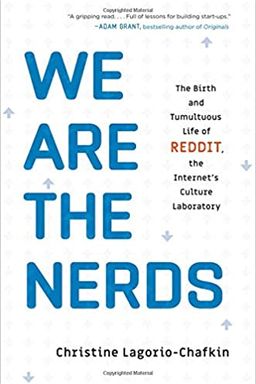
How do a few college hackers create one of the most influential communities on the internet—and what does that reveal about digital societies themselves? This book traces Reddit’s rise from two nervous graduates sketching a mobile ordering app to a global platform that has reshaped media, activism, and the politics of online freedom. It’s a biography of software and people, showing how technical decisions, community experiments, and moral dilemmas combine into what Paul Graham called “the front page of the Internet.”
At its core, Reddit’s story is about how networks self‑govern. You see mentors like Graham urging “make something users want” and founders like Steve Huffman and Alexis Ohanian testing that mantra through lean code and unpredictable pivots. The MyMobileMenu prototype dies within days; Reddit is born when they follow Graham’s advice to build a site that lets users signal what’s interesting online. The launch in June 2005—spartan interface, blue toolbar, alien mascot—marks the moment a culture of participation begins.
The Power of Design Choices
Every feature—from upvotes to comment threading—contains an ideology. Huffman’s early experiments with arrows instead of stars teach you that simple mechanics can define social norms: an upvote becomes affirmation, a downvote becomes rejection. Chris Slowe’s “hotness algorithm” refines this into a self‑balancing ecosystem: time decay ensures freshness, creating an economy of attention that rewards immediacy. Subreddits later decentralize governance, giving users small kingdoms of autonomy. (Note: this anticipates what later scholars call “platform federalism”—distributed governance within one ecosystem.)
Humans, Friction, and Founding Realities
Startup myths hide emotional tolls. You watch Huffman’s quiet discipline collide with Ohanian’s promotion flair, and Aaron Swartz’s intellectual volatility strain cohesion. The “hell summer” of 2005—combining family tragedy, illness, and frantic coding—reveals founding as psychological warfare as much as engineering. The team survives on loyalty and caffeine in small apartments with servers stacked like furniture. Their nerd‑centric, prankish culture defines Reddit’s tone: irreverent, idealistic, allergic to corporate polish.
Acquisition, Survival, and the Corporate Paradox
In 2006 Condé Nast buys Reddit for about $10 million. The founders gain stability—and bureaucracy. The “benign neglect” era demonstrates both sides of assimilation: corporate HR slows hiring while traffic explodes. The Lipstick.com contract and later Reddit Gold show creative survival. User‑funded models like Gold become miniature rebellions against corporate inertia, proof that community goodwill can substitute for missing revenue streams.
Community as Force and Responsibility
Reddit becomes civic instrument. The Mister Splashy Pants incident and the SOPA/PIPA blackout prove that humor and protest share DNA when coordination tools exist. The same dynamics, however, spawn mobs and harassment. The BadgerMatt doxing, r/jailbait scandal, and Violentacrez crisis reveal how idealistic freedom mutates into real harm without effective moderation. Reddit’s tension—between free speech and accountability—mirrors society’s struggle to balance liberty with safety online.
Leadership Crises and Cultural Evolution
As CEOs cycle—Yishan Wong’s erratic mandates, Ellen Pao’s reformist but unpopular policies, and Huffman’s restorative tenure—you see leadership clash with community expectation. Events like AMAgeddon (Victoria Taylor’s firing) teach operational empathy: remove the wrong human connector and volunteers revolt. Huffman’s later rebuild introduces systems thinking—teams for trust and safety, anti‑evil engineering, and clear enforcement. Reddit matures through structured moderation and mobile redesigns while retaining its participatory soul.
Activism, Politics, and the Modern Platform Dilemma
Aaron Swartz’s arc—from Infogami coder to open‑access martyr—infuses Reddit’s DNA with moral urgency. His prosecution and tragic death expose how law lags behind ethics in the digital age. Later political storms—r/The_Donald manipulations, Russian influence campaigns, Charlottesville aftermath—extend the same question: how do open systems confront weaponized participation? Huffman’s “quarantine” policies demonstrate that moderation can evolve without full censorship, bridging civic dialogue with protective design.
The Core Lesson
Reddit’s journey—from startup accident to global stage—is a study in self‑organizing systems. You learn that community design is governance, that leadership is interpretation, and that freedom without structure invites chaos. It reminds you that every product shapes social behavior—not only through code but through the values embedded within it. By tracing this wild, messy ascent, you see not merely how Reddit was built, but why its tensions define modern internet culture itself.