
Idea 1
Travel, Taste, and Becoming Yourself
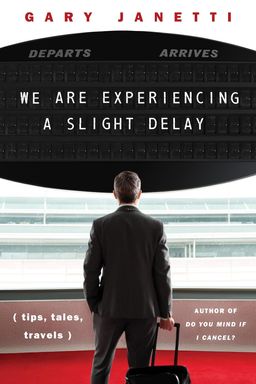
When has a trip ever turned out exactly the way you imagined—and wasn’t the best part the messy, funny, human things that ambushed you along the way? In We Are Experiencing a Slight Delay, Gary Janetti argues that travel isn’t about bucket lists or wellness hacks; it’s about recognizing yourself in motion. He contends that the way you eat, pack, pick tables, complain about foghorns, and fall asleep on a stranger’s shoulder reveals your truest preferences—and that the richest souvenirs are the stories you bring home. But to see yourself clearly, you have to be honest about snobbery, desire, disappointment, and joy.
Across essays that range from a caffeine-free hiking retreat in an Italian hill town to a thwarted double-birthday on the Pacific aboard the QE2, Janetti braids barbed humor with soft-hearted observation. He admits to obsessive research (he will cross-reference your Rome restaurant with Eater, Bon Appétit, and three concierges), refuses to check luggage on principle, and tells you why you should never accept a rich person’s “Stay with us!” Yet beneath the arch tone is a tenderness for partners, parents, servers, bellmen, and the fellow traveler seated two rows behind you humming “America” from West Side Story in a cruise revue. Travel is the stage that lets him stage-whisper truths about class, taste, manners, and love.
What the Book Really Says (Under the Jokes)
Janetti’s core claim is simple: you don’t go away to become someone new; you go to remember who you are. On a supposedly purifying wellness week outside Rome, he discovers that he wants espresso more than affirmation and that he loves his husband Brad—who speeds ahead on the hikes—but most of all loves hearing Brad laugh somewhere up the trail. On a rain-plagued Queen Mary 2 cruise where his cabin sits atop a piano bar and under a foghorn that blasts every two minutes, he vows not to be petty, fails magnificently, and then surprises himself with gratitude for the tiny mercies (Vincenza at the pier moving his 92-year-old father past an impossible line; a perfect banana daiquiri; big-band night that turns octogenarians thirty again). His theme: expectation collides with reality, and the spark that flies off that collision is meaning.
Tastes, Tables, and the Class System in Your Head
Throughout, taste is a moral education. He learned hierarchy early on Cunard’s QE2—Queens Grill vs. Britannia—then met a preening NYU kid in the Queens Grill who mockingly cracked a cake in the empty kitchen, awakening in young Gary both resentment and hunger for more. Years later he trains his partner into a co-conspirator: together they can spot the “right restaurant” in Rome, leave the wrong table by telepathy, and share the illicit thrill of hating what everyone else loves. He’s also the rare humorist willing to teach you how to eat alone at a table—as opposed to hiding at the bar—because claiming your own table in public is a tiny, defiant work of selfhood (think Nora Ephron’s appetite meets David Sedaris’s prickly candor).
The Travel Operating System
Practical rules surface everywhere. Pack for three days, use wash-and-fold, never check a bag; bring a book to dinner; always ask for the upgrade; tip housekeeping daily with a note. If you must taste luxury on a budget, do one night at the Four Seasons and milk two full days of pool, beach, and breakfast (his delicious “two-days-for-one-night” hack). Above all, stay in hotels, not as a guest in someone’s home—especially not a rich person’s—unless you’re willing to perform as their on-demand entertainer (Alain de Botton’s The Art of Travel muses about anticipation and place; Janetti adds the etiquette and theater).
Love Is the Throughline
This is a love story disguised as a travel book. Janetti met Brad on Mykonos—he still remembers the alley, the dessert spoon, the name “Brad” lighting him like a Christmas tree—and the book keeps swiveling back to the ways that shared taste becomes a marriage. Hearing Brad laugh ahead on a brutal hike, dancing with his sister Maria while Brad leads her through a swing on the QM2, or seeing a London long-stay hotel shift from dream to suffocation—all of it points to the paradox: place changes you, but your person orients you.
Why This Matters for You
If you travel—or simply aspire to live with more taste and fewer apologies—Janetti gives you permission to name what you actually like (a well-done burger, a quiet cabin, the right table), ditch what you don’t (group hikes, forced hospitality, cruise revues with tap shoes that don’t tap), and then laugh when the universe sends fog instead of views. You’ll see how class and status seep into your plans, how expectations booby-trap vacations, how small graces redeem big snafus, and how a good partner—or a kind stranger named Betty who’s 94 and lost on a ship—can turn a day. The book is part etiquette, part memoir, part stand-up set, and all heart.
Big Idea
Travel doesn’t fix you; it clarifies you. The more honest you are about what delights and infuriates you, the more likely a trip will give you the only upgrade that matters: stories worth retelling.
In the pages ahead, you’ll see how he wrestles with wellness culture, how he curates restaurants with surgical precision, how he revisits the class markers of his youth, how expectation vs. reality creates comedy and connection, and how love, family, and aging shape the journeys that actually count.