
Idea 1
Displacement, Resilience, and the Power of Storytelling
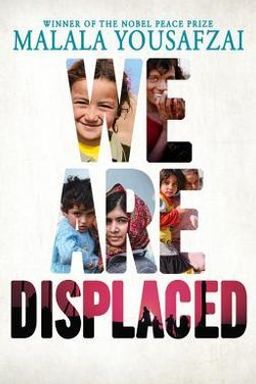
What would you do if one morning your home became unsafe — if you had to flee the place where you laughed, learned, and dreamed? This is the haunting question at the heart of We Are Displaced by Nobel laureate Malala Yousafzai. She argues that displacement is not merely a statistic or an abstract global issue — it is an intensely human experience filled with loss, longing, and courage. Through her own story and those of other young women across the world, Malala contends that refugees are not defined by what they have lost but by who they become.
We Are Displaced weaves together two intertwined narratives: Malala’s personal journey from Pakistan’s Swat Valley to the world stage, and the collected voices of refugee and displaced girls she has met through her work. The book’s central claim is that every displaced person carries a story of both unimaginable hardship and unbreakable strength. Malala challenges readers to humanize these experiences — to look beyond news headlines and see the individual faces, voices, and dreams of those forced to flee.
Part I: Malala’s Own Displacement
The book begins with Malala’s memory of home — the lush beauty of Pakistan’s Swat Valley, her father’s devotion to education, and a childhood abruptly ruptured by Taliban occupation. When girls’ schools were bombed and education was banned, Malala’s passion for learning turned into quiet defiance. As the Taliban took over, she and her family were eventually told to evacuate. Becoming an internally displaced person (IDP), Malala experienced the confusion, sadness, and fear of losing everything familiar. That loss would become a foundation for her empathy toward refugees around the world.
Her later resettlement in England, following the shooting by the Taliban, complicated the idea of home even more. In Birmingham, she learned the feeling of being caught between two worlds — deeply grateful for safety but aching for her homeland. These experiences ground her understanding that displacement is not a single event; it is a lifelong state of being torn between past and present identities.
Part II: Voices of Other Displaced Girls
Malala then turns the microphone to other young women: Zaynab and Sabreen from Yemen, Muzoon from Syria, Najla from Iraq’s Yazidi community, María from Colombia, Analisa from Guatemala, Marie Claire from Congo, and Ajida from the Rohingya crisis. Each story personalizes global displacement statistics — over 68 million forced to flee as of the book’s publication — with real faces and voices. Through their vivid accounts, Malala shows that being displaced means living between survival and hope, between the memory of what was and the uncertain promise of what could be.
For example, Zaynab arrives in Minneapolis after escaping war-torn Yemen, excelling in school while grieving separation from her sister Sabreen, who risks her life crossing the Mediterranean. In Zaatari refugee camp in Jordan, Muzoon becomes an education activist, urging girls to study instead of marrying young — reflecting Malala’s own mission. Najla’s story confronts genocide; María’s describes growing up internally displaced amid Colombia’s decades-long conflict. Each girl’s voice expands our understanding of the struggles and resilience shared by displaced people worldwide.
Empathy, Agency, and Global Connection
At its core, Malala’s message is about empathy turned into action. She writes that while we cannot always stop wars, we can amplify voices, volunteer, and treat newcomers with kindness. Displacement is not only about movement but about rebuilding identity and reclaiming dignity. For Malala, telling these stories is activism — a way to replace fear and ignorance with understanding and compassion.
“No one leaves home unless home is the mouth of a shark,” reads the book’s opening epigraph by poet Warsan Shire. This captures the ethical heart of Malala’s project: no one chooses displacement willingly. By telling these stories, Malala builds a bridge between readers’ daily stability and the instability others endure. The book calls you to consider what it means to belong, to lose, and to begin again — and reminds you that humanity’s greatest strength lies not in borders but in solidarity.
In this engaging, emotionally rich narrative, We Are Displaced moves beyond Malala as a symbol and becomes a chorus of girls insisting on being seen not as victims, but as agents of change. Together, their voices make a compelling case that education, empathy, and storytelling are the keys to healing a displaced world.