
Idea 1
The Moral Purpose of Fiscal Policy
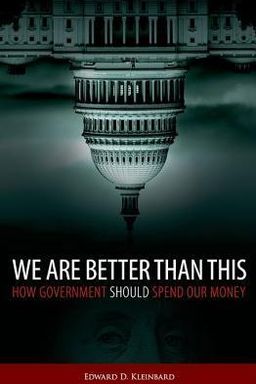
What does a nation value? Edward Kleinbard argues that you can answer that question by following the money—government spending and taxes reveal a country's fiscal soul. In his powerful synthesis of economics, moral philosophy, and data, Kleinbard redefines fiscal policy as the institutional expression of collective values. Budgets are not technical documents but moral manifestoes that convey what you think human happiness requires.
He begins by restoring the moral vocabulary of economics that Adam Smith himself used before being miscast as a market fundamentalist. The Smith of The Theory of Moral Sentiments grounded prosperity in virtue, sympathy, and the impartial spectator, not in pure market freedom. Kleinbard reminds you that Smith saw public spending for "the happiness of society" as central to good government (a rebuke to today’s market triumphalism that equates the invisible hand with moral virtue).
This sets up the book’s major claim: that government’s proper economic mission is twofold — to insure against risks individuals cannot and to invest in shared goods markets underprovide. Everything that follows—tax reform, social insurance, education, or healthcare—traces back to this fundamental moral architecture of the fiscal state.
Government as Insurer and Investor
Kleinbard argues that viewing government as an insurer changes how you think about redistribution. Programs like Social Security, Medicare, and unemployment compensation are not charity; they are risk pools that convert uncertain adversity into manageable certainty. Universal participation solves the private market’s failures of adverse selection and incomplete coverage (for example, how the Affordable Care Act’s pooling rules fix health insurance markets). Likewise, when you buy national defense, you’re insuring against foreign peril.
As an investor, government supplies the capital markets undersupply: early education, research, and infrastructure. These raise productivity and happiness but do not yield immediate monetary returns to private actors. Kleinbard shows that many public investments have net positive returns rivaling private capital — citing the enormous measurable paybacks from preschool interventions, nutrition programs like WIC, and highway modernization (analogous arguments appear in Mariana Mazzucato’s work on the “entrepreneurial state”).
Welfare versus GDP
GDP, Kleinbard insists, is not the same as welfare. Roughly a quarter of productive activity—especially unpaid household labor and nonmarket public goods—never appears in GDP figures. When policymakers idolize GDP growth alone, they mistake market transactions for actual human well-being. As he notes pointedly, no increase in GDP compensates for deteriorating public health or crumbling bridges if those reduce life satisfaction. Fiscal policy, therefore, should aim explicitly at welfare maximization, not GDP fetishization.
Why Equality of Opportunity Is the Moral Test
The practical measure of a society’s fiscal soul is how it invests in children and the poor. Research Kleinbard cites shows poverty impairs cognitive bandwidth by the equivalent of 13 IQ points, early malnutrition cuts lifetime earnings by about 20%, and American school funding patterns favor affluent districts. A nation that ignores these facts, he says, fails its own creed of equal opportunity.
These empirical realities ground Kleinbard’s broader moral argument: fiscal decisions are not zero-sum thefts but collective bets on national well-being. Taxes finance insurance and investment that expand opportunity and resilience for everyone. If markets leave children unread or the sick untreated, moral failure—not fiscal prudence—is the result. Thus, the book reframes fiscal policy as an ethical calculus of happiness, justice, and sustainability, not as arithmetic about deficits.
Throughout the rest of the book, Kleinbard shows you how misunderstanding this moral mission—through neoliberal myths, narrow GDP benchmarks, or fear-driven austerity—has led the U.S. to underinvest in its people and infrastructure. But he also offers practical ways to rebuild a government that insures wisely, invests prudently, and measures success by human flourishing rather than slogans about small government.