
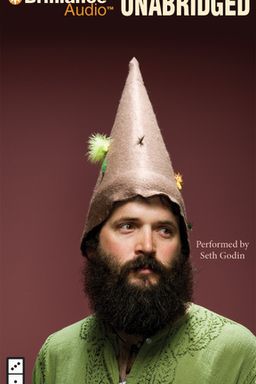
We Are All Weird cover

We Are All Weird

by Seth Godin

We Are All Weird challenges the myth of the mass market, revealing a world where uniqueness is celebrated. Seth Godin''s manifesto encourages readers to embrace their eccentricities and thrive in a diverse, connected society.

Weird Is the New Normal: The End of Mass and the Rise of Choice

When was the last time you voluntarily chose to do something not because everyone else was doing it, but because it simply felt right for you? In We Are All Weird: The Rise of Tribes and the End of Normal, Seth Godin argues that this feeling—the insistence on choosing for ourselves—is not just a personal quirk but the defining cultural and economic shift of our time. His claim is bold: the age of mass is dead. The center of the cultural bell curve, once packed with the “average consumer,” is melting away, replaced by millions of edges—groups, niches, and individuals who embrace their own forms of weirdness.

Godin provocatively reframes “weird” from insult to empowerment. Weird, as he defines it, isn’t about being eccentric for its own sake—it’s about choosing. Choosing to eat organic in a fast-food world, to watch Japanese animation instead of sitcoms, to teach differently, lead differently, and buy differently. Normal, on the other hand, is no longer a moral or practical necessity—it’s merely a relic of the mass-production era, when conformity made the factory, the classroom, and the corporate machine run smoothly.

The Death of the Mass Mind

For much of the last century, mass media, mass production, and mass education brought scale—and sameness. The twentieth-century mindset prized average products for average people. Factories required predictable consumers; schools produced compliant workers. “Normal” became not just statistical but moral. According to Godin, this was no accident: marketers and governments alike built their systems around the profitable illusion that mass conformity equals stability.

But the Internet, technological progress, and social change have shattered that illusion. Today, every consumer is a broadcaster, every creator can find an audience, and global connection fuels individual expression. The “normal” curve—itself a relic of industrial efficiency—is flattening, spreading out toward its edges. Variety is no longer a side effect; it’s the new engine of culture.

The Four Forces Driving Weirdness

Godin identifies four powerful forces that accelerate our collective weirdness:

  • Creation Is Amplified: Technology allows anyone to publish, design, sell, or share ideas instantly. You no longer need a printing press to be an author or a producer.
  • Richness Fuels Choice: As societies become wealthier, more people can afford to choose—hobbies, diets, art, or lifestyles that once seemed reserved for elites.
  • Marketing Can Find the Weird: Digital tools make it easy to reach micro-communities, turning niches into profitable markets.
  • Tribes Connect the Weird: Social networks and online communities reinforce and amplify weirdness, allowing like-minded people to validate and grow their interests together.

Together, these forces dismantle the factory model of society. As more people become both creators and choosers, the centralized systems that defined “normal” lose power. The economy of scale is replaced by an economy of scope—an economy of choices, of tribes.

The Marketer’s New Imperative

For business leaders and marketers, this shift is deeply unsettling—but also liberating. The “mass premium” that once fueled giants like Coca-Cola, Tide, and Ford has disappeared. Modern advertising can no longer buy attention or loyalty by flooding TV screens. Instead, real value now lies in authentic connection—in talking to a tribe rather than everyone. Godin cites TOMS Shoes as an example: its success came not from slick campaigns but from a simple, meaningful story—“buy one, give one”—that resonated deeply within a tribe of socially conscious consumers. Contrast that with the “pregnant elephant” campaign from a Belgian zoo—a viral stunt chasing mass attention. The former built community; the latter chased a vanishing crowd.

Why This Shift Matters for You

Whether you’re an entrepreneur, teacher, parent, or citizen, you operate in a world where mass can’t protect you anymore. You can’t hide behind average products, average ideas, or average behaviors. Godin’s central challenge is simple but personal: which side are you on? Will you fight to maintain the status quo and the false safety of average? Or will you embrace the joy, risk, and humanity of weirdness—of belonging to a smaller tribe that actually cares?

“The opportunity of our time,” Godin writes, “is to support the weird, to sell to the weird—and to become weird.”

Through stories about bread bakers, fly-fishermen, and boutique hoteliers, Godin shows that weird isn’t niche anymore—it’s the new human normal. The world’s central question has changed from “How do we reach everyone?” to “Who are we here for?” In the end, We Are All Weird is not just about marketing; it’s a manifesto for individuality—and a call to rebuild culture around communities of choice rather than markets of compliance.


From Mass to Micro: How the Bell Curve Melted

To understand why Godin claims mass culture is over, picture the classic bell curve: a high central hump representing the average, surrounded by thinner tails on both sides. For most of the industrial age, we lived by that shape. The center was everything—the average consumer, student, voter, listener. Governments legislated for it, marketers served it, and schools produced it. But somewhere along the way, that bell started to flatten, spread, and finally dissolve.

The Center Can’t Hold

Godin traces the “morphing” of the bell curve through vivid examples. Once, bread meant Wonder Bread—identical loaves for every family. Today, we buy from “Bread Alone” bakeries offering spelt, sourdough, or sunflower loaves. Once, music was Top 40 radio; now it’s infinite playlists of remixes and bootlegs. Ice cream went from three flavors to thirty-one. Tower Records vanished because it couldn’t satisfy our bottomless appetite for the obscure. The patterns are clear: homogeneity stopped being profitable.

At the heart of this shift is access. The Internet removed the barriers of geography and scarcity that once stabilized the middle. When consumers could suddenly find, share, and create exactly what they wanted, mass lost its gravitational pull. A bell curve that used to represent height or intelligence now represents behavior—and that behavior grows more distributed every day.

Mass Is Addicted to Average

The addiction to mass thinking runs deep. For much of the last century, television offered cheap access to mass audiences—what Godin calls the “Mad Men Mass Premium.” A few affordable commercials could buy trust, market share, and shelf space for products like 7Up, Tide, or Nationwide Insurance. The more normal you were, the more likely you were to succeed. But as digital channels splintered, that formula failed abruptly. The bargain of “spend to broadcast to everyone” no longer holds when there is no everyone.

Today, advertisers face an identity crisis. They still crave scale but find themselves stranded in a world of fragments. Some desperately produce “fake weird” marketing (like Hyatt’s attempt to create an edgy boutique hotel that felt more corporate than creative), while others—like Threadless, the crowd-sourced T-shirt company—embrace genuine weirdness by letting users design and choose what they love. The moral? You can’t simulate authenticity. You actually have to be weird.

Multiple Peaks, Many Centers

Godin notes that the modern market no longer has one dominant bell curve but thousands of small ones—each representing a tribe, a shared interest, a microculture. What once was the “bestseller list” has become overlapping lists, each meaningful to its own audience. A ballad tops one chart, a rap song another, a podcast another still. We no longer care what everyone else listens to—we care what our people love. In this world, “bestseller” status doesn’t mean cultural dominance; it means resonance within a niche.

This fragmentation worries the defenders of mass—politicians who can’t rally broad majorities, educators struggling to fit diverse learners into one system, corporations missing their “target markets.” But as Godin reminds us, diversity of behavior isn’t chaos—it’s freedom. “The weird are now more important than the many,” he writes, “because the weird are the many.” The 21st century doesn’t belong to the middle of the curve—it belongs to the edges that decide for themselves.


The Four Engines of Weirdness

Seth Godin structures the heart of his argument around four interconnected social forces that have turned mass conformity into mass individuality. Each of these forces has multiplied the power of uniqueness and accelerated the decline of average. Together, they explain why almost every cultural, political, and business institution now feels unstable—and what’s replacing them instead.

1. Creation Is Amplified

In a networked world, anyone can make something. You can publish a book, record an album, or start a movement—all from your living room. Godin calls this the Pro-Am Revolution, where amateurs now create at professional quality, often for love rather than money. YouTube musicians, indie game designers, and 3D-print hobbyists all exemplify this shift. The result is cultural abundance: endless remixes, variations, and experiments that keep morphing faster than any institution can control.

2. Rich Allows Us to Choose

Weirdness, Godin argues, is a privilege born of progress. Only “rich” societies—those whose people can afford time beyond survival—can afford to be weird. Wealth gives humans the freedom to make cultural choices rather than merely economic ones. Once survival is handled, difference becomes expression. From five-thousand-dollar fly rods to Bengali solar lanterns, people everywhere are exercising new power through choice. A fruit vendor in rural India, who selects his own purchased lantern instead of accepting aid, is just as “rich” by Godin’s definition as a Manhattan entrepreneur: he can choose.

3. Marketing Finds and Feeds the Weird

In the old days, marketing forced sameness because it couldn’t afford precision. Now, data and connectivity make precision not only possible but profitable. Marketers no longer have to shout at everyone—they can whisper to the right someones. Niche markets from vegan dating apps to $1,000 speaker cables thrive because they don’t need millions of customers; they just need true fans. As Kevin Kelly once wrote in “1,000 True Fans,” this smaller but deeper connection sustains both creativity and commerce.

4. Tribes Connect and Protect Weirdness

When people with shared interests find each other online, they no longer feel isolated—they feel validated. A group of vegan bakers, Firefighters of Barbados, or gaming modders may seem obscure, but within their circles, they’ve found belonging. Godin’s earlier book Tribes prefigured this idea: tribes supply meaning and connection beyond consumption. Weirdness used to mean loneliness; now it means community. Once connected, tribes reinforce differences rather than mute them, pushing their members further into authentic self-expression.

Together, these four forces have turned normal into an illusion. Weird isn’t the exception—it’s the structure of modern life. The factory of conformity has been replaced with a network of creators, buyers, and tribes, each amplifying the other in a virtuous (and sometimes riotous) cycle. The new market isn’t centered—it’s woven of millions of overlapping edges.


Tribes Over Mass: Redefining Belonging

Humans are wired to belong. For centuries, that belonging came from geography, religion, and nation—the largest possible tribes. But as global connectivity exploded, our loyalties and identities fractured into smaller, tighter circles. Godin argues that tribes—not masses—are now the dominant unit of culture and commerce.

Weird People, Real Communities

In the old world, being weird was lonely. A person who loved rare jazz or obscure board games probably had no one in their small town to share it with. Today, platforms like Reddit, Facebook Groups, and Discord let them find their people instantly. These microtribes turn isolation into connection. A community of a few thousand people can collaborate, create, and fund projects together—no centralized control required.

This dynamic reshapes not just cultural identity but power itself. When weird people link up, they amplify their voice. That’s why Godin calls on marketers and leaders to serve tribes instead of chasing the crowd. A politician can no longer win by appealing to “everyone”—only by passionately representing specific groups. A business can’t please the general public—but it can transform its category by thrilling its tribe.

The Double-Edged Sword of Tribe

Of course, tribalism can also fragment society. Godin acknowledges the dark side: when tribes turn inward, they can fuel schisms, misinformation, or moral superiority. Whether in art movements or politics, dividing “us” from “them” creates false normalities and weakens collective progress. The same tools that empower weirdness can be weaponized to enforce conformity within groups—transforming creative tribes into controlling ideologies.

Despite this risk, Godin remains optimistic. He believes the answer isn’t fewer tribes but better ones—tribes committed to inclusion, contribution, and connection. True leaders of tribes don’t demand sameness; they celebrate diversity within shared purpose. The healthiest communities keep evolving, accepting new definitions of normal as a sign of vitality, not threat.

“Weirdness (which used to be a shortcut to lonely),” Godin writes, “is now fueled by the very tribes that fought it.”

Ultimately, the rise of tribes marks a return to humanity's roots: small groups reinforced by belonging and purpose. But unlike the rigid tribes of the past, today’s are self-selected. You choose them, they choose you, and together you define your version of normal. The task, Godin says, is to lead and contribute within your tribe authentically—and to respect the millions of others doing the same elsewhere.


Factories, Mass Education, and the War on Weird

Godin devotes an entire section of his book to how institutions built around mass—businesses, schools, religions, and governments—actively suppress weirdness. He calls these institutions “factories” because they exist to produce standard, compliant output. Whether turning raw steel into cars or children into workers, the factory thrives on predictability. Its enemy? Individuality.

Schools as Factory Training

Few parts of modern life better illustrate this than mass education. Designed during the industrial revolution, schools were built to create standardized workers—people who could follow rules, manage tasks, and function as interchangeable parts. Standardized testing and age-based grading enforce the same message: compliance equals success. The system aims for the middle of the bell curve and labels deviation as “problematic.”

Godin asks us to look closer: when you actually see students up close, “normal” disappears. Every child learns differently, dreams differently, and struggles differently. Educators who recognize this—by celebrating unique learning rhythms and projects—often produce the very innovators society later reveres. Why, he asks, do we suppress the very weirdness our culture later rewards?

The Corporate Factory

The factory mindset doesn’t end at graduation. Most companies still recruit for conformity, preferring reliable laborers over inventive minds. They equate order with efficiency, discouraging risk and individuality. This mentality worked in the 1950s when predictable output made money. But in the idea economy, sameness is a liability. Innovation requires precisely the kind of weirdness the system was designed to crush.

As compliance loses its value, organizations must rewrite their DNA—from hiring and training to marketing and management. Instead of filtering out exceptions, they must nurture them. That means making space for creative misfits, giving permission for experimentation, and rewarding emotional or artistic labor—the very qualities that can’t be mechanized or outsourced.

A Simple Solution: Embrace the Weird

Godin’s prescription is deceptively simple: stop pushing kids and workers toward someone else’s definition of success. Discover what makes each person weird—and amplify it. Schools should help students deepen their unique obsessions rather than homogenize them. Companies should hire for difference, not conformity. When individuals express authentic creativity, the results benefit everyone: happier people, richer ideas, and stronger communities. Compliance may make factories efficient—but it makes human beings miserable.


Weirdness, Happiness, and Moral Freedom

Why do we crave normalcy even when it makes us unhappy? Godin links weirdness to freedom and happiness, arguing that being allowed to choose—what to say, buy, or believe—is central to well-being. Research by Ronald Inglehart and others supports this: happiness correlates less with wealth than with autonomy. The real luxury, it turns out, is permission to live by your own rules.

Freedom as Happiness

Across cultures, Godin shows that people who can make meaningful choices report higher life satisfaction—even in low-income contexts. Wealthy consumers might express that through self-chosen lifestyles; poorer communities might express it through newfound participation in markets. Either way, the principle is the same: when people can choose, they feel powerful. When they’re compelled to conform, they feel invisible.

The Morality of Weird

Societies often confuse weirdness with immorality. Historically, movements that challenged “normal”—abolition, women’s suffrage, or LGBTQ rights—were condemned as moral breakdowns. Godin interprets this as a power tactic: the elites protect their authority by labeling new behavior as wrong. Religion, politics, and marketing have long used “normal is moral” messaging to keep people compliant. But moral progress happens precisely when weirdness wins: when formerly radical ideas become tomorrow’s norms.

The Ethical Obligation of the Weird

For Godin, freedom comes with responsibility. If the weird gain power, they must use it—not for selfish novelty, but for creative contribution. Weirdness only reshapes culture when it leads to engagement: showing up, leading, supporting new art, funding diverse projects. He criticizes passive tribes—like classical music fans who lament fading culture without buying tickets—for failing to sustain what they love. You can’t expect marketers to support your weirdness if you won’t invest in it.

“Consumers have more power than ever before,” Godin reminds us. “What a shame it would be if all we used it for was to get a Whopper for a few pennies less.”

In this vision, weirdness isn’t rebellion—it’s moral courage. It’s the willingness to break from inertia and conformity, to create something worth caring about. The end of normal doesn’t mean chaos; it means conscious choice. Weirdness, at its best, is civilization’s way forward.


From Compliance to Creation: The Future of Humanity

In his closing chapters, Seth Godin zooms out to offer a sweeping view of what all these shifts add up to: a civilization turning away from uniformity toward connection and creativity. This isn’t merely a marketing trend—it’s an evolution of human organization. The post-industrial world, he argues, no longer needs masses; it needs makers and connectors.

The End of “Us and Not-Us”

For centuries, power worked by dividing the world into insiders and outsiders: mass and niche, normal and weird. Godin insists this lens is obsolete. There is no mass anymore—only individuals within tribes of their own choosing. The task for marketers, educators, and leaders isn’t to create conformity but to build systems flexible enough to honor difference. In practical terms, this means designing products, policies, and communities that help people become more of who they already are.

Digital Light, Not Digital Shadow

Godin rejects the cynical view that the Internet is just a distraction machine. Digital culture, he says, is a light—not a shadow. It illuminates humanity’s diversity instead of suppressing it. Mobile devices, social feeds, and search engines all empower micro-connections between people who might otherwise never meet. Each of us can curate a life that matches our curiosity rather than the mainstream. The Internet didn’t fragment society; it revealed the fragmentation that was always there.

The Weird Future

Where does it all lead? To a world where individual creativity replaces centralized control. Godin predicts that the next generation of breakthroughs—whether in art, business, or politics—will emerge from small, passionate tribes, not giant institutions. The goal now is not to win the middle but to serve the edges. Success will come to those willing to be specific, generous, and brave enough to lead their weird. As he concludes, “No niches. No mass. Just tribes that care.” That’s the future: countless small circles of weird people doing meaningful work together—and, in the process, redefining what normal even means.

Dig Deeper

Get personalized prompts to apply these lessons to your life and deepen your understanding.

Go Deeper

Get the Full Experience

Download Insight Books for AI-powered reflections, quizzes, and more.