
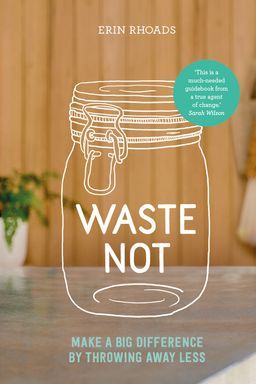
Waste Not cover

Waste Not

by Erin Rhoads

Waste Not offers actionable insights to reduce your environmental footprint. Learn practical ways to minimize waste, embrace a sustainable lifestyle, and enjoy modern conveniences without harming the planet. Transform your habits for a better future.

Rethinking Waste: A Journey Toward a Kinder World

Have you ever looked into your rubbish bin and wondered where all that waste really goes? Erin Rhoads’s Waste Not Everyday begins with this deceptively simple question—and from it unfolds a powerful challenge to the way we live, consume, and discard. Rhoads argues that waste is not just an environmental issue, but a reflection of our culture, our pace of life, and our relationships with each other and the planet. Through 365 actionable steps, she invites readers to transform daily habits and participate in a broader cultural shift toward intentional, compassionate living.

The Heart of the Zero-Waste Philosophy

At its core, Rhoads’s philosophy is built on a simple premise: every small act of waste reduction has a big cumulative impact. She asserts that zero-waste isn’t about perfection—it’s about awareness. Unlike global-scale solutions such as carbon taxes or government programs that might feel distant from everyday life, zero-waste choices are visible and immediate. You can see progress directly by watching your trash bin shrink, compost grow, and recycling demands fade. This visibility builds motivation and gives ordinary people agency in addressing massive environmental problems.

Beyond Plastics: A Call to Rethink Modern Systems

Rhoads emphasizes that zero-waste living extends far beyond avoiding plastics or disposable coffee cups. She situates it within the larger context of consumerism and industrial waste—from mining raw materials to exploiting labor and emitting pollution. Every product thrown away represents hidden waste upstream: fuel burned to transport it, water drained to produce it, and chemicals released during manufacturing. By reusing, repairing, and refusing unnecessary purchases, individuals can disrupt these destructive cycles. Her book encourages readers to think systemically, realizing that personal consumption choices ripple outward and can influence corporate practices.

The Framework: Redesign, Rethink, Refuse, Reduce, and Reuse

To make the philosophy practical, Rhoads introduces a framework she calls Waste Not: redesign, rethink, refuse, reduce, reuse, share, repair, compost, recycle, choose kindness, and be the change. These steps form a hierarchy that prioritizes prevention and creativity over reactionary measures like recycling. Notice that recycling falls near the end—she points out that it doesn’t truly solve the problem but merely delays it. True sustainability means consuming less upfront, not simply managing waste after the fact.

“One of the goals of zero waste,” Rhoads writes, “is to recycle less too.” Her challenge flips conventional recycling wisdom on its head by reminding us that the best waste is no waste at all.

Kindness and Connection as Environmental Acts

Perhaps the most striking idea in Waste Not Everyday is how deeply Rhoads connects waste reduction to kindness. Reducing waste, she argues, is not merely an environmental duty—it’s an act of care. It means valuing the people whose labor made your goods, protecting future generations from ecological harm, and acknowledging that human well-being depends on healthy ecosystems. By slowing down consumption and questioning habits, zero-waste living leads to what she calls a “freer” life—one that resists constant comparison and consumer pressures (“keeping up with the Joneses”). In this sense, waste reduction becomes a mindfulness practice, prompting us to pause, breathe, and appreciate what truly matters.

Visual Change and Empowerment

Rhoads’s approach appeals to the human need for visual progress. Unlike abstract climate metrics, smaller bins and emptier recycling containers are tangible markers of success. This visibility empowers people to feel the impact of their efforts. She includes an exercise—the bin audit—as a way to make waste patterns concrete. By sorting trash into categories like “edible food and scraps” or “plastics,” you can literally see where habits need adjusting. Within a couple of weeks, the audit reveals trends that can guide your next steps. The process of sorting garbage becomes a surprising form of self-discovery.

Why This Matters Now

Rhoads wrote Waste Not Everyday amid rising global concern over plastic pollution, climate change, and fast fashion. Yet she refuses despair; her tone is hopeful, urging incremental change that still adds up over time. In contrast to overwhelming news headlines, her advice restores perspective: small, consistent efforts—like those described by Katrina Mayer’s quote at the book’s opening—create widespread transformation. “The people who make the biggest difference,” Mayer notes, “are the ones who do the little things consistently.”

The Bigger Picture: Shifting from Consumption to Compassion

Ultimately, Rhoads’s argument is not just ecological—it’s philosophical. Wastefulness is tied to consumption, and consumption is tied to identity. By buying less, reusing more, and rediscovering local connections, we begin reshaping our place within the world. This shift reconnects us with natural rhythms and human creativity. Just as Alain de Botton suggests in his writings on simplicity, Rhoads sees reducing waste as reclaiming meaning amid commercial chaos. You find freedom not in accumulation, but in intentional choice.

Through accessible tips, thoughtful reflection, and a deeply compassionate lens, Waste Not Everyday transforms sustainability from a buzzword into a lived, daily value system. It isn’t about perfection or pressure—it’s about progress, awareness, and kindness. Every reused container, repaired item, or composted apple core becomes part of a collective movement to heal both planet and spirit. Rhoads asks readers to start small, stay mindful, and remember: the biggest changes begin with what’s inside your bin.


Seeing the Invisible Waste Before the Bin

Erin Rhoads introduces the concept of “upstream waste”—the unseen resource depletion that occurs long before an item reaches your home. It’s easy to believe waste begins when something’s tossed in the bin, but she argues that by the time an item is discarded, most of its environmental cost has already been spent. From mining metals to draining rivers for cotton fields, the world’s exhausting pursuit of new materials fuels exploitation and harm. Recognizing this hidden waste changes how you think about consumption itself.

Understanding Upstream Waste

Rhoads explains that industrial production uses massive amounts of energy and water. When we buy something new, we’re indirectly contributing to those environmental costs. For example, manufacturing a single cotton T-shirt involves thousands of liters of water and significant pesticide runoff. When that shirt loses appeal after a season, its brief usefulness belies an unsustainable journey of extraction, transport, and pollution. The zero-waste lifestyle seeks to break that cycle by reusing and repairing rather than replacing.

The Power of Refusing and Reusing

According to Rhoads, one of the simplest ways to combat upstream waste is learning to refuse. You can say no to unnecessary freebies, to single-use packaging, and to disposable convenience culture. The ripple effect is real—if enough consumers consistently reject products that rely on exploitative or unsustainable methods, industries are forced to shift. She invites readers to participate in this resistance thoughtfully, seeing every refusal as a statement of values.

A Conscious Consumption Practice

Rhoads’s view echoes ideas from Annie Leonard’s The Story of Stuff, which similarly examines the lifecycle of everyday items. Both authors remind readers that sustainability isn’t about immediately replacing everything with eco-products but slowly transforming habits. Reusing and repairing—not buying new—help curb invisible waste before it begins. That’s why Rhoads’s Waste Not framework encourages starting with redesign and rethink before anything else.

When Awareness Leads to Accountability

Once you see the whole picture of waste—from resource extraction to landfill burial—it becomes impossible to dismiss. Rhoads argues that awareness is transformative: it fosters empathy for workers and ecosystems alike. Every act of conscious consumption is a vote for a cleaner, fairer world. And by rethinking waste before it even appears, you participate in a revolution that doesn’t just clean your bin—it reshapes your ethics.


The Bin Audit: Seeing Your Waste Story

Before you can reduce waste, you have to understand it. That’s why Rhoads proposes the bin audit, one of her most practical strategies. By tracking what enters your rubbish and recycling bins, you gain a clear picture of your household’s habits. This exercise turns environmental theory into personal insight—it’s like budgeting, but with trash.

How to Conduct a Bin Audit

Rhoads suggests you divide your waste into four categories: edible food and scraps, plastics, other packaging, and other. Over two weeks, record each item before it hits the bin. Alternatively, on bin night, you can empty the contents onto a tarp, sort the materials, and take notes. The process reveals recurring patterns—maybe food waste dominates, or disposable plastics pile up. These patterns point directly to where lifestyle adjustments will have the biggest impact.

Turning Data into Habit Change

Once you’ve completed your audit, you’ll see opportunities everywhere. If food waste is high, meal planning or composting might be next steps. If single-use packaging is the main culprit, buying in bulk or carrying reusable containers could help. The audit isn’t about shame—it’s about clarity. Rhoads wants you to see waste as a teacher, not a punishment.

Seeing the Broader Patterns

Bin audits connect the personal with the systemic. When Rhoads references studies by Sustainability Victoria and other agencies, she shows that similar waste trends appear globally—food packaging and recyclables dominate landfills everywhere. This context highlights that personal behavior mirrors global patterns, meaning collective action can inspire systemic solutions.

Conducting a bin audit is less about cleanliness and more about consciousness. By naming your waste, you tell the story of your consumption—and that awareness holds the key to transformation. It’s a small, humble activity that can trigger a lifetime of mindful choices.


Redesigning the Way We Consume

Rhoads begins her Waste Not framework with the step “redesign,” and for good reason. Before you can reduce or reuse, you have to redesign the systems and habits that lead to waste in the first place. This idea draws inspiration from systems thinkers and product designers who believe sustainability begins at the blueprint stage.

Rethinking Function, Not Packaging

Rhoads encourages individuals to redesign their routines as though they were designing products. For example, can you redesign your weekly grocery habit to use local bulk stores instead of pre-packaged goods? Can you redesign your approach to gifting—valuing experiences over objects? When you treat lifestyle design as a creative project, sustainability becomes innovation, not deprivation.

Influencing Broader Systems

As a consultant for businesses, Rhoads applies the same design principles on a corporate scale. She advises industries to minimize waste in production rather than pushing it onto consumers. This echoes ideas from architect William McDonough’s Cradle to Cradle, which reimagines products as part of a continuous resource loop instead of linear throwaway cycles. Redesigning systems for circularity reduces not only waste but moral disconnection—ensuring the people and places affected by production are respected.

By beginning with redesign, Rhoads reminds us that zero-waste isn’t reactive; it’s proactive. It’s about creating lifestyles and industries designed with intention, generosity, and durability from the start.


Kindness as the Core of Sustainability

One of Rhoads’s distinctive insights is that environmental responsibility and kindness are inseparable. She encourages readers to see waste reduction through the lens of compassion—toward future generations, the planet, and those directly affected by overconsumption. This emotional grounding makes her philosophy accessible even to those daunted by complex environmental science.

Redefining What It Means to Care

Kindness manifests in simple actions: choosing reusable items protects ecosystems; buying fair-trade goods safeguards laborers; consuming less leaves more for others. Rhoads frames sustainability as empathy in action. She wants readers to see every choice—from skipping plastic straws to supporting local producers—as a reflection of values rooted in care rather than convenience.

The Emotional Side of Waste

Living with kindness, she argues, realigns emotional well-being too. Consumerism often breeds comparison and anxiety, but sustainable living slows that rush. By embracing intentional consumption, you feel “freer and less like you have to keep up with the Joneses.” This sense of peace aligns with mindfulness teachings from writers like Thich Nhat Hanh, who connect personal calm to global compassion.

In the end, kindness becomes a practical metric for environmental choices: if an act harms someone or something unnecessarily, it’s likely wasteful. Rhoads’s message is clear—protecting the planet is another way to love the world.


Recycling Less, Living More

Most sustainability advice begins with recycling—but Rhoads deliberately places it near the end of her framework. Her reasoning is provocative: recycling doesn’t truly reduce waste, it just delays it. Plastic deteriorates with each cycle; systems are inefficient; and the psychological relief of recycling often encourages continued consumption. Instead of chasing better recycling, she asks us to build a lifestyle where recycling is rarely needed.

The Trouble with Recycling Systems

Rhoads points out that many recyclables still end up in landfill because contamination ruins their usability. Even when recycling works perfectly, it consumes energy and transport fuel. That’s why she advises shifting focus to the steps before recycling—refusing, reusing, and repairing. If fewer disposable items enter circulation, the recycling burden drops.

Economy of Enough

Rhoads proposes embracing an ‘economy of enough.’ By learning satisfaction and sufficiency, you naturally buy and discard less. Minimalism joins sustainability here as a lifestyle of peace rather than scarcity. The result is not just less waste—it’s more life, lived intentionally.

Recycling, in Rhoads’s world, isn’t the hero—it’s the last resort. A truly zero-waste life integrates creativity, repair, and restraint, leading to ecological health and personal liberation alike.

Dig Deeper

Get personalized prompts to apply these lessons to your life and deepen your understanding.

Go Deeper

Get the Full Experience

Download Insight Books for AI-powered reflections, quizzes, and more.