
Idea 1
Living Deliberately in Body, Mind, and Spirit
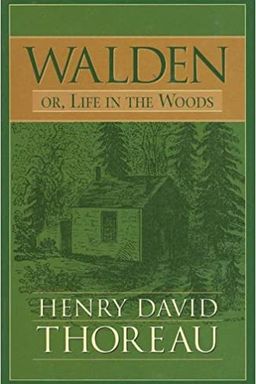
What does it mean to live deliberately? In Walden, Henry David Thoreau crafts an experiment designed to answer this question through lived experience rather than metaphor. By withdrawing to a small cabin beside Walden Pond, he tests whether simplicity, self-reliance, and attention to nature can yield freedom—economic, intellectual, and moral. For Thoreau, the goal is not retreat but reorientation: to live awake, aware, and in conscious harmony with the essential facts of life.
Why Simplicity Matters
Thoreau begins his argument with a precise ledger—costs of boards, shanty purchase, nails and lime totaling about $28.12—and ends with a moral balance sheet: by reducing expenses and obligations, he gains freedom. Comforts, he says, are not neutral; they cost time and spirit. The supposed necessities of civilized life—fancy clothing, ornate furniture, large houses—create invisible debt and dependence. His injunction, “Simplify, simplify,” is not romantic minimalism; it is a formula for recovering autonomy. You are invited to try this algebra yourself: subtract possessions until what remains supports vitality.
Self-Reliance and Practical Freedom
Thoreau’s cabin is emblematic. By making his own house, cultivating his own beans, and earning a modest living through day labor, he demonstrates a practical form of liberty. His yearly expenses total about $61.99, while his income from beans and odd jobs totals $36.78—enough to sustain eight months of thinking and writing. The arithmetic teaches that independence is a function of simplicity: by reducing needs, you create space for thought and moral clarity. (Note: Emerson’s essays on self-reliance echo similar claims, though Thoreau’s version is rigorously experimental.)
Critique of the Modern Condition
Against this simple life, Thoreau sets the modern one—a “crazy life” of quiet desperation, where men spend years paying for barns and mortgages. Luxury, he argues, enervates the body and spirit. The division of labor, wage slavery, and relentless pursuit of property make people less free and less skillful. You are asked to consider the Hydra of Necessity: kill one debt and two arise. The problem is not wealth itself but mistaken necessity—what we call must-haves that are merely habits of mind.
Nature and Moral Awakening
Living deliberately also means living in rhythm with nature. Thoreau’s dawn bathing becomes a ritual of intellectual renewal; every sunrise is a summons to mental wakefulness. He treats the morning as sacred—an hour of moral clarity free from the “soft stupor” of haste. Walden Pond itself mirrors this purity: its transparent depths and shifting colors become metaphors for honest perception. To watch the pond thaw or hear its ice boom is to witness nature’s reflection of inner life.
Learning, Solitude, and Community
Thoreau balances solitude with engagement. His three chairs—one for solitude, two for friendship, three for society—symbolize proportionate living. Solitude is welcome company when nature fills the conversation, yet he shares his hut gladly with the woodchopper, fishermen, and runaway slaves. True community, he argues, begins in simplicity and voluntary association, not conformity. Likewise, he invites intellectual independence through reading: study Homer or Aeschylus, engage the classics, and build local “uncommon schools.” A village can become a university if its inhabitants value thought over ornament.
Moral and Spiritual Lessons
In Higher Laws, Thoreau reconciles primitive instinct with spiritual aspiration. Hunting and fishing train observation and endurance, but discipline must follow appetite. The evolution from hunter to contemplative naturalist marks his moral growth: vigor without brutality, appetite governed by purity. Diet, temperance, and chastity become ways to clarify consciousness, transforming wildness into creative energy. (In Stoic and Eastern traditions, similar restraint breeds insight—the parallel is intentional.)
Seasonal and Social Mechanics
Thoreau’s scrutiny extends to ice, thaw, and village routines. The pond’s freeze becomes a study in physics and industry; ice-cutting crews dramatize human ambition against nature’s cycles. The village, meanwhile, appears as a machine of social taxation—a circuit of stores, taverns, and post offices designed to trade attention for reputation. His resistance—walking cow‑paths instead of main streets—shows how minor acts reclaim autonomy from systemic pressures.
Place Memory and Reorientation
As he explores the remnants of former inhabitants—cellars, apple trees, burned homes—Thoreau reads the land as biography. To be lost, literally or spiritually, is to renew your bearings. Every disorientation teaches how to find north again, both geographic and moral. The woods remember names like Brister Freeman and Zilpha; the soil carries memory. In walking through them, you rejoin an ongoing dialogue between human presence and natural reclamation.
Core message
To live deliberately, you must pare down desires until they align with natural rhythms and moral laws. Thoreau proves that self‑reliance, simplicity, and attentive living can transform ordinary time into freedom—a laboratory for both conscience and creativity.