
Idea 1
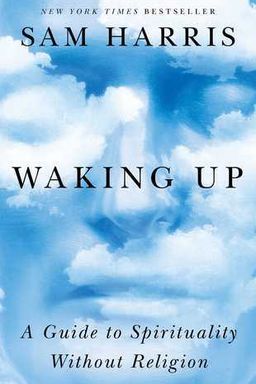
Waking Up: A Guide to Spirituality Without Religion
What if happiness depended less on what happens to you and more on how you experience what happens? In Waking Up: A Guide to Spirituality Without Religion, neuroscientist and philosopher Sam Harris argues that the deepest human truths—inner peace, self-transcendence, and meaning—can be approached rationally, without belief in gods or sacred doctrines. He invites you to explore spirituality as an empirical investigation into consciousness itself rather than a matter of faith or dogma.
Harris contends that our conventional sense of self—the feeling that there’s a thinker inside our head, observing reality from behind the eyes—is an illusion. This illusion is the source of suffering, anxiety, and delusion. The good news, he insists, is that we can wake up from it. Drawing on his background in neuroscience and years of meditation practice, Harris reframes spirituality as a disciplined inquiry into subjective experience. Through meditation, mindfulness, and scientific curiosity, he argues that we can achieve transformative insights traditionally sought through religion—but without superstition or dogmatic metaphysics.
A Bridge Between Science and Spirituality
For centuries, spirituality has belonged to religion, while science has claimed rationality. Harris’s project seeks to bridge this divide. His central claim is that spirituality—understood as the cultivation of presence, compassion, and self-transcending insight—is not only compatible with scientific reasoning but requires it. True awakening, he says, is based on empirical insight into the mind’s nature, not blind belief. “Nothing in this book needs to be accepted on faith,” he assures readers; the laboratory is one’s own subjective experience.
Harris’s worldview aligns partly with Buddhist philosophy and Advaita Vedanta—traditions that emphasize that the self is an illusion and that awareness, when understood correctly, is boundless and impersonal. But he strips these teachings of religious trappings, casting them as insights into human consciousness that any rational person can test through direct experience. In doing so, he challenges both traditional believers and militant atheists who reject everything labeled “spiritual.”
The Path to Presence
The book moves from personal narrative to philosophical reflection to practical guidance. Harris begins with his youthful encounters with solitude and meditation in Colorado, where silence first revealed his restlessness. A later experience with MDMA (Ecstasy) awakens in him a profound sense of unconditional love and selfless clarity—a preview of what contemplative traditions describe as enlightenment. These experiences lead him to ask: if such states of compassion and peace are possible, how can we cultivate them deliberately, without drugs or dogma?
His answer is meditation—especially mindfulness or vipassana—as a scientific method for observing consciousness. He explains that how we attend to the present moment shapes the quality of our life. Attention is reality construction in motion: when attention is scattered, the mind suffers; when it is clear and nonjudgmental, freedom becomes possible.
Why This Matters
In an age where religion divides and science disenchants, Harris proposes a new kind of wonder rooted in awareness itself. Human life, he argues, unfolds within the mind, and the mind can be trained. Spiritual practice, in this secular sense, strengthens compassion, dissolves egocentrism, and illuminates moral understanding. As Harris writes, “There is no discrete self or ego living like a Minotaur in the labyrinth of the brain.” By realizing this directly, we find not nihilism but an expanding sense of connection with others.
Over the chapters ahead, Harris explores meditation techniques, the neuroscience of consciousness, the illusion of the “I,” and the fine line between wise spiritual guidance and dangerous guru worship. He tackles death, psychedelics, and the paradox of spiritual seeking—all while grounding his analysis in skeptical inquiry. For readers seeking a middle way between religious mysticism and sterile materialism, Harris’s message is clear: the path to fulfillment lies not in believing better stories but in experiencing life with greater clarity and compassion.