
Idea 1
The Hidden Power of Delay
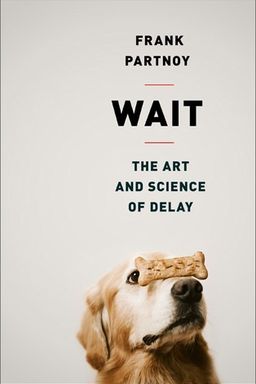
What if speed isn’t the secret to success—but timing is? Across psychology, physiology, economics, and policy, the book reveals a surprising thesis: the ability to wait strategically, to delay action just long enough, is the defining skill of effective decision-makers. Split-second reactions are often overrated; the most resilient performers—from surgeons and traders to investors and creative thinkers—use measured pauses and calibrated delay to create better outcomes. Using millisecond physiology, expert cognition, and macroeconomic ethics, the book reframes delay not as hesitation but as a powerful form of intelligent control.
Speed and the biology of patience
It begins in your body. Stephen Porges’s research on heart rate variability (HRV) shows that your heart and brain maintain a millisecond-scale dialogue through the vagal nerve. High HRV—your heart’s ability to accelerate and decelerate flexibly—supports emotional regulation and self-control. Infants who display rich HRV patterns later show fewer behavioral problems and greater adaptability. This means that patience isn’t merely psychological—it’s physiological. Practices such as slow breathing, yoga, and rhythmic group activities improve vagal tone, helping your brain resist impulsive reaction and recover calm more quickly. (Note: This echoes Daniel Kahneman’s “System 2” thinking—the bodily ability to pause supports cognitive control.)
Milliseconds to mastery
Elite performers—from tennis champions to fastball hitters—don’t necessarily see faster. They manage time differently within milliseconds. In a 400–500 ms serve-return window, professionals like Chris Evert or Jimmy Connors automate the mechanical swing so their mind can spend more of that split second preparing. Angel Lopez calls this “ball identification”: train your body to be quick so you buy time for the brain. The same principle applies everywhere: compress execution to expand preparation. Benjamin Libet’s experiments, showing a half-second lag between unconscious action and conscious awareness, highlight that mastery lives in this preconscious zone—the space where speed and reflection meet.
Delay as a system design principle
In technology and finance, speed can backfire. The UNX trading paradox proved that shaving milliseconds off communication time degraded performance, and the 2010 flash crash demonstrated that hyper-speed algorithms amplify systemic fragility. Optimal systems deliberately introduce latency—the equivalent of built-in pause points—to prevent runaway interactions. Sometimes “being first” isn’t best; it accelerates feedback spirals and crowds good judgment out. The lesson parallels sports and physiology: controlled delay stabilizes complex systems, from your heartbeat to global markets.
Human cognition under pressure
Gary Klein’s field studies of fireground commanders and John Boyd’s OODA loop illustrate how experts turn seconds into advantage. Under pressure, panic narrows attention and pushes you toward automatic “novice” errors. Experts, by contrast, integrate instinct and plan—they rehearse crisis scenarios (premortems) to shorten the OODA loop without rushing decisions. The same pattern applies to Captain Rogers’s tragic shootdown and Belichick’s studied football calls: preparation creates calm, and calm buys time. Expertise is the art of compressing reaction while preserving reflection.
From bias to biology
Millisecond judgments can also mislead. Nalini Ambady’s “thin-slicing” work shows that short exposures predict teacher success and relationship stability—but also amplify bias. In medicine, split-second racial cues affected lifesaving prescriptions; awareness and structural pause points changed outcomes. Quick impressions are powerful but dangerous when unchecked. Dana Carney’s research on power posing demonstrates you can physically alter hormonal responses—raising testosterone and lowering cortisol—to improve both perception and performance under fast judgments. Your body, again, is part of time control.
Economics of delay
In behavioral economics, delay defines human irrationality. George Akerlof’s confession about not mailing Joseph Stiglitz’s box led economists to label procrastination as hyperbolic discounting—a bias toward the immediate. Humans value the present disproportionately, explains researchers like Richard Thaler and David Laibson. James Mazur’s pigeons reveal the same pattern: both species overweight near-term effort reduction. The book reframes this trait as manageable, not shameful—you can use commitment devices, deadlines, and micro-steps to shift preferences toward the future. (Note: This connects to George Ainslie’s claim that “you literally cannot avoid delay; you can only organize it.”)
Professional timing and delay
Experts across disciplines display intentional waiting. Warren Buffett’s patient investing, Bill Ackman’s seven-year conviction, and Atul Gawande’s surgical pauses all represent the same discipline: calculate your temporal bandwidth and deliberately use it. Journalists like Steve Kroft and clinicians like Gurpreet Dhaliwal combine deep preparation with rapid execution at the moment of truth. Strategic waiting is what separates reactive amateurs from professionals who drive outcomes toward quality and insight. It’s not abstention—it’s active timing.
Time frames and social design
Time itself has competing meanings. Modern life operates by clock time—hourly billing, meetings, and deadlines—that optimizes efficiency but erodes satisfaction. Researchers like Sanford DeVoe show that hourly pay increases perceived time pressure and reduces leisure enjoyment. Event time, by contrast, prioritizes completion and meaning. The book advocates blending the two: use clock time for precision but protect event time for creativity and depth. Institutions that confuse efficiency for effectiveness breed stress and short-termism; balancing both restores human rhythm.
Patience and innovation across years
Long-term ideas evolve through “slow hunches,” not sudden sparks. Steven Johnson’s term fits Art Fry’s Post‑it® journey at 3M—a decade of serendipitous reshaping supported by a culture of exploratory patience. Cognitive traps like Einstellung (stuck thinking) show the need for fresh perspectives and unhurried exploration. Organizations that fund side projects, foster cross‑disciplinary exchange, and protect long incubation find more breakthroughs. Fast environments destroy fragile ideas; slow ones let them bloom.
Policy and the future value of time
Delay also scales to civilization. The book’s final argument applies discounting logic to public policy: high discount rates make long-term welfare—climate security, public health—look trivial and justify inaction. Low-rate models like Nicholas Stern’s emphasize intergenerational equity. Governments that build structured delays into decision cycles, like Sarkozy’s GDP commission or FEMA’s circuit‑breaker pauses, resist short-term political bias. To think wisely, institutions must learn to wait well. In this sense, the book’s idea of delay becomes a philosophy: each system, human or social, must reclaim time not to stall action but to align it with the long arc of what truly matters.