
Idea 1
The Power and Spectrum of Visual Thinking
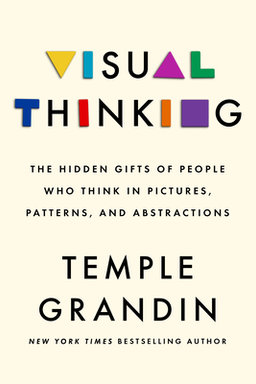
What if your thoughts didn’t come as words but as pictures? Temple Grandin’s work explores this question through the lens of visual thinking—a mode of cognition in which the mind organizes experience primarily through images, sensory impressions, and spatial associations. This idea lies at the heart of her broader argument: society undervalues visual thinkers even as their abilities underpin innovation, safety, and creativity in the real world.
Understanding Visual vs. Verbal Minds
If you are a verbal thinker, your brain processes ideas sequentially—strings of sentences, logical steps, and inner self-talk. You thrive in systems built around testing, essays, and policy. By contrast, visual thinkers rely on mental scenes and hands-on experience. They recall how something looked or worked rather than memorizing verbal facts. Grandin’s mind operates “like Google Images”: when you mention a topic, she sees a flood of detailed pictures linked by association.
Visual thinking isn’t about eyesight—it’s about how your brain encodes and retrieves knowledge. Many children show these tendencies early: they love puzzles, Lego, and drawing. The “IKEA Test” captures the distinction neatly: do you read the steps or follow the pictures? Visual thinkers favor imagery; verbal thinkers favor text. Recognizing which mindset you or your child use changes how you learn, teach, and solve problems.
Two Types of Visualizers
Grandin draws on Maria Kozhevnikov’s research to distinguish two subtypes. Object visualizers think in photorealistic detail—they remember surfaces, textures, and exact configurations. They become the welders, machinists, drafters, and designers who excel at creating and repairing real things. Grandin herself fits this pattern. Spatial visualizers, on the other hand, specialize in patterns and abstract geometry. They mentally rotate shapes, design computer algorithms, or construct data models—think physicists and engineers. The two complement each other: one builds the prototype, the other refines the math.
Neuroscience and Brain Evidence
Brain scans support these differences. Grandin’s own imaging revealed a large visual-cortex network—up to 400% more fiber connections than typical—linking imagery to frontal planning areas. These findings align with research by Adam Zeman on aphantasia (no visual imagery) and hyperphantasia (extremely vivid imagery), confirming that minds vary greatly in how vividly they picture things. Yet imaging is only a map, not a manual: it shows correlations, not full explanations of how creativity and perception arise.
Why Society Needs Visual Minds
Grandin warns that modern education and workplaces increasingly reward verbal logic and abstract testing while neglecting spatial and object-based reasoning. Shop classes, drafting, and mechanical apprenticeships have vanished, “screening out” the very people who could fix machines, prevent disasters, and invent new systems. She connects this to broader losses in industrial capacity—why American plants now import specialized equipment from Europe and why aging infrastructure suffers from overlooked maintenance.
Her conclusion is both scientific and social: thinking exists on a spectrum. You cannot build a safe bridge, invent a new camera, or raise animal welfare standards without people who see through images as vividly as others write in words. Visual thinkers recognize the cracks, patterns, and relationships invisible to verbal logic. Once you value that difference, you not only empower individuals—you strengthen the systems they design, maintain, and protect.
Core Idea
Visual thinking is not a curiosity of autism or creativity—it’s a missing dimension of how society operates. Recognizing and integrating visual cognition unlocks human potential and safeguards systems built by imagination and hands-on experience.