
Idea 1
Let the Science Speak: Vax vs. Unvax
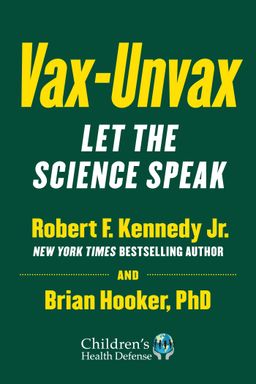
If you had a simple way to compare the long-term health of vaccinated and unvaccinated people before making decisions for your family, would you want to see it? In Vax-Unvax, Robert F. Kennedy Jr. and Brian Hooker argue that U.S. health authorities have avoided the most basic question in modern public health—how the total vaccine program compares, in real-world health outcomes, to taking fewer vaccines or none at all. They contend that long-term, placebo-controlled trials are rare; that post-licensure surveillance is fragmented; and that the most direct, policy-relevant study—vaccinated versus unvaccinated (vax–unvax) comparisons—has been systematically discouraged. Their thesis is bold: when you examine studies that do make this comparison (intentionally or incidentally), the signal often runs in the same direction—more chronic illness in vaccinated cohorts across multiple domains.
A Bigger Schedule, Narrower Safety Lens
Kennedy and Hooker open with the reality of the modern schedule: in the 1960s, a handful of vaccines; since 1986, after Congress created a no-fault vaccine injury program and liability shield, a rapidly expanding schedule culminating in 70+ doses by age 18. Yet, they say, most licensure trials observe subjects for days—not months or years—and use active comparators (another vaccine or adjuvant), not inert saline, making subtle or delayed harms hard to detect. They cite the National Academy of Medicine (formerly IOM) 2011 and 2013 reports, which concluded that data were inadequate to accept or reject causality for most hypothesized adverse events and that no studies had comprehensively examined health outcomes associated with the entire childhood schedule.
What the Book Promises
You’re walked through a tour of vax–unvax evidence: studies comparing cohorts of children visiting the same clinics; retrospective analyses embedded in large databases like the Vaccine Safety Datalink (VSD); surveys of unvaccinated families; and safety signals around ingredients (thimerosal/mercury, aluminum) or specific products (MMR, rotavirus, HPV, DTP, hepatitis B, influenza, COVID-19). You’ll see odds ratios, rate ratios, and hazard ratios, alongside names and dates—Mawson 2017, Hooker & Miller 2020/2021, Lyons-Weiler & Thomas 2020, Enriquez 2005, Daley 2022 (aluminum and persistent asthma), DeStefano 2004 (MMR timing), Hooker 2018 (reanalysis), and Thompson 2007 (tics).
Why the Authors Say This Matters
For you as a parent, clinician, or policymaker, their point is practical: you weigh risk and benefit every day. If a program prevents some infections but correlates with more asthma, allergies, neurodevelopmental diagnoses, or autoimmune events, that trade-off should be quantified transparently—not assumed away. The authors underscore that benefits like reduced chickenpox or measles appear in the data; what they argue is missing is a credible accounting of potential off-target harms (so-called “non-specific effects”). They highlight Peter Aaby’s work in West Africa on DTP and mortality, influenza studies linking H1N1 vaccination to narcolepsy in Europe, and multiple myocarditis/pericarditis analyses following mRNA COVID-19 vaccination.
The Roadblocks They Describe
The book recounts a 2017 meeting at NIH with Anthony Fauci and Francis Collins, where Kennedy and colleagues asked for placebo-controlled trials and access to VSD data to run vax–unvax comparisons. They describe promises unfulfilled, FOIA requests, and court filings documenting missing safety reports. They also cite the Lazarus VAERS project (AHRQ), which found automated systems could detect far more adverse events than voluntary reporting captured—an initiative the authors say was halted when high reporting rates appeared. (Note: federal and academic bodies broadly maintain that vaccines are rigorously tested and continuously monitored; they generally dispute these characterizations.)
How the Book Is Structured
After framing the evidence gap, the authors present chapter-by-chapter vax–unvax findings for: the schedule overall; thimerosal; live-virus vaccines (MMR, polio, rotavirus); HPV; Gulf War vaccines; influenza; DTP; hepatitis B; COVID-19; and vaccines in pregnancy. Each chapter summarizes study designs and numbers, provides charts (e.g., asthma odds ratios, intussusception risks), and spotlights methodological disputes (saline placebos vs aluminum adjuvants; withdrawal of papers; the role of VAERS).
Key Idea
Vax-Unvax doesn’t claim one killer study; it curates a pattern the authors believe demands open, adversarial testing: in multiple settings and products, vaccinated cohorts show higher rates of certain chronic conditions. They argue policy should catch up to the science with real comparisons, transparent data access, and fully informed consent.
Reading with a Critical Eye
Because health recommendations affect millions, you’ll want to understand where the mainstream stands: CDC, WHO, and major medical societies conclude vaccines’ benefits outweigh risks and contest many interpretations highlighted here (pointing to biases, confounding, and stronger evidence for safety). Kennedy and Hooker respond that this is precisely why independent, blinded vax–unvax analyses across the schedule are vital. Whether you agree or not, the book equips you with study names, effect sizes, and methods—the minimum you need to interrogate claims and make your own risk–benefit judgments.
In the rest of this summary, you’ll see the most-cited comparisons, how ingredients and timing factor in, pregnancy and product-specific chapters, and the policy reforms the authors propose. If you’ve ever wanted “the graph behind the slogan,” this is the book’s promise to you.