
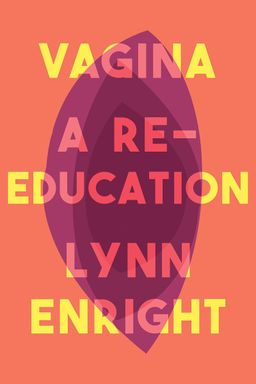
Vagina cover

Vagina

by Lynn Enright

Vagina: A Re-education by Lynn Enright delves into the neglected and misunderstood world of female anatomy. By debunking myths and exposing societal biases, this book empowers readers with knowledge to challenge cultural taboos and advocate for comprehensive sex education. A must-read for anyone seeking to understand and support women''s health and autonomy.

Reclaiming the Vagina: Knowledge, Power, and Liberation

How well do you actually understand your own body? In Vagina: A Re-Education, journalist Lynn Enright argues that much of what girls and women have been taught about their bodies—particularly about their vaginas, their sexuality, and their reproductive health—is incomplete, distorted, or deliberately obscured. Decades after the sexual revolution, she contends, misinformation, shame, and silence still dominate conversations about the female body.

Enright’s mission is both scientific and political: she wants to return clear, evidence-based knowledge about the female body to its rightful owners—women and people with vaginas—and to undo centuries of misogynistic biology. Through frank discussions about anatomy, menstruation, sex, pain, fertility, menopause, and gender identity, she demonstrates that understanding the vagina is inseparable from reclaiming agency in a world shaped by patriarchy.

The Vaginal Taboo and Its Consequences

Enright opens with a telling childhood memory: being told to look at her genitals in a mirror and recoiling in confusion and shame. Her story mirrors that of countless women raised to think of their vaginas as unspeakable—labeled with euphemisms like “front bottom” and associated almost exclusively with reproduction or modesty. This early indoctrination, she argues, begins the cycle of ignorance that persists into adulthood, where even basic anatomy is misnamed and misunderstood. For example, 60 percent of British women could not identify the vulva correctly, confusing it with the vagina.

That silence, Enright explains, has consequences far beyond embarrassment—it perpetuates inequality. When women do not fully understand their bodies, they are easier to control. From prohibitions on abortion and flawed sex education to misinformation about pleasure and pain, ignorance becomes a tool of subjugation. “We have been taught far more about shame than about our anatomy,” she writes.

A New Feminist Science Lesson

The book acts as a brilliant mix of memoir and re-education manual. Enright walks readers through the anatomy that many of us should have learned in school: the difference between the vulva and the vagina, the shape and function of the clitoris, and the truth about menstruation, fertility, and menopause. Each chapter takes a subject that patriarchy has rendered shameful—the hymen, orgasms, periods—and restores clarity and dignity through science and story.

Across these explorations, Enright exposes the absurdity of how often “female biology” has been defined through male assumptions. The clitoris was literally removed from medical textbooks for nearly half a century. The hymen, falsely cast as a measure of virginity, has been the pretext for violence and control in multiple cultures. And even in modern relationships, she observes, sex continues to be defined around the male orgasm—with women’s pleasure treated as peripheral or mysterious. Each of these examples underlines her central insight: what we don’t know about the vagina is never neutral—it is shaped by cultural power.

Why This Re‑Education Matters

For Enright, understanding the vagina is not merely an act of health literacy; it is an act of liberation. The book links sexual ignorance to structures of oppression—from purity myths in religious societies to consumer beauty standards that drive women toward unnecessary surgeries. She shows how miseducation limits agency, affects medical decisions, and fuels violence against women. For instance, her own lack of anatomical knowledge left her vulnerable during a sexual assault in her teens, an absence of language and understanding that compounded her trauma.

The re-education extends beyond cisgender women. Enright’s later chapters weave in trans and intersex experiences to challenge the reduction of womanhood to anatomy, arguing that caring about vaginas and caring about trans rights are not contradictory. Recognizing that not all women have vaginas and not all people with vaginas are women, she calls for empathy, inclusive language, and sexual education that honors everyone’s bodily reality.

The Scope of Enright’s Mission

Across twelve chapters, Enright traces how misinformation and stigma weave through the full arc of life: childhood ignorance fostered by poor sex education; adolescent confusion around the hymen and virginity; adult struggles with pleasure, appearance, and pain; middle life challenges of fertility, pregnancy, and childbirth; and the later-life transformation of menopause. By combining data, interviews, and personal testimony, she makes the subject intimate yet political, graphic yet dignified.

By the book’s end, Enright offers a vision of sexual literacy that could transform relationships, healthcare, and feminism itself. Our bodies, she insists, deserve accuracy, not euphemism; awe, not shame. “Armed with robust information about our own bodies,” she concludes, “women can begin to resist damaging myths.”

Understanding the vagina, Enright reminds us, is not just biological curiosity—it is cultural defiance. Her book challenges readers to replace fear with factual knowledge, secrecy with speech, and alienation with ownership of the body that has too long been explained by others.


Rewriting Sex Education

For Enright, the failures of sex education are the roots of adult ignorance and shame. Growing up in Ireland under the lingering shadow of Catholic conservatism, she learned to use euphemisms like “front bottom” instead of vulva and was taught more about male wet dreams than female pleasure. This lack of accurate education, she argues, sets up a pattern of disempowerment that lasts a lifetime.

The Myths We Teach

Enright details how most curricula focus almost entirely on male anatomy and reproduction while treating female sexuality as dangerous or shameful. Girls learn about pregnancy prevention but not about how their own pleasure or cycles work. Boys learn that sex is something they do; girls learn that sex is something they must defend themselves against. The consequences are measurable: by adulthood, 44 percent of British women cannot even correctly identify the vagina, let alone the vulva or clitoris.

Models That Work

She contrasts this with the Dutch model of comprehensive, sex-positive education. In the Netherlands, children begin learning about relationships and respect at age four and later receive lessons that include discussions of pleasure, consent, and equality. The results are striking—Dutch teens have later sexual debuts, lower teenage pregnancy rates, and far more positive experiences of first-time sex. (Peggy Orenstein’s Girls & Sex similarly celebrates how Dutch openness improves both safety and satisfaction.)

What Real Re‑education Looks Like

Enright suggests that an honest sex education must begin with accurate language: children should be taught the correct terms—vulva, vagina, clitoris—from the start. Education should introduce consent, LGBTQ+ inclusion, and the factual functions of anatomy without moral panic. Instead of weaponizing ignorance to police sexuality, society should normalize curiosity and equip young people with an understanding that their bodies are worthy of respect and care.

Until then, she warns, silence will continue to breed misinformation—from the myths about hymens to the dangerous “wellness” industries that profit from women’s insecurities. True sex education, Enright concludes, must teach not only the facts of reproduction but the rights of ownership over one’s body.


The Hymen and the Virginity Myth

In one of the book’s most powerful chapters, Enright dismantles centuries of mythmaking around the hymen. As a teenager, she couldn’t locate her own vaginal opening and believed her hymen was an unbreakable seal barring her from womanhood. That misconception left her ashamed and confused—a common experience, she later discovered, among women worldwide.

The Biology Versus the Belief

Contrary to popular belief, the hymen is not a taut film that “breaks” during intercourse. Anatomically, it’s a thin, often crescent-shaped fold of mucous membrane just inside the vaginal opening. Its shape and thickness vary widely, and in some people, it’s barely visible at all. Because it serves no biological purpose, Enright notes, it’s puzzling that it has carried so much symbolic weight. That emptiness has allowed patriarchy to fill it with cultural meaning—primarily as a marker of purity and proof of virginity.

Virginity as a Weapon

Across cultures, the concept of an “intact” hymen has been used to control female sexuality. Enright cites Egyptian feminist Mona Eltahawy’s assertion, “Our hymens are not ours; they belong to our families.” In some Middle Eastern communities, the failure to bleed on a wedding night can lead to ostracism or even honor killings. Global industries now sell “fake hymens” and hymen reconstruction surgeries, practices she condemns as physical manifestations of misogyny.

Ignorance and Vulnerability

Enright’s personal story brings the abstract horror into focus. Years of misinformation left her too embarrassed to seek medical help for what was actually an anatomical variant, and later, her lack of knowledge made her vulnerable during a sexual assault. The violence robbed her not just of bodily autonomy but of the sense that her body belonged to her at all. “Ignorance,” she writes, “left me without power.”

By reclaiming accurate knowledge—what Sweden now calls the “vaginal corona” instead of hymen—Enright urges women to replace purity myths with biology. Virginity, she argues, is not a physical state but a cultural invention, and exposing that myth is crucial for freeing women’s sexuality from patriarchal measurement.


The Clitoris and the Politics of Pleasure

The next chapter traces another form of erasure—the systematic disappearance of the clitoris from medical, educational, and cultural knowledge. Enright tells the story of a male teacher skipping the clitoris card in a classroom anatomy lesson—an act seemingly small but deeply emblematic. This silence, she argues, is how patriarchy has policed women’s pleasure.

Erasure Through History

Shockingly, the clitoris was removed from the famous textbook Gray’s Anatomy in 1947 and remained missing for decades, literally deleted from Western medical education. Enright recounts how discoveries about its full structure—from its outer glans to its internal crura and bulbs—were repeatedly “lost” throughout history, only to be rediscovered by female scientists like Dr. Helen O’Connell in the 1990s. The result: generations of doctors and women grew up unaware of the clitoris’s true size and complexity.

Pleasure, Shame, and Control

The ignorance isn’t accidental. Since pleasure-centered knowledge threatens patriarchal control, cultures have minimized or punished it—from Victorian doctors performing clitoridectomies to modern taboos around masturbation. Enright connects this to ongoing violence, including female genital mutilation (FGM), which she calls an atrocity against the very organ designed for pleasure. Quoting activist Nimko Ali, she shows how campaigners are reframing FGM not as a “cultural practice” but as organized gendered violence that must be named to be ended.

Rediscovering the Whole Clitoris

By mapping the full anatomy, O’Connell and feminist educators reveal the interconnected nature of sexual response. The clitoris isn’t a tiny nub, but an organ that engorges like a penis and interacts with the vagina and anus—a fact long ignored in sex education and media. Understanding this system helps debunk myths about “vaginal” versus “clitoral” orgasms and reframes pleasure as complex, normal, and entirely female.

Enright argues that reclaiming the clitoris as a legitimate organ of knowledge is revolutionary. Talking about it, naming it, and centering it in sexual education is not crude, she insists—it’s essential. Knowledge is the first step toward bodily independence.


Orgasm Equality and the Pleasure Gap

Why do women orgasm less often than men? Enright reframes this as a structural, not personal, problem. She names it the “orgasm gap”—a persistent inequality tied to misinformation, internalized shame, and cultural scripts that center male pleasure.

Myths of the 'Vaginal Orgasm'

Following earlier thinkers like Anne Koedt and Betty Friedan, Enright dismantles Freud’s notorious claim that clitoral orgasms were immature and that mature women should achieve pleasure through penetration alone. That dichotomy, she notes, was never scientific; it was moral. By ranking “vaginal” orgasms as superior, Freud placed male penetration at the center of normal sexuality—a narrative that still shapes sex today. Studies show only about 18% of women climax from intercourse alone, yet movies, pornography, and even medical advice perpetuate the myth.

The Calculus of Desire

Drawing on contemporary research and authors like Emily Nagoski (Come As You Are), Enright explains that orgasm depends on an interplay of physiological, psychological, and relational factors. Stress, communication, medication, and arousal matter as much as physical technique. She praises initiatives like OMGYes, which uses empirical research and instructional videos to normalize female masturbation and illustrate the diversity of pleasure. Real sexual equality, she insists, begins when women stop faking orgasms and start understanding what makes them feel good.

Reclaiming Sexual Honesty

The goal, however, isn’t to define a single formula for pleasure but to legitimize all kinds. It’s normal, Enright writes, to orgasm through clitoral stimulation, multiple times, during sleep—or not at all. What’s not normal is teaching generations of women that their satisfaction is secondary. Closing the orgasm gap, she concludes, requires cultural as well as personal honesty: talking about female pleasure without shame turns it from taboo into truth.

By tracing the long arc from Freud’s pseudo-science to modern self-discovery apps, Enright reclaims sexual pleasure as an educational right, not a luxurious secret.


Shame, Beauty, and the Commodified Vulva

Modern beauty culture, Enright observes, has turned the vulva into just another body part for profit and perfection. In her witty yet unsettling Berlin waxing story, she exposes how grooming, pornography, and social media create new insecurities even as they masquerade as empowerment.

From Bush to Bare

Tracing the rise of the Brazilian wax from 1990s Manhattan to a global norm, Enright notes that what was once a sexual experiment became a hygiene expectation. The bald vulva, popularized by porn since the 1970s, now defines “cleanliness” for women in the West. Yet research shows that pubic hair protects against infections and STDs, while its removal increases the risk of microtears and irritation. This inversion—where health is sacrificed for aesthetic ideals—reveals how deeply consumerism entwines with sexual shame.

Invisible Diversity

The more visible vulvas become, ironically, the narrower the definition of what’s acceptable. The sameness of porn’s “tidy labia” fuels a boom in labiaplasty—cosmetic surgery to trim inner lips deemed too long or “uneven.” In 2016, global labiaplasty procedures rose by 45%, and girls as young as nine in the UK asked doctors for surgery. The obsession extends to “labial puffs” and luxury vulva-care products that promise confidence through consumption. Enright likens these trends to earlier waves of female genital mutilation and Victorian “clitoral corrections”—technologies changing shape, not intent.

Seeing Ourselves Clearly

Against this backdrop, Enright celebrates doctors who educate patients rather than operate unnecessarily. She urges readers to actually look at their vulvas—not to judge, but to know. The moment she finally does so herself, she feels neither pride nor shame but neutrality, which she calls “a kind of freedom.” True empowerment, she concludes, lies not in beautifying the vulva but in understanding it as normal, variable, and wholly one’s own.

Her critique transforms a conversation about grooming into a mirror for broader anxieties about femininity: whenever women are told to “perfect” their genitals, Enright reminds us, someone else is profiting from our discomfort.


Pain, Periods, and the Medical Silence

Pain, Enright writes, is women’s constant companion—and medicine has too often refused to listen. She threads together personal stories of excruciating periods, endometriosis, infertility, and humiliating gynecological procedures to reveal how female suffering is normalized and dismissed.

The Culture of Endurance

Girls learn early that pain is “just part of being female.” From the cramps of menstruation to labor or menopause, women are taught endurance rather than advocacy. Enright’s own hysteroscopy—performed without adequate anesthesia—captures this cruelty: her tears were met with a note labeling her “particularly sensitive to pain.” Similar disregard, she finds, pervades endometriosis care, where diagnosis takes an average of seven years and many patients are told their agony is psychological.

Periodic Shame

She calls menstruation “horrible and heroic”—a messy biological fact still surrounded by taboo. Cultural silence means millions face period poverty or stigma; menstruating women are even banished to huts in parts of Nepal. Yet when the topic enters pop culture—like Sally Rooney’s frank depictions in Conversations with Friends—it breaks the old shame. Enright applauds movements making periods visible, from Kiran Gandhi’s marathon free-bleeding to campaigns against the tampon tax.

When Doctors Don’t Believe Women

Whether dealing with vulvodynia, vaginismus, or menopause, women face structural disbelief. Enright explains how patriarchal medicine, built from male-data research, fails to account for women’s physiology. Pain is minimized, misdiagnosed, or medicated away with antidepressants. Yet as more female patients, doctors, and writers speak openly—Hilary Mantel on endometriosis, Lena Dunham on hysterectomy—the conversation shifts from dismissal to understanding.

“What hurts,” Enright insists, “must be named.” By teaching women to see pain as information rather than weakness, she calls for a healthcare revolution grounded in empathy and equality.


Fertility, Pregnancy, and the Myth of Control

Motherhood, in Enright’s framework, reveals how little control women actually have over their reproductive lives. She explores fertility, pregnancy, miscarriage, and birth not as moral milestones but as complex intersections of biology, culture, and choice.

The Betrayal of Biology

While society blames women for both getting pregnant and not getting pregnant, Enright shows how fertility education rarely prepares anyone for the realities of conception. Her own experience of infertility—agonizing months of “TTC” (trying to conceive)—reveals how even educated adults misunderstand ovulation and age-related decline. The lack of honest dialogue means women face both unplanned pregnancies and unmet expectations in silence.

Abortion, Miscarriage, and Silence

Defying stigma, Enright discusses her abortion as a pragmatic and necessary choice, later followed by the grief of infertility. This duality—agency and loss—captures how society simplifies women’s reproductive experiences into binary narratives of sin or success. She extends empathy to those facing miscarriage, stillbirth, and reproductive trauma, arguing that silence compounds suffering. Miscarriage, she reminds us, is “common but not ordinary.”

Toward a New Fertility Education

Instead of fear-based messages about “ticking clocks,” Enright calls for a nuanced fertility re-education that includes men. Male infertility, often hidden by stigma, now accounts for half of infertility cases. By teaching boys and girls alike about biology, contraception, economics, and emotion, societies can replace shame with preparedness. Real reproductive freedom, she concludes, requires both rights and knowledge: abortion access, maternal care, and honest fertility awareness.

Enright’s refrain echoes throughout: women’s bodies are not moral battlegrounds—they are living, changing, deserving of truth.


Bodies Beyond Binaries: Gender, Identity, and Inclusion

The final chapters ask: if understanding the vagina is central to feminism, how do we include those whose experiences of sex and gender differ from the traditional narrative? Enright’s answer is deeply compassionate: we must enlarge, not erase, the conversation.

Trans and Intersex Visibility

Enright dismantles the media’s prurient obsession with trans people’s bodies, citing trans writers like Janet Mock, Juno Roche, and Buck Angel, whose stories reclaim sexuality from sensationalism. Their experiences prove that womanhood or manhood cannot be reduced to anatomy. Similarly, she highlights intersex infants historically subjected to “normalizing” surgeries, calling such operations human rights violations. Education, she argues, must include these realities to teach respect for bodily diversity from the start.

Reconciling Feminism and Trans Rights

Against online culture wars pitting “vagina-centric” feminism against trans inclusion, she insists the two are allies, not enemies. Citing the backlash to Janelle Monáe’s “Pynk” music video, where dancers wore vulva-shaped pants, Enright argues that celebrating vaginas need not invalidate trans identities. “A trans woman is a woman,” she writes, “and a man can have a vagina.” The goal is compassion, not categorization.

Beyond the Body

Ultimately, Enright concludes that genitals should not define anyone’s personhood. Drawing on feminist thinkers like Chimamanda Ngozi Adichie, she envisions a world where anger at gender injustice evolves into education and empathy. “We are all more than our genitals and our gender,” she writes. Intimate knowledge should lead to solidarity, not division.

Her closing challenge is simple but profound: to know your body is to know your freedom. And freedom grows when we extend that right to everyone.

Dig Deeper

Get personalized prompts to apply these lessons to your life and deepen your understanding.

Go Deeper

Get the Full Experience

Download Insight Books for AI-powered reflections, quizzes, and more.