
Idea 1
The Art of Living Through Travel
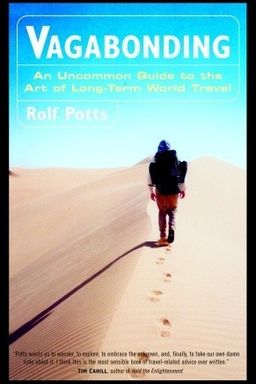
Have you ever felt that life is moving too fast—so full of obligations that you barely have time to notice you’re living it? In Vagabonding: An Uncommon Guide to the Art of Long-Term World Travel, Rolf Potts turns this restless modern feeling into a philosophy for freedom. He argues that travel isn’t an escape from life—it’s a way of embracing life itself. Vagabonding isn’t simply backpacking or tourism; it’s a deliberate choice to reclaim your time and live intentionally. Potts contends that long-term travel can teach you to see the world—and yourself—with fresh eyes, revealing how simplicity and curiosity can bring far more wealth than possessions ever could.
What makes this idea so powerful is its simplicity: anyone can do it. You don’t have to quit your career and buy a one-way ticket to Timbuktu; you just have to value time over money, and experience over comfort. Potts explains that vagabonding begins long before your plane departs. It starts when you stop making excuses, simplify your life, and earn the freedom to explore. It’s an attitude, a mindset, a quiet rebellion against the notion that success is measured by lifestyle brands or retirement plans. Instead, it’s about “time wealth”—your ability to spend your time as you choose.
Redefining Wealth and Freedom
Most people chase money in the hope it will one day buy them freedom. Potts flips this logic completely: freedom isn’t earned by income, it’s cultivated through deliberate simplicity. Borrowing from thinkers like Thoreau and Whitman, he argues that the true luxury is time itself—the ability to pause, wander, and pay attention. The modern world teaches busyness as a moral virtue; vagabonding teaches patience as a spiritual one. The difference between the two is transformative: one makes you grind to afford leisure; the other shows how leisure can birth meaning.
Travel as Philosophy, Not Vacation
Potts draws a sharp line between long-term travel and vacationing. Vacations are escapes from a life you’ve built around work and responsibility; vagabonding is an embrace of the wider world in which you belong. Whereas vacationers count down the days until “real life” returns, vagabonders see traveling itself as real life—a continuous act of learning, improvising, and adapting. To him, it’s not a matter of being “a tourist” or “a traveler.” It’s about cultivating curiosity instead of collecting passport stamps.
In this sense, Potts invites you to live as though you were a permanent student—not of institutions, but of experience. He highlights figures like Walt Whitman, Henry David Thoreau, and John Muir as patron saints of this way of seeing. Their wanderings weren’t escapes but ecstatic acts of engagement with the world. Reading Leaves of Grass or walking in the Sierras, each learned that freedom isn’t merely outer movement—it’s inner expansion.
The Practice of Vagabonding
Practically, vagabonding means learning how to earn your freedom, simplify your possessions, plan your travels mindfully, and stay curious on the road. Potts gives down-to-earth advice on saving money, finding work abroad, and immersing yourself in local cultures. But the deeper message is never logistical: it’s philosophical. The act of saving isn’t just about funding your trip—it’s about changing your priorities. Quitting your job isn’t rebellion—it’s rediscovery. Even at home, you can begin cultivating vagabonding by changing how you spend your time and attention: read maps, plan routes, dream of foreign places, and practice curiosity where you already live.
Why Vagabonding Matters
Potts’s book is ultimately about agency—the radical act of claiming your life as your own. He reminds you that time is finite, and every hour you trade for things adds weight to a life that could be light and free. Vagabonding strips away the illusion that travel belongs only to the rich, young, or brave. As Bayard Taylor proved in the 1800s (traveling two years across Europe on just $140), and as modern wanderers continue to show, adventure belongs to those willing to sacrifice comfort for experience. Freedom, Potts says, begins the moment you decide to live deliberately.
If you’ve ever felt trapped by schedules, obligations, or the idea that you must wait until retirement to see the world, Vagabonding is your manual for reclaiming your life now. It’s not just about moving through countries—it’s about moving through ideas, fears, and limitations. As Bruce Lee’s quote echoes in Potts’s introduction: “Absorb what is useful, add what is specifically your own.” That, ultimately, is what vagabonding teaches—how to create your own way, every day, wherever you are.