
Idea 1
Building Products People Actually Want: The Lean UX Revolution
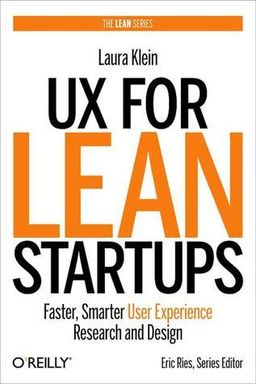
How can you stop wasting months building something nobody wants? In UX for Lean Startups, Laura Klein argues that modern entrepreneurship doesn’t fail from lack of passion—it fails from lack of learning. Startups often pour time and money into beautiful products that solve the wrong problems. Klein’s answer is Lean UX, a design approach that blends the Lean Startup principles of Eric Ries and Steve Blank with user-centered design and agile collaboration so you can validate ideas before writing a single line of code.
Klein contends that success comes not from visionary hunches, but from designing simple experiments that reveal what users actually need. Instead of guessing, you’ll generate hypotheses, test them quickly, and learn iteratively. Whether you’re an entrepreneur, designer, or developer, her message is blunt: you already have assumptions—you just need to stop pretending they’re facts.
From Vision to Validation
Klein begins with a familiar warning: most startups begin not with real customer pain but with ideas dreamed up in conference rooms. They end up building features their customers don’t want because they never talk to real users. Borrowing from Lean Startup, she advises founders to get out of the building—to observe how real people struggle, not how executives imagine they behave. The book teaches readers to frame every product idea as a hypothesis (“We believe adding comments will increase engagement”) and design small, measurable tests to prove or disprove it. This mindset turns intuition into inquiry and opinion into evidence.
Why Design and Startup Thinking Must Merge
In traditional companies, UX tends to be slow, perfectionistic, and insulated. Lean startups, on the other hand, emphasize speed and iteration. But going fast without understanding users just leads to shipping junk faster. Klein’s vision of Lean UX unites these worlds: designers, engineers, and product managers collaborate in short cycles, testing small bits of functionality as hypotheses. There are no 300-page documents or endless meetings. Learning replaces guessing, testing replaces arguing, and data replaces opinion.
She draws from personal experience as a designer at IMVU, the startup famous for pioneering Lean Startup ideas. There, every design decision—from avatars to onboarding—was treated as an experiment. At one point, they hypothesized that improving user activation required redesigning “return visits.” Instead of spending months on a campaign, they built and tested several approaches rapidly to learn which improved retention. This illustrates Klein’s mantra: design is not art—it’s problem solving under conditions of uncertainty.
The Challenge: Designers Inside Chaos
Startups, Klein notes, are chaotic ecosystems. Designers and product teams face confusing advice: be agile, deploy continuously, launch an MVP, raise millions, and delight users—all at once. Her aim isn’t to overwhelm readers with dogma but to show the practical side of Lean UX. It’s not about being cheap—it’s about being efficiently wrong. You’ll fail faster and learn faster, preventing those expensive late-stage disasters when customers reject your product entirely. This makes Lean UX both a philosophy and a set of survival skills.
A Roadmap for Learning
Throughout the book, Klein lays out a journey that mirrors the life of a startup:
- Part I teaches validation—how to find a real market, uncover real pain, and test whether anyone will pay for your solution.
- Part II covers design—how to design the smallest possible product that validates your assumptions, and when to skip unnecessary design work.
- Part III explores measurement and speed—how to use metrics, A/B testing, and cross-functional teams to iterate faster.
This learning loop—build, measure, learn—anchors every concept, from early user research to full product design.
Why It Matters Now
Klein argues that the age of intuition-driven design is over. Today’s startups operate in a data-rich, low-fidelity world where user feedback can be gathered overnight and prototypes can go live in hours. For founders, this means the barriers to learning are gone—but the excuses are not. By embracing Lean UX, you make learning your competitive advantage: understanding users faster than your rivals. You avoid the tragedy of building brilliant features into products nobody wants.
“Stop pretending you know what users want. Make every design a test.”
Klein’s core principle distills the essence of Lean UX—it’s not the art of perfection, but the science of discovery. Her book invites you to build smarter, faster, and more human products.