
Idea 1
The Global Crisis of 'Us vs. Them'
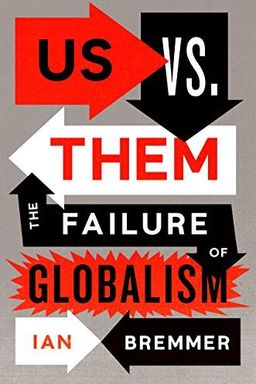
What happens when people begin to feel the world is stacked against them? When every economic setback, every cultural change, and every new technology seems to threaten your way of life—it’s easy to start asking, “Who’s really winning here?” In Us vs. Them: The Failure of Globalism, political scientist Ian Bremmer dives deep into this question and reveals how frustration and fear have created our current era of division—an age when national, racial, and social boundaries harden, and trust in institutions erodes.
Bremmer argues that globalism—the optimistic belief that worldwide interconnection and open borders would benefit everyone—has not lived up to its promise. Yes, globalization has lifted over a billion people out of poverty, he acknowledges. But it’s also created a new class of people who feel locked out and betrayed: those who watched the world change and left them behind. The anger that propelled Donald Trump’s rise, fueled Brexit, and sparked populist movements from Brazil to Turkey is, for Bremmer, not a passing phase but a defining fault line of 21st-century politics.
From Global Optimism to Global Fragmentation
Globalization was supposed to make the world fairer. Bremmer traces how policymakers and business elites embraced free trade and open borders, convinced that everyone would prosper through cooperation. Yet while corporations and investors thrived, ordinary workers faced vanishing jobs and downward pressure on wages. In communities from Appalachia to South Africa’s townships, the dream of upward mobility began to crumble. Feeling ignored and humiliated, people turned from ballots to protests—and sometimes to rocks, literally or metaphorically, to make themselves heard.
Bremmer draws on his experiences growing up in Chelsea, Massachusetts—a poor neighborhood overshadowed by Boston’s wealth—to illustrate the emotional gap between global elites and ordinary citizens. He believed, as many did, that hard work would guarantee success. But decades later, he finds even his own community seething with resentment, no longer convinced that education or effort can overcome systemic barriers. This story of disillusionment, Bremmer suggests, is happening everywhere—from Gaza to Appalachia, from Johannesburg to Jakarta.
The Anatomy of Division
Bremmer structures the book around the widening fissures that divide societies: economic, cultural, technological, and political. He sees a world split between winners and losers of globalization, where leaders exploit these divides by offering simple enemies—“the migrants,” “the bankers,” “the media,” “the elites.” He warns that these us-versus-them narratives are seductive because they give people someone to blame. Populists like Marine Le Pen in France or Erdogan in Turkey thrive by promising protection from outsiders and the restoration of lost pride.
The book maps these divides across continents. In developing countries such as India and Nigeria, Bremmer shows that economic frustration mixes with ethnic and religious tension. In wealthy nations, cultural anxiety about immigration and identity transforms into political polarization and conspiracy. Everywhere, the common thread is fear—the feeling that your community, job, or values are under siege.
Technology and Inequality: A New Fault Line
A major part of Bremmer’s argument concerns technology. He predicts that automation and artificial intelligence will devastate developing economies even more than advanced ones. While rich nations can invest in education and retraining, poorer states cannot. In places like India or Indonesia, millions of young workers will compete for fewer jobs as machines take over factories and service industries. This widening gap—between technologically adaptable societies and those left behind—creates fertile ground for resentment and extremism.
Bremmer likens this process to a geological fault line, invisible until it ruptures. Once the pressure builds—through unemployment, corruption, and inequality—political earthquakes follow. The Arab Spring, Brazil’s protests, and Venezuela’s collapse are examples of societies learning “geology the morning after the earthquake.”
Walls and Social Contracts: Two Paths Forward
Looking ahead, Bremmer identifies two possible responses: governments can build walls or rewrite the social contract. “Walls” mean literal and metaphorical barriers—border fences, protectionist policies, censorship, and digital control systems (like China’s social credit score). They offer short-term security but deepen inequality and paranoia. The “new deals,” by contrast, seek inclusive solutions like universal basic income, better education, and partnerships between government and the private sector. Bremmer highlights promising experiments in countries such as Finland, Singapore, and Brazil, proving that innovation isn’t limited to wealthier nations.
Ultimately, Bremmer argues that only empathy and honest reform can bridge the divide. Mocking populists or ignoring their followers means reinforcing the “us vs. them” dynamic that drives anger. Globalists must stop treating economic losers as statistical inconveniences and start addressing the real human cost of globalization’s failures. If they don’t, he warns, the world will keep building walls until democracy itself is walled off.
Why This Matters
The book’s relevance expands beyond politics—it’s about how fear reshapes the very idea of community. Bremmer challenges you to see that these divides aren’t “their problem” or “another country’s issue.” They’re reflections of universal human reactions to uncertainty. Like Yuval Noah Harari in Homo Deus or Thomas Friedman in The Lexus and the Olive Tree, Bremmer invites you to rethink progress itself: if globalism means leaving half the world behind, is it really progress?
With lucid storytelling and global examples, Us vs. Them gives you a panoramic view of a world at a crossroads. You can choose to ignore the tension—or, as Bremmer urges, to confront it and find ways to repair the broken promises of globalization. The question isn’t whether we live in an “us vs. them” world. It’s whether we can learn how to make “us” big enough to include everyone.