
Idea 1
From 'You and Me' to 'Us': Rethinking Love and Connection
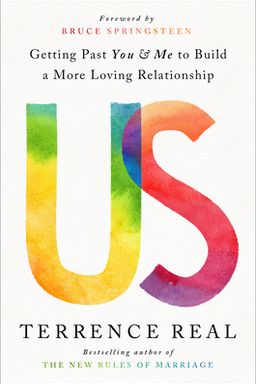
Have you ever found yourself replaying the same argument with your partner, no matter how hard you try to change it? In Us: Getting Past You and Me to Build a More Loving Relationship, family therapist Terrence Real invites you to confront that universal frustration. His central claim is bold: the root of our relational suffering lies in the modern obsession with individualism—the illusion that we are independent, self-sufficient entities. To create deeply connected, enduring relationships, we must move beyond the adversarial stance of “you and me” and rediscover the fertile ground of “us.”
Real proposes that healthy love is an ecology of interconnected lives, not an arena of competing egos. He blends neuroscience, psychology, cultural history, and decades of therapy work to show that intimacy isn’t a static state of mutual happiness, but an ongoing, embodied practice of repair, empathy, and mutual regulation.
The Core Idea: Escaping the 'Myth of the Individual'
Real argues that most of us bring a silent myth into our relationships: the belief that we are self-contained individuals who must protect ourselves against dependency. This culture of individualism, deeply rooted in Western history, has distorted our sense of love and community. Our brains, he reveals, are built not for competition but for connection and co-regulation. When you feel heard, your nervous system literally calms down. When you and your partner argue, it’s not just ideas that clash—it’s two nervous systems flaring into alarm.
Yet in moments of conflict, Real observes, our physiology betrays us. The brain’s emotional alarm system—the amygdala—grabs control, while our wiser prefrontal cortex (the part that reasons, empathizes, and balances perspective) goes offline. Suddenly, we are no longer rational adults but reenacting old childhood defenses. We lose our grip on “us” and devolve into “you versus me.”
From Adaptive Child to Wise Adult
Real uses two archetypes to map this shift. The Adaptive Child is the defensive, reactive self born out of early trauma—be it neglect, overcontrol, or emotional disconnection. This part of you has one goal: survival, even at the cost of connection. It is rigid, controlling, perfectionistic, and often harsh—traits that once kept you safe but now poison intimacy.
By contrast, the Wise Adult represents your integrated, present-centered self. It can hold nuance, regulate emotion, and approach differences creatively. The everyday work of a loving relationship, Real insists, is learning to pause when the Adaptive Child takes over—and to reengage from the Wise Adult’s place of humility, courage, and empathy. This deliberate act of self-regulation is what he calls relational mindfulness.
“In those heated moments when anger or fear takes over,” Real writes, “remember—your partner is not your enemy. The goal isn’t to win, but to find your way back to us.”
The Broader Mission: From Patriarchy to Partnership
The personal healing Real advocates is inseparable from social change. He contends that the same patriarchal values that prize domination, control, and emotional stoicism in men—and self-sacrifice and silence in women—tear couples apart and damage society. He tracks how centuries of “rugged individualism” and “romantic expressiveness” have collided, pitting freedom against belonging. Healing our relationships, then, becomes a revolutionary act: to dismantle toxic hierarchies of gender, race, and privilege, starting in our most intimate spaces.
This idea culminates in his vision of “ecological love,” in which we see ourselves not as masters or victims but as interdependent participants in a living system. Just as the health of an environment depends on balance, repair, and reciprocity, so does the health of a relationship. You can’t dominate your way to intimacy, nor can you disappear into harmony; you must learn to work together as a conscious team.
The Heart of the Journey: Remembering Love
Throughout the book, Real returns to a simple but transformative question: Can you remember love when it matters most? When you’re triggered—when fear or anger floods your system—can you recall that this person you’re fighting is someone you care about? True mastery, he says, is measured not by how rarely you fight but by how swiftly and gracefully you repair. “Everyone says relationships take work,” Real warns, “but few understand that the work is moment to moment.”
The book’s many stories—from Bruce, a domineering husband learning remorse, to Angela, a betrayed wife discovering her strength—illustrate that transformation is possible when partners commit to seeing each other anew. Love is not static; it is an ongoing practice of returning to connection after every rupture, expanding from isolation back into belonging.
Ultimately, Us is more than a manual for better relationships; it’s a manifesto for a relational civilization. Real implores us to grow up—not just individually but collectively—to trade self-protection for collaboration, contempt for compassion, and the illusion of independence for the freedom of interdependence. When we remember “us,” he says, we recover the wisdom of what it means to be human.